

IKEA POÄNG Footstool: Analysis for Your Home Office

You're sitting at your desk, your shoulders are getting heavy, your feet are looking for support. Then the obvious idea comes to mind: Why not just use the IKEA Poäng footstool as a footrest? It's well-known, looks good, and might already be in the living room anyway.
This is exactly where the mistake begins. A furnished home product is not automatically an ergonomic work tool. What feels good for short relaxation can quickly become a problem during daily screen work.
If you want to set up your home office effectively, you need to clearly separate home comfort from workplace ergonomics. The IKEA Poäng footstool is a good example of this. It works as a footrest next to an armchair. As a serious solution for long working days, it usually doesn't.
The POÄNG Footstool in the Home Office – A Good Idea?
The idea initially seems logical. The footstool is wide, upholstered, and stable. Many think: If I rest my legs on it, I'll sit more relaxed and work more comfortably.
For short breaks, that might even be true. But in everyday work, it's not about whether something is soft. It's about whether it properly supports your posture, works reproducibly for hours, and fits your desk height, chair height, and sitting position.
Why the idea is so common
The IKEA Poäng footstool hits exactly two points that are often important in a home office:
- It's already there. You don't have to buy anything new.
- It feels comfortable. Upholstery and a wooden frame immediately suggest relief.
The problem lies in the word "feels". Ergonomics is not a question of style. It's a question of function.
Comfort and ergonomics are not the same thing. Comfort is a first impression. Ergonomics only becomes apparent after several hours of use.
What you really need to look for to determine suitability
When assessing a footrest for your desk, don't look at the appearance first. Check these three points:
- Angle of the support surface A good footrest doesn't force your feet into an unfavorable position.
- Height adjustment Your seat height, desk height, and leg length must match. A rigid solution often fails at this.
- Use throughout the entire workday A product for relaxation is not automatically designed for concentrated sitting.
Many lifestyle reviews omit precisely this distinction. They look at design, material, and general sitting feel. For home office users, that's not enough. If you spend several hours a day at your desk, you don't need an improvised home solution, but a reliable ergonomic foundation.
What exactly is the IKEA POÄNG Footstool? An Inventory
Before evaluating the IKEA Poäng footstool, it needs to be accurately described. The product is not office accessory, but a footstool from the POÄNG series. Its construction and material are clearly designed for use in the living area.

Construction and Material
The footstool is made of bent birch veneer. The frame is shaped by steam bending at approximately 100 to 120 °C. This construction method creates the typical springy quality of the POÄNG series. According to the IKEA assembly instructions for the POÄNG frame stool, the construction distributes loads up to 110 kg. Assembly is done with four screws.
This is technically sound. The bent wood gives slightly, making it feel pleasant. This very springiness is a plus point in the living room.
In the home office, this same characteristic is not automatically positive. A footrest should provide reproducible support. It should not primarily "spring," but rather provide stable support.
Cover and User Impression
For the cover, the difference between living quality and work quality is also important. According to the same IKEA document, the Knisa cover can withstand 40,000 Martindale abrasion cycles. This speaks to intensive everyday use.
Practically speaking: The footstool is not cheaply built. It is well-made and solidly designed for household use. Anyone using it in the living room gets a reasonable product.
Important point: Good material values do not automatically mean good ergonomics. A durable fabric does not turn a home footstool into a suitable footrest for screen work.
What this inventory really shows
The IKEA Poäng footstool has recognizable strengths:
- Bent veneer for an elastic seating character
- Solid cover for everyday use
- Easy assembly with minimal hardware
- Familiar form with a homey look
But even in the product logic, it becomes clear what it is optimized for. Not for neutral foot contact at the workplace. Not for adaptability. Not for long, static desk phases.
Anyone who wants to use the footstool in the home office is using a product outside its intended area of application. This can work if you briefly put your feet up. It's not a good basis for a full workday.
The Ergonomics of the POÄNG Footstool in a Home Office Test
You've been sitting at your desk for two hours, you put your feet on the POÄNG footstool, and you immediately feel relief. After lunch, however, you realize what its living room suitability conceals. You constantly change your position, your pelvis tilts with it, and your lower back works more than it should.

This is precisely where the POÄNG footstool fails as a footrest for serious screen work. Its problem is not the craftsmanship, nor is it the padding. The problem is its geometry.
The support surface is clearly inclined. For briefly putting your feet up, this is pleasant. Under a desk, however, this incline creates a predetermined foot position that you constantly have to compensate for over hours. A good footrest at the workplace should stabilize foot contact, support the knees sensibly, and provide a calm base for the pelvis. The POÄNG footstool does not do this reliably.
The real problem is the predetermined posture
In the home office, it's not the first minute that counts, but the eighth consecutive workday. That's why the difference between comfortable and ergonomic is so often misjudged.
With the IKEA Poäng footstool, three clear weaknesses emerge:
- The feet do not rest neutrally, but follow the incline of the support surface.
- The load is distributed unevenly, especially at the ankle and lower leg.
- The pelvis reacts to the foot position, which changes the entire sitting posture.
That sounds small. But it isn't.
If the foot position is not stable, the body seeks compensation. You slide forward a bit on the chair, pull your feet back, place one leg differently, or tilt your pelvis slightly. These micro-movements are not a sign of good ergonomics, but an indication of an unsuitable support surface.
Why this matters during long working days
A footrest for the workplace must function just as well in the morning as it does in the late afternoon. It should not constantly require you to readjust your posture. But that's exactly what happens here.
Typical everyday consequences are:
- Restless sitting, because you're constantly correcting your position
- More tension in the lower back, because the pelvic position isn't properly guided
- Pressure on the legs, if seat height, table height, and footstool don't match
If you want to check if your setup is already heading in this direction, read the guide on proper sitting at your desk. There you'll quickly see why a neutral and reproducible foot position is the foundation of any usable sitting posture.
An ergonomic footrest guides your feet into a stable, predictable position. The IKEA Poäng footstool, on the other hand, dictates its own angle. For relaxing on the sofa, that's appropriate. For concentrated desk work, it's the wrong logic.
IKEA hack or serious solution
Many users try to make the stool suitable for work after the fact. They put a cushion on it, turn it differently, put something under it, or change the distance to the chair. This is creative, but ergonomically not a good sign. A work tool should function without a DIY solution.
My advice is clear: Use the POÄNG stool for what it is. A cozy stool for briefly putting your feet up. It's not suitable as a footrest for daily home office work. It lacks the neutral support, adjustability, and stability in its movement pattern for that.
POÄNG Footstool vs. Ergonomic Footrest in Comparison
At the desk, it quickly becomes clear whether a product was built for work or for living. With the POÄNG footstool, the answer looks friendly, but ergonomically it clearly fails.
Comparison of features
| Feature | IKEA POÄNG Footstool | Professional Ergonomic Footrest |
|---|---|---|
| Basic Idea | Living room stool for relaxation | Work tool for defined foot positioning |
| Support Surface | Soft and inclined | Flat or specifically adjustable |
| Height Adjustment | No precise adaptation to the workplace | Designed for different seat heights and desk situations |
| Posture Effect | Changes foot angle without precise guidance | Stabilizes foot position and relieves sitting posture |
| Everyday Use | Comfortable for short periods | Designed for long desk sessions |
| Response to Load | Designed for home use | Developed for regular use at the workplace |
| Adjustment Logic | Hardly controllable | Reproducibly adjustable |
The central difference lies in the purpose. The POÄNG footstool is meant to feel comfortable. An ergonomic footrest is meant to make your sitting position controllable. You need exactly this controllability in the home office if you spend several hours at the table every day.
Where the difference really counts in everyday life
In the living room, it hardly matters if the foot position varies slightly from day to day. In a work context, this is a problem. Your body reacts to repetition. If the footrest is sometimes too high, sometimes too soft, or sometimes too far away, the entire chain of ankle, knee, pelvis, and lumbar region changes.
A good footrest can be adjusted to your seat height and then remains predictable. The POÄNG footstool does not do that. It dictates form and angle, even if they don't match your chair, desk height, or leg length.
If you want to understand the differences in selection and adjustment more precisely, this guide to footrests for office and home office will help you.
My clear recommendation
For short relief next to the sofa, the POÄNG footstool is fine. For serious home office ergonomics, it's the wrong category.
If you work at a desk daily, use an adjustable ergonomic footrest. It solves a work problem with the right tools. The POÄNG footstool remains a piece of living room furniture with an improvised supporting role.
Why a Professional Footrest is the Better Choice
A good footrest is not an extra. It is a corrective tool. It creates the basis for your body to remain calmly and properly aligned at your desk.
The health benefits are not theoretical. Studies by the IGR show that using a suitable footrest can reduce venous pressure in the legs by 20 to 30 percent. This is particularly relevant during long periods of sitting in the home office to prevent fatigue and the risk of circulatory problems. How to choose the right solution is also explained in the guide to footrests for office and home office.
What a good footrest does for your body
The benefit arises not from luxury, but from geometry. When your feet are properly supported, the entire sitting chain changes.
Important effects include:
-
More stable pelvic position
Your lumbar spine has less to compensate for. -
Less pressure in the legs
This is especially relevant during long periods of sitting. -
More calm in the upper body
Shoulders and neck benefit because the base below becomes more stable.
Practical rule: If your feet do not have clear, calm contact, your upper body will almost always compensate.
How to recognize a usable solution
You don't need complicated technology. You need the right features.
Pay attention to these points:
-
Adjustability
Your body measurements and desk dictate the correct height. Not the product. -
As neutral support as possible
A good footrest does not force you into a restrictive posture. -
Non-slip stand
A foot solution must not wander when you change your position. -
Use for work phases
The product must be intended for regular use, not for occasional relaxation.
A professional footrest often seems unspectacular. That's exactly what's good. It shouldn't stand out. It should function.
Suitable Alternatives for Your Ergonomic Setup
If you're replacing the IKEA Poäng footstool, you don't need a complicated substitute. You need a setup that's built for work. First, that includes a real footrest. Then comes the coordination with your chair and desk.

What kind of alternative makes sense
Not everyone needs the same product. Your working style is crucial.
| Need | Sensible Alternative |
|---|---|
| You sit for long periods and need stable foot support | Classic ergonomic footrest |
| You often change position | Adjustable footrest with flexible tilt |
| You want more movement when standing | Balance board as an addition, not a replacement for seating ergonomics |
| You work at changing workstations | Compact, easily adaptable foot solution |
How to build a clean setup
Many people first buy some accessory and hope for improvement. This order is better:
-
Adjust seat height properly
Your chair dictates the basic position. -
Match desk height to it
Only then does the foot position truly make sense. -
Only use a footrest if it improves posture
Not because "something is still missing" on the floor. -
Plan for movement
Even the best footrest cannot replace changes in posture.
A balance board, for example, can be useful when standing. An adjustable footrest helps when sitting. Both have their place. The Ikea Poäng footrest sits exactly between these worlds and doesn't cleanly solve either.
The best workstation doesn't feel spectacular. It just doesn't constantly force you into compensatory movements.
What you should avoid
Don't be tempted by three things:
- Homely aesthetics instead of function
- Improvised hacks instead of adjustable solutions
- Short-term comfort instead of long-term resilience
Especially power users in a home office quickly notice whether a setup supports or hinders them. If you spend many hours in front of a screen every day, a semi-suitable product is not a clever trick. It's a permanent compromise.
Conclusion: Your workplace deserves more than a compromise
The Ikea Poäng footrest is not a bad product. It's just built for something else. It fits well in a living area. At a desk, it fails on the points that truly matter: neutral foot position, adjustability, and reliable ergonomic support over long periods.
That's the crux of the matter. A home office setup should not be planned according to living room logic. It must function according to stress, posture, and repeatability. That's exactly where the POÄNG footrest falls short.
If you just want to put your feet up for a moment, it's not critical. If you work daily, you need a real solution. A professional footrest is not a luxury decision. It's a clean ergonomic foundation.
Working healthily does not mean improvising as creatively as possible. It means putting the right function in the right place. For a desk where you spend many hours week after week, that's no small matter.
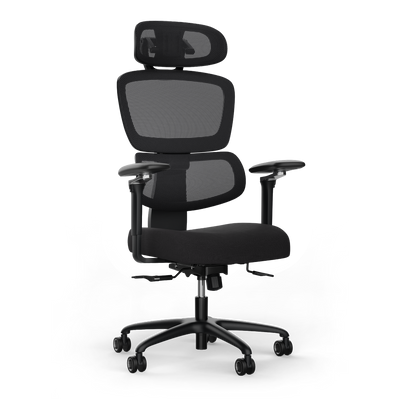
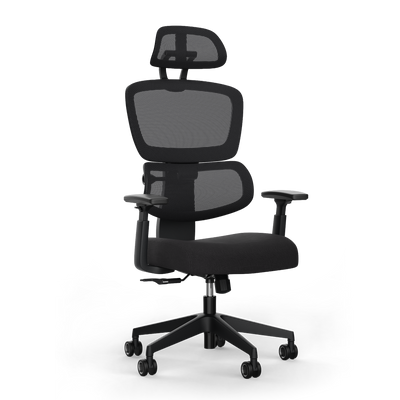
If you want to set up your workplace without compromises, you'll find ergonomic solutions for home offices and offices at DESKSPACE. These include height-adjustable desks, ergonomic chairs, and suitable accessories that have been developed for real working conditions instead of living room improvisations.


