

Chair exercises for a strong back at work

If you sit a lot, you force your body into an unnatural posture. The result is often pain in the neck and back. Targeted chair exercises are an effective solution that directly addresses the issue at your desk.
Why Chair Exercises Really Work
Hours of sitting are among the greatest stresses on the body in the office. The core muscles, which are supposed to stabilize the spine, become weaker. Without regular activation, these muscles atrophy. This leads to poor posture and chronic pain.

Chair exercises break this cycle. Short, targeted exercises are enough to activate the muscles. They stimulate blood circulation and relieve pressure on the intervertebral discs.
The Biomechanical Benefits
The effectiveness of chair exercises is based on simple biomechanical principles. Every small movement sends important signals to your brain and muscles.
- Activating the muscle pump: Simple leg lifts or tensing your calf muscles boost blood flow back to the heart. This helps combat heavy legs and fatigue.
- Mobilizing the spine: Gentle rotations and inclinations of the upper body keep the small vertebral joints supple. This prevents a stiff feeling in your back.
- Strengthening the deep muscles: Consciously tensing your abdominal muscles during an exercise strengthens your core. A strong core is the best prevention against back pain.
These impulses accumulate throughout the workday. They increase your physical well-being and concentration, as your brain is better supplied with oxygen. To understand how to best support your body, it can help to know what stimulates metabolism.
Movement is a necessity in modern working life. Chair exercises make it accessible and immediately implementable for everyone.
Numbers Prove the Necessity
The statistics on sitting behavior are clear. Germans sit an average of 9.2 hours on weekdays. A study shows that over 80 percent of office workers suffer from work-related complaints such as back and neck pain. These figures highlight the importance of actively counteracting this. You can find more information in the statistics on office-related illnesses in Germany.
An ergonomic work environment, combined with regular chair exercises, is the most effective strategy for a healthy and productive day.
How to Create the Right Foundation for Your Exercises
Before you start with the exercises, the correct starting position is crucial. Take a moment to prepare yourself and your workplace. This ensures the effectiveness of every movement and protects you from incorrect strain.

Your feet should be firmly on the floor. Your knees should be bent at an angle of about 90 degrees. If your feet are dangling in the air or you have to pull your knees up, the seat height of your chair is not set correctly.
First the Chair, Then the Start
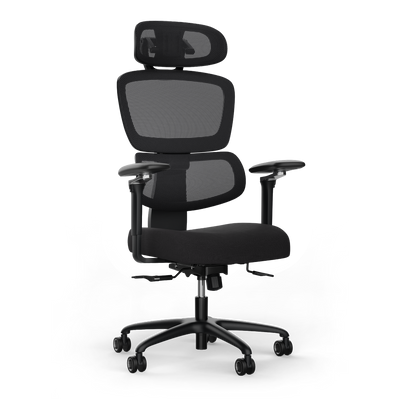
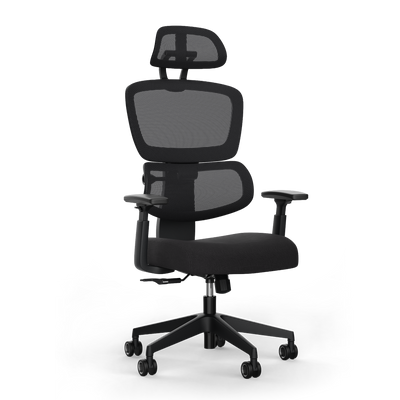
A good ergonomic office chair is the foundation for every desk exercise. It adapts flexibly to your body and gives you the necessary stability.
- Seat height: Adjust the height so that your feet are flat on the floor. Your forearms should rest relaxed at a 90-degree angle on the tabletop or armrests. You should not shrug your shoulders.
- Backrest: Make sure the backrest supports your lower back well. This helps your spine maintain its natural S-shape. This is the best position to avoid tension.
- Stability: A firm stance is particularly important for dynamic exercises. Check that your chair is stable and does not wobble.
This preparation ensures that you get the maximum out of every movement. If you want more details, read our guide on sitting correctly at your desk.
A neutral spinal posture is key. It is the safest and most effective position to activate the core muscles without unnecessarily straining joints or intervertebral discs.
The need for active breaks is obvious. According to the DKV Report, people in Germany sit for an average of over ten hours a day. The trend is rising. Few manage to compensate for this long inactivity with exercise. Regular chair exercises are a simple method to integrate movement into daily work and counteract the negative consequences of sitting.
Exercises for a Relaxed Neck and Shoulders
Many know the feeling after hours at the desk. There is a pull in the neck and the shoulders are tense. These are often the first warning signs of overworked muscles. You can do something about it directly at your desk.
The following exercises are designed to loosen up these problem areas. You can do them discreetly and without much effort at your desk.

Each exercise only takes a few minutes and fits perfectly into a short screen break. Perform the movements slowly and controlled. Breathe calmly and evenly.
Mobilizing the Neck and Cervical Spine
These exercises stretch the stiff muscles on the sides and back of the neck. They help you improve the mobility of your cervical spine and prevent tension headaches.
Lateral Neck Stretch
Sit upright and let your shoulders relax downwards. Slowly tilt your head to the right side, as if your ear wants to touch your shoulder. You should feel a gentle stretch on the left side of your neck. Hold this position for 15 to 20 seconds.
Slowly return to the center and repeat the exercise on the other side. Do a total of three repetitions per side. For a more intense stretch, you can reach under your chair with the opposite hand or actively push your arm towards the floor.
Looking Over Your Shoulder
Remain sitting upright. Slowly turn your head to the right, as if you want to look over your shoulder. Go only as far as feels comfortable.
Hold the gaze for about 15 seconds before slowly returning to the front. Repeat this to the left side. Three repetitions per side are ideal.
Important for all neck exercises: Never work into pain. The goal is a pleasant, gentle stretch.
If you want to do more about neck pain at work, read our guide with more effective neck exercises against neck pain.
Loosening the Shoulder Girdle and Thoracic Spine
The shoulder area is heavily stressed, especially when working at the computer with arms bent forward. These exercises promote blood circulation and help release blockages.
Controlled Shoulder Circles
Sit upright and let your arms hang loosely at your sides. Slowly pull both shoulders up towards your ears.
From there, move them controlled backwards and then down again. Imagine you are drawing large circles with your shoulders. Do this movement ten times backwards and immediately after ten times forwards. This mobilizes the entire shoulder girdle.
Chest Opener on the Chair
Slide forward a bit on your chair. Cross your hands behind your back.
Gently straighten your arms and consciously pull your shoulder blades together. Lift your chest slightly and look straight ahead or slightly upwards. Hold this position for 20 to 30 seconds. This is a treat for the often shortened chest muscles.
Arm Stretch Upwards
This simple exercise is very effective for stretching the entire spine.
- Sit upright and raise both arms straight above your head.
- Interlace your fingers and turn your palms upwards towards the ceiling.
- Stretch as if you want to touch the ceiling with your hands.
- Hold this stretch for 15 seconds, breathing deeply in and out.
These exercises are a central building block of chair exercises. They are simple, effective, and can be perfectly integrated into any workday. This way, you prevent tension before it becomes a problem.
Targeted Exercises to Strengthen Your Back and Core
A stable core is the best protection against back pain. Although the neck and shoulders often complain first, the foundation for good posture lies in a strong core. The following exercises strengthen your back and abdominal muscles directly at your desk.

These exercises require a bit more core tension than simple loosening exercises. However, they can be integrated just as easily into your daily work routine. They help you actively support your spine and counteract the typical slumped office posture. Perform the movements in a controlled manner and consciously tense your muscles.
Mobilizing the Lumbar Spine
The lower back suffers from prolonged sitting and often becomes stiff. Pelvic tilting is a gentle but effective exercise to mobilize this area and activate the deep abdominal muscles.
Conscious Pelvic Tilt
Slide to the front half of your chair and place your feet firmly on the floor. Rest your hands loosely on your thighs.
Consciously tilt your pelvis backward, so that your lower back becomes rounded. Hold this position briefly. Then tilt your pelvis forward until you are in a slight hollow back.
Repeat this flowing movement 10 to 15 times. Make sure the movement comes only from the pelvis. The upper back remains stable.
Strengthening the Abdominal and Core Muscles
Strong abdominal muscles are the antagonists of your back muscles. When trained, they relieve strain on the spine and improve your posture.
Controlled Torso Rotation
Sit upright, feet hip-width apart and firmly on the floor. Cross your arms in front of your chest. Tighten your abdominal muscles and slowly and controlled rotate your upper body to the right side.
Only rotate as far as feels good, without using momentum. Hold briefly, then slowly return to the center. Repeat this to the left side. Do a total of 10 repetitions per side.
Isometric Leg Lifts
Hold on to the sides of the chair with both hands. Tense your abdominal muscles firmly and lift both legs straight a few centimeters off the floor.
Hold this position for 10 to 15 seconds. Breathe calmly and evenly. Then slowly lower your legs and repeat the exercise three to five times.
The strength for these exercises must come from your core, not from your shoulders or neck. A stable ergonomic chair is important for correct execution.
These exercises are a central building block of chair gymnastics because they train your supporting muscles. Regular application not only prevents back pain but also promotes an upright posture throughout the day.
How to Keep Your Legs and Feet Moving
Long periods of sitting at a desk slow down blood circulation in the legs. Blood accumulates in the lower legs, which can lead to fatigue, swelling, or heavy legs. With small, targeted exercises, you can activate the venous pump directly under your desk.
These mini-workouts are an important part of chair exercises. They are discreet, require little time, and improve your circulation and energy levels.
Activating the Venous Pump and Stimulating Blood Circulation
The following exercises specifically target the muscles in your calves and feet. These muscles help the veins pump blood back to the heart.
Seated Calf Raises
Sit upright, both feet flat on the floor. Slowly lift your heels until you are on your tiptoes. Hold this tension briefly and then slowly lower your heels. Repeat this 15 to 20 times.
Heel Rockers
Remain in the upright sitting position. First, lift your heels, set them down again, and then immediately pull your toes up. Only your heels touch the floor. Perform this flowing rocking motion also 15 to 20 times.
Imagine your calf muscles as a pump. Each contraction and relaxation gives your bloodstream an important impulse.
Perform these exercises several times a day, especially if you notice your legs getting tired.
Loosening Ankle Joints and Keeping Them Mobile
Stiff ankle joints are a consequence of lack of movement. With these simple exercises, your joints stay flexible and you promote blood circulation down to your toes.
- Ankle Circles: Lift one foot off the floor and move the ankle joint in large, slow circles. Do 10 circles clockwise and then 10 circles counter-clockwise. Then switch legs.
- Leg Lifts Under the Table: Sit stably and stretch one leg straight forward. Hold it in the air for 10 to 15 seconds and then slowly lower it. Repeat this 5 to 10 times per leg. This also strengthens your thigh muscles.
Even these short periods of movement help prevent heavy legs. They increase your well-being and supply your body and brain with fresh oxygen. The result is better concentration at work.
An ergonomic footrest for the office can also help reduce strain on your legs and promote healthy posture. If you want to know how a footrest for the office can optimize your workspace, read our guide on it.
Your 5-Minute Routine for the Workday
When it comes to chair exercises, regularity is key. It doesn't have to be complicated. I've put together three short routines for you to make getting started easier. Each takes only five minutes and fits into any workday.
Choose the routine that feels best for you right now. A tip: set a fixed reminder in your calendar. You will see the positive effect a short, conscious movement break has.
Three Sample Routines for Your Workday
The following table shows three simple 5-minute workouts. They combine exercises from the previous sections to relieve tension and give you energy.
| Routine | Focus | Exercises (60 seconds each) | Goal |
|---|---|---|---|
| Morning Activation | Mobilization | Shoulder circles, pelvic tilts, torso twists, arm stretches | Gently wake up the body and prepare the spine for the day. |
| Midday Reset | Loosening | Lateral neck stretch, chest opener, ankle circles, heel rockers | Release tension from the first half of the day and stimulate circulation. |
| Afternoon Boost | Strengthening | Isometric leg lifts, calf raises, torso twists, arm stretches | Counter an energy slump and specifically activate core muscles. |
The biggest mistake is waiting for the perfect moment. Just start with one of these routines. Five minutes is better than zero minutes.
Consider these templates as a guide. You can swap exercises or adjust the order at any time. The most important thing is to get moving.
Make chair exercises a firm habit. This way, you actively prevent discomfort instead of just reacting when it already hurts.
Questions and Answers about Office Chair Exercises
Are you thinking about starting desk exercises but still have questions? Here we clarify the most common uncertainties.
How often should I do the exercises?
Regularity is key. Plan several short sessions of five to ten minutes daily. A good rule of thumb is a movement break after every hour of concentrated work.
These constant interruptions are more effective than one long session per week. This prevents tension from setting in.
Are chair exercises suitable for everyone?
Basically, yes. The exercises are gentle and low intensity. Most people can perform them safely, without prior knowledge or a specific fitness level. It's an easy way to incorporate more movement into your sedentary workday.
An important principle: Listen to your body. The exercises should feel good and not cause pain. A gentle pull during stretches is normal, stabbing pain is not.
If you already have health problems, especially with your spine, joints, or cardiovascular system, talk to your doctor before starting.
Do I need special equipment for this?
No, you don't need any special equipment. A stable office chair, ideally without wheels or with lockable brakes, is sufficient. An ergonomic chair supports an upright posture and offers additional safety.
It is important that your chair has a firm stand and does not slip. Your normal work clothes are suitable, as long as they allow you enough freedom of movement.
Do you want to set up your workplace to optimally support you during active breaks? At Deskspace you will find ergonomic chairs and height-adjustable desks that promote your health and productivity. Find the perfect equipment for your office now.


