

Back Pain Below the Shoulder Blade: Causes and Solutions

Almost everyone who sits at a desk a lot experiences back pain below the shoulder blade. Often, it feels like a sharp or dull spot that just won't go away. This is usually a signal from the body that something is out of balance. The cause is often muscle tension.
The main reasons are usually prolonged sitting, a hunched posture over the keyboard, and one-sided strain in daily life.
What pain below the shoulder blade means
To understand why it hurts specifically in this area, a look at the anatomy helps. The shoulder blade, or scapula, is not rigidly connected to the rib cage. It moves on the back and is held by a complex network of muscles.
This flexible suspension allows for the great freedom of movement of our arms. However, it also makes the area susceptible to muscular imbalances.
The main culprits in the muscle network
When it hurts below the shoulder blade, two muscle groups are usually involved:
- Rhomboids (Rhomboid muscles): These muscles pull the shoulder blades towards the spine. They are crucial for an upright posture and retracting the shoulders.
- Trapezius muscle (Trapezius): This large muscle extends from the neck to the middle of the back. Its lower part supports the rhomboids in stabilizing the shoulder blades.
Prolonged sitting at a desk with rounded shoulders leads to a permanent stretching and weakening of these back muscles. At the same time, the chest muscles shorten. This imbalance causes painful tension and trigger points.
A muscular imbalance between the chest and back muscles is one of the most common causes of pain below the shoulder blade. The overworked back muscles react with hardening and pain.
A widespread problem
You are not alone with this problem. A 2021 study by the Robert Koch Institute shows that 61.3 percent of adults in Germany had back pain in the last year. The modern working world with too much sitting and too little movement contributes significantly to this. You can find more information in the study results on the prevalence of back pain on rki.de.
See the pain as a hint. It shows you that you should check your daily posture and ergonomics at your workplace. Sometimes the pain also radiates from the shoulder itself. Our further article shows you what you can do for shoulder pain. Understanding the causes is the first step towards improvement.
The most common causes of your back pain
To relieve back pain below the shoulder blade, it is important to understand its origin. Usually, there is no serious illness behind it. It is often about functional problems that develop due to everyday habits. They arise gradually and are almost always related to posture and movement patterns.

You can influence these causes yourself. Knowing the connections is the first step to overcoming the pain.
Muscular imbalances due to one-sided strain
Muscles function like a balanced system. Hours of sitting in the same position disrupt this balance. Some muscles are constantly tense, while their antagonists become weaker.
A typical example is working with a computer mouse. The hand and arm are constantly slightly extended forward. This leads to permanent tension in the shoulder and neck muscles on that side. At the same time, the muscles between the shoulder blades are overstretched and weakened.
This imbalance leads to tension, which manifests as a sharp pain point below the shoulder blade. Your body is signaling a problem.
Trigger points as pain triggers
In overworked muscles, myofascial trigger points can form. These are small, hardened muscle knots that are very sensitive to pressure. You can imagine them as a tiny cramp in a muscle bundle.
The peculiarity of these trigger points is that the pain often does not occur at the site of the knot but radiates to other body regions. For example, a trigger point in the infraspinatus muscle on the shoulder blade can cause deep pain below the shoulder blade.
These points usually arise from:
- Chronic overload: Poor posture at work over weeks and months.
- Acute overload: A sudden, unusual movement, such as lifting a heavy box.
- Stress: Psychological tension unconsciously increases basic muscle tension.
Adhered fascia and their role
Muscles are surrounded by a fine network of connective tissue called fascia. This tissue ensures smoothness and allows muscle strands to glide smoothly. Lack of movement or one-sided strain can cause the fascia to adhere.
If the fascia around the shoulder blade muscles lose their gliding ability, it restricts mobility. The muscles can no longer work freely. This leads to stiffness and a dull, pulling pain in the region.
The combination of weakened back muscles, shortened chest muscles, active trigger points, and adhered fascia is the most common reason for functional back pain below the shoulder blade in desk work.
The causes are often closely linked. Poor posture leads to muscular imbalances. These promote the formation of trigger points and fascial adhesions. Therefore, a holistic approach is important, rather than just treating a single symptom.
Common causes and symptoms at a glance
This table helps you better classify your symptoms and identify possible causes for your back pain below the shoulder blade.
| Cause | Typical Symptoms | Main Triggers |
|---|---|---|
| Muscular Imbalance | Pulling, dull pain; feeling of weakness between the shoulder blades; often unilateral | Long sitting, mouse work, one-sided activities |
| Myofascial Trigger Points | Punctual, sharp pain; can radiate into the arm or chest | Chronic overload, stress, sudden wrong movement |
| Adhered Fascia | Feeling of stiffness, restricted mobility, dull, widespread pain | Lack of movement, poor posture, insufficient stretching |
| Rib Joint Blockage | Sudden, sharp, breathing-dependent pain; often after a wrong movement | Quick rotational movements, coughing, sneezing, improper lifting |
| Vertebral Blockage (Thoracic Spine) | Dull pressure pain next to the spine, restricted upper body rotation | Unfavorable sleeping position, jerky movements, prolonged sitting |
This overview is for orientation only. In case of very severe or prolonged pain, as well as accompanying symptoms such as fever or numbness, you should consult a doctor.
When to see a doctor
Most pain below the shoulder blade is muscular. It can be treated well with targeted exercises and an ergonomic workplace. Nevertheless, it is important to listen to your body's signals. Some symptoms can indicate more serious problems that require medical clarification.
It's not about creating fear. It's about interpreting your body's signs correctly and knowing when a doctor's visit is necessary.
Clear warning signs
Seek immediate medical attention if your pain below the shoulder blade is accompanied by any of the following symptoms:
- Sudden, unbearable pain: Especially if it occurs after an accident or fall.
- Shortness of breath or chest pain: These can be signs of heart or lung problems and require immediate medical help.
- Numbness or tingling: If your arms, hands, or chest area feel numb or tingle, this is an alarm signal.
- Weakness in the arms: Sudden loss of strength, difficulty holding objects.
- Fever, chills, or unexplained weight loss: These general symptoms of illness could indicate an infection or another systemic disease.
If pain occurs suddenly, is extremely severe, or is accompanied by neurological deficits such as numbness, a quick medical examination is essential.
If the pain doesn't go away
Persistent, ongoing complaints are also a reason to see a doctor. If back pain lasts longer than 12 weeks, it is called chronic pain. A nationwide survey shows that 31 percent of adults have experienced chronic back pain. These complaints particularly increase in people over 45, as muscle strength decreases. More information on the prevalence of back pain can be found in this article by the Stiftung Gesundheitswissen.
If your pain does not improve despite exercises and your own initiative, or if it restricts you in everyday life, it's time for a doctor's visit. An expert can determine the exact cause and initiate appropriate therapy.
Effective exercises for immediate relief
When experiencing acute pain below the shoulder blade, quick help is needed. The goal is to loosen tense muscles, improve mobility, and stimulate blood circulation.
The following exercises can be performed immediately at your workplace or at home. You don't need any special equipment.

Chest muscle stretch in the doorway
Prolonged sitting shortens the chest muscles and pulls the shoulders forward. This leads to permanent tension in the back muscles. This simple stretch counteracts this.
- Stand in an open doorway.
- Bend your arms at a 90-degree angle and place your forearms against the sides of the frame. Your elbows should be at shoulder height.
- Take a small step forward with one leg until you feel a distinct stretch in your chest.
- Hold this position for 20 to 30 seconds, breathing deeply and calmly. Avoid arching your back and keep your torso stable.
Repeat the exercise two to three times.
Thoracic spine mobilization
This exercise improves the mobility of the thoracic spine. It helps release blockages that are often the cause of pain between the shoulder blades.
- Shoulder circles: Sit or stand upright. Slowly pull your shoulders up to your ears, then roll them far back and let them drop down. Repeat this movement about ten times in each direction.
- Arm rotation while lying down: Lie on your back and extend both arms sideways at a 90-degree angle. Now rotate one arm so that the back of your hand points to the floor, while you rotate the other arm towards the ceiling. Perform this opposing movement smoothly for about a minute.
Mobilization exercises are a good complement to strengthening. Similar principles also help with neck pain. You can find more about this in our guide on effective neck exercises for neck pain.
Regular mobilization is the key to prevention. A few minutes a day can be enough to keep the spine mobile and prevent tension.
Treating trigger points yourself
Sometimes the pain is in a single spot, a trigger point. You can treat this yourself. You will need a fascia ball or massage ball.
- Stand with your back to a wall.
- Position the ball precisely on the painful spot between your shoulder blade and spine.
- Lean slowly against the wall to increase the pressure until you feel a distinct "good pain."
- Maintain constant pressure for 45 to 60 seconds. Breathe deeply into your abdomen until the pain subsides.
- You can also move slightly to change the pressure point.
Using heat for relaxation
Heat is a proven remedy. It promotes blood circulation and helps tense muscles relax.
- Place a cherry pit cushion or hot water bottle on the affected area for 15 to 20 minutes.
- A hot shower is also helpful. Direct the water jet specifically to the area between the shoulder blades.
The combination of stretching, mobilization, trigger point treatment, and heat is often the quickest way to alleviate discomfort.
Ergonomically furnishing your workplace
Exercises help with acute complaints. However, the long-term solution for back pain below the shoulder blade lies in prevention. A poorly set up workplace forces the body into an unhealthy posture daily. Lasting pain relief begins at the desk.
The goal is a neutral body posture. The spine maintains its natural S-shape, and no muscle group is overloaded unilaterally. With a few adjustments, you create the foundation for a healthy workday.

The foundation: chair and desk
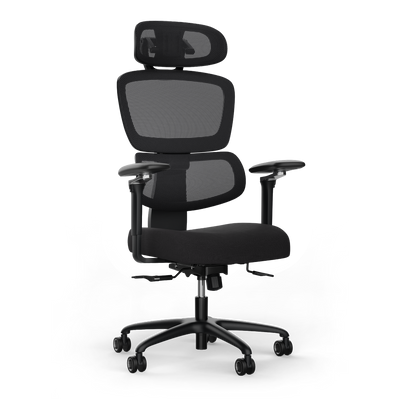
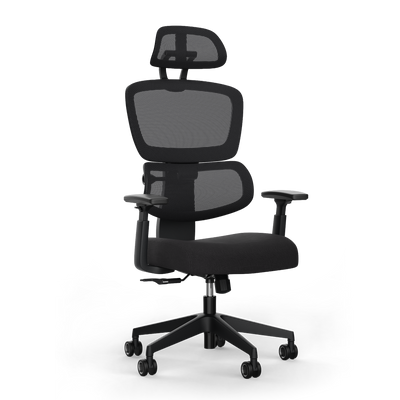
It all starts with the right seat height. Place your feet flat on the floor. Your knees should form an angle of about 90 degrees. Your thighs should be parallel to the floor or slope slightly downwards.
Adjust the height of the armrests so that your shoulders remain relaxed. Your forearms should rest comfortably and also form a 90-degree angle. The height of your desk depends on this position.
A height-adjustable desk is a central tool for dynamic work. It not only allows for perfect adjustment to your sitting height but also the important change between sitting and standing.
This regular change of position relieves the intervertebral discs, activates the back muscles, and prevents rigid staying in one position.
Optimal arrangement of work equipment
Once the chair and table fit, the details follow. An unfavorable position of the monitor, keyboard, or mouse can cause new tensions.
Use this checklist:
- Monitor position: The top edge of the screen should be at or just below your eye level. Your gaze will then be relaxed downwards. The distance between your eyes and the monitor should be 50 to 70 centimeters.
- Keyboard and mouse: Place both close to the edge of the table. This prevents you from having to stretch your arms forward. Your wrists should remain straight.
Working conditions strongly influence back health. Data shows that the incidence of back pain in Germany varies regionally: from 21.3 percent in Potsdam to 45.8 percent in Suhl. This suggests a connection between working conditions and back health. You can find more about this in the Health Atlas Germany on regional differences in back pain.
Small helpers with a big impact
Ergonomic accessories can make all the difference. An external keyboard and mouse for the laptop are important for a healthy posture. A monitor arm offers maximum flexibility in screen alignment.
By optimizing your workplace, you create the best conditions for pain-free work. In our guide, we show you how to set up your workplace ergonomically.
Frequently asked questions about pain below the shoulder blade
Here are the answers to the most frequently asked questions about pain below the shoulder blade.
How long does muscular pain in this area last?
The duration depends on the cause and your countermeasures. Acute muscle tension can improve after a few days if you provide relief and gentle movement.
For chronic complaints caused by poor posture, you will need more patience. Expect an improvement within two to four weeks if you consistently do stretching exercises and improve the ergonomics of your workplace.
The pain remains as long as its cause exists. Without adjusting posture and workspace, the complaints are likely to return.
Can the pain also be caused by stress?
Yes, stress is an often underestimated factor. Psychological tension leads to an unconscious, permanent tension of the muscles, especially in the neck and shoulder area. The body is in a constant state of tension.
This can worsen existing muscular problems or be the sole trigger. A vicious cycle often arises: stress leads to tension, this causes pain, and the pain creates new stress.
Is there a difference between pain on the left and right side?
Yes, functional, muscular pain often occurs unilaterally. Which side is affected depends on your daily habits.
- Right side: Typical for right-handed people who work a lot with a computer mouse. The constant tension in the arm and shoulder transfers to the muscles that stabilize the right shoulder blade.
- Left side: Common for left-handed people or if you often hold the phone between your head and left shoulder.
Although the cause is usually muscular, in rare cases, pain can also indicate internal organs. Left-sided pain, with additional symptoms such as shortness of breath, can indicate the heart or pancreas. Right-sided pain could theoretically be related to the liver or gallbladder. If in doubt, a doctor's visit is always the right decision.
How effective are massages for long-term relief?
Massages are very effective for acute tension. They loosen muscles, stimulate blood circulation, and can resolve trigger points. You often feel immediate relief.
However, for a long-term solution, they are only part of the strategy. A massage treats the symptom, the tense muscle. But it does not eliminate the cause, such as poor posture or an unergonomic workplace.
For sustainable pain relief, a combination is necessary:
- Acute relief: Massages, heat, and targeted exercises.
- Prevention: An ergonomically furnished workplace.
- Strengthening: Targeted strengthening of weakened back muscles.
Without adjusting your daily routines, the tension will likely return.
An ergonomic workplace is the best prevention against recurring back pain. The height-adjustable desks from Deskspace allow you the important change between sitting and standing and help you establish a healthy posture. Find the right solution for your workplace now at https://deskspace.de.


