

Stiff Neck - What to Do? Immediate Relief & Prevention

You wake up, want to turn your head, and suddenly almost nothing works anymore. The neck pulls, the shoulder locks up, every movement feels wrong. Exactly at this moment, most people look for a simple answer to the question stiff neck - what to do.
The short answer is: First calm down, then move deliberately, then eliminate the cause. A stiff neck is often no coincidence. It is usually the result of rigid posture, too little compensation, a poorly adjusted workplace, or an unfavorable sleeping position. If you just wait, it often gets tougher. If you stretch too aggressively, you can make it slightly worse. The right order is crucial.
The morning after A stiff neck and its causes
The typical sequence is well known. In the evening, a few more hours on the laptop at the dining table, glancing at the phone on the side, shoulders raised. Sleeping awkwardly at night. In the morning, the first shoulder check and immediately the pain.

In everyday life, I repeatedly see the same pattern. The head moves forward. The gaze looks slightly downward. The arms work in front of the body. The upper back rounds. Exactly then, the neck muscles have to hold continuously instead of just guiding.
Why the neck tightens up so quickly
The neck reacts sensitively to static strain. Usually, the problem is not the individual movement but staying in one position for a long time. This is a classic especially in home office.
According to a survey by the German Statutory Accident Insurance from 2025, 68% of home office workers complain about neck tension due to non-ergonomic workplaces. This matches practical experience. A monitor too low, a chair without meaningful support, or working for hours on a laptop are often enough.
Common triggers in modern work life
- Monitor too low: You constantly tilt your head slightly forward.
- Chair without support: The upper body slumps, the neck compensates.
- Laptop instead of an external setup: Screen and keyboard are in a poor combination.
- Too little change of position: Even good posture becomes problematic if you hold it for too long.
- Stress: Many unconsciously raise their shoulders and clench their jaw.
A stiff neck is often not a single event. It is the visible result of many small misloads.
If you recognize this, it also becomes clear why pure pain treatment is often not enough. Immediate help is important. It only gets permanently better when you change the strain in everyday life.
Immediate measures for an acute stiff neck
If the neck feels acutely blocked, you don’t need a complicated strategy. You need a few clean steps. The goal is not to stretch everything away immediately. The goal is to reduce tension and allow movement again.
What helps immediately now
Heat is often the fastest way to start. Heat applications increase blood flow and can inhibit pain signals. This helps in many cases of tension-related stiffness. Practical options are a warm cherry pit pillow, a hot water bottle, or infrared light.
Afterwards comes gentle movement. No circling, no jerking, no pushing into pain. Better are small, controlled movements within the tolerable range.
Acute help for a stiff neck Do's & Don'ts
| Recommended (Do's) | To avoid (Don'ts) |
|---|---|
| Apply heat and relax the area | Jerky head movements |
| Slowly move the head to the right and left | Intense stretching into pain |
| Loosely circle the shoulders | Heavy lifting |
| Get up briefly and walk a few steps | Long periods in a protective posture |
| Breathe deeply and calmly | Immediately sit for hours again at the laptop |
A sensible sequence for the first hours
- Apply heat: Place warmth on the neck if the muscles feel hard and tight.
- Calm your breathing: Slow breaths often reduce unconscious protective tension.
- Test mini-movements: Turn your head slightly to the side. Nod slightly. Raise and lower your shoulders.
- Change working position: Move away from the sofa, away from the low laptop, towards a more upright posture.
- Reduce strain: No strength training, no fast rotations, no experiments.
Practical rule: If a movement immediately worsens the pain significantly, it is the wrong choice during the acute phase.
What often doesn’t work
Many make one of two mistakes. Either complete rest or too much ambition. Both slow progress.
Total rest often keeps the muscles on high alert. Overstretching provokes resistance. The sensible approach is a middle ground. Relieve, warm up, gently mobilize, then reassess.
If you are looking for more practical everyday approaches for tense neck muscles, you will find further useful tips in this article on neck tension and what helps.
Targeted stretches to loosen the neck muscles
As soon as the acute tension eases a bit, targeted exercises usually help more than passive waiting. The execution is important. A good stretch feels clear and pulling, but not sharp.

A study shows that 81% of participants with chronic neck pain feel improvement after just 3 days when they do 10 minutes of specific exercises daily. This is an important point. It’s not the single intense session that helps, but the short, regular practice.
Side neck stretch
This exercise often relieves the side neck muscles and upper shoulder area.
Here’s how to proceed:
- Sit upright.
- Consciously let the shoulders drop.
- Slowly tilt the right ear toward the right shoulder.
- The left shoulder stays heavy.
- Hold the position calmly and breathe evenly.
- Then switch sides.
The feeling is important. You should feel the stretch along the side of the neck toward the shoulder. Not at the front of the throat.
Shoulder down, head slightly turned
This variation often reaches areas that become especially tight during screen work.
Execution:
- Sit steadily on the chair.
- Actively pull one shoulder down.
- Turn the head slightly to the opposite side.
- Then tilt the chin slightly downward.
- Stay calm in the position.
This often targets the transition between the neck and upper back. That’s exactly where many people hold their stiff office tension.
Chin back instead of head forward
This is less a classic stretch and more a corrective movement. It’s very effective if you spend a lot of time looking at screens.
Here’s how it works:
- Look straight ahead.
- Gently pull the chin back.
- Don’t press down.
- Imagine you’re making a small double chin.
- Hold briefly, then release.
This movement brings the head back over the torso. It relieves the muscles that otherwise constantly work against forward tilt.
You don’t have to force anything with neck exercises. The best effect often comes from small, precise movements.
Shoulder blade work against neck strain
Many neck pains don’t just originate in the neck. The upper back is underused. That’s why a simple activation of the shoulder blades is worthwhile.
Quick routine:
- Let your arms hang loosely.
- Gently pull the shoulder blades back and down.
- Slightly lift the breastbone.
- Hold the tension briefly, then release.
If you do this properly, your neck often feels freer immediately. The reason is simple. The load is shifted from the neck to the entire shoulder girdle.
How often you should practice
Not for hours. Better short and regular.
A practical routine for everyday life:
- Morning: a brief mobilization routine
- During work: short sessions at the first signs of tension
- Evening: gentle repetition instead of intense stretching
If you're looking for additional guidance, you'll find more suitable movements for everyday desk work in this article on neck exercises for neck pain.
How to tell good exercises from bad ones
Good exercises gradually free up the area. Bad exercises make the pain sharper, create protective tension, or provoke radiating pain into the arm or head.
Stop an exercise immediately if you notice tingling, numbness, severe dizziness, or sharp pain spikes. Then it’s no longer about normal muscle tension.
Fight the cause with an ergonomic workstation
If your neck keeps locking up, the problem often isn’t a lack of stretching. The problem is on your desk. Or more precisely: it’s how the desk, chair, monitor, and input devices work together.

An ergonomic workstation not only lowers the risk of new tension. It also prevents you from immediately falling back into the same poor posture after every exercise.
TÜV/IGR-certified ergonomic setups, like electrically height-adjustable desks, can reduce neck strain by up to 52%, as EMG measurements show. That’s exactly why it’s not enough to just treat the muscles. You have to change the strain.
The monitor matters more than many think
If the screen is too low, your head tilts forward. If it’s too far away, you push your upper body forward. Both strain the neck.
Pay attention to these points:
- Top edge of the screen at eye level: This keeps your gaze neutral.
- Monitor directly in front of you: No constant turning.
- Don’t use a laptop alone: Better with an external keyboard and mouse.
The chair supports more than just the back
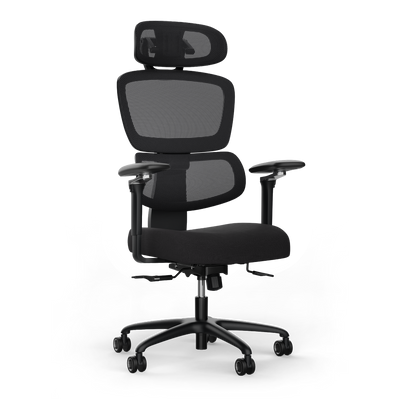
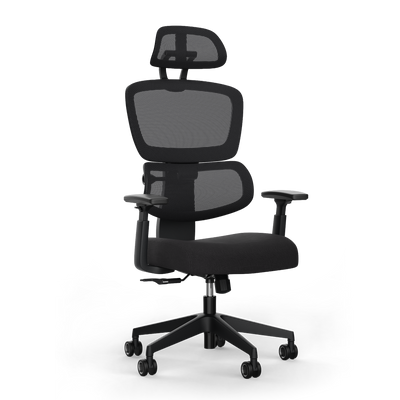
A decent office chair prevents you from slumping. As soon as that happens, the neck has to save the position. That works briefly. Not in the long run.
What you should pay attention to:
| Area | Meaningful adjustment |
|---|---|
| Seat height | Feet flat on the floor |
| Knees and hips | Preferably at a relaxed right angle |
| Backrest | Support upright sitting |
| Armrests | Shoulders stay relaxed, not raised |
| Sitting position | Close enough to the desk so you don’t fall forward |
Desk height is not a detail
A desk that is too high raises the shoulders. A desk that is too low makes you slouch. Both put strain on the neck.
A height-adjustable desk helps mainly because you can adjust positions. Not just once, but throughout the day. That’s the big difference compared to fixed furniture.
The best workstation is not the one where you sit perfectly still. It is the one where you can meaningfully change your posture repeatedly.
Combine sitting and standing properly
Standing is not automatically better. It is just a different strain. If you position the monitor incorrectly while standing or hold your shoulders tight, the neck remains under pressure.
A dynamic change is sensible:
- When sitting: Let your back be supported, place feet firmly, keep shoulders relaxed.
- When standing: Distribute weight evenly, adjust the monitor, rest your arms relaxed.
- When switching: Don’t just stand up and continue, but briefly realign.
For a systematic guide to setup, this article on setting up an ergonomic workspace is worthwhile.
The three most common setup mistakes
-
The laptop is the main screen.
That’s convenient but rarely good for the neck. -
The chair is never adjusted.
Many sit on an adjustable chair like it’s a kitchen chair. -
The desk stays the same all day.
The body needs variation, not rigid correctness.
If you’re looking for a lasting answer to the question stiff neck - what to do, you almost always end up at the workspace. Exercises relieve tension. Ergonomics prevents it from coming back every day.
Long-term prevention for a healthy neck
A good workspace is the foundation. You usually stay pain-free only when you also organize your habits properly. The neck reacts to what you do daily, not what you do perfectly once a week.
Dynamic ergonomics instead of static posture
Many switch to a standing desk and expect immediate relief. That doesn’t happen automatically. A study by TU Munich from February 2026 showed that 55% of participants experienced increased neck strain from unbalanced standing without proper chair adjustment, highlighting the importance of dynamic ergonomics. This information is referenced in this overview at apotheken.de on stiff necks.
The lesson is clear. You don’t need a permanent mode, but changes with proper adjustment.
Habits that really help in everyday life
- Take movement breaks seriously: Stand up, take a few steps, loosen your shoulders.
- Keep your jaw relaxed: Many hold unnecessary tension there.
- Regularly look into the distance: This relieves not only your eyes but often your head and neck as well.
- Limit phone usage time: Constantly looking down adds up.
- Check your sleeping position: If you lie twisted or your head bends sharply, the day often starts with tension.
A short prevention routine for workdays
You don’t need a long session in the morning. A few clear steps are enough.
- Quickly check your workspace: Monitor, chair, desk.
- Move your shoulders: A few conscious circles or retractions of the shoulder blades.
- Gently pull the chin back: So the head doesn’t immediately move forward.
- Take the first break early: Not only when everything is tight.
A healthy neck benefits more from regular breaks than from occasional exertions.
Don’t ignore stress
Stress often shows visibly in the shoulder girdle. Those who work concentrated raise their shoulders, clench their teeth, and hold their breath shallowly. That is exactly when muscle tone stays high.
You don’t have to make a science out of it. Often simple markers in everyday life help. Let your shoulders drop. Exhale once. Loosen your hands briefly. It sounds trivial but is often the difference between building up tension and releasing tension.
When you should seek medical advice
Many cases of stiff neck are muscular and respond well to heat, movement, and a better work environment. However, there are clear situations where self-help is not enough.
Medical clarification becomes important when complaints not only persist stubbornly but also indicate something other than pure muscle tension. These include radiating pain, tingling, numbness, significant dizziness, fever, paralysis symptoms, or pain after an accident.
You should also take persistent or recurring courses seriously. According to osteopathic analyses, 85% of all chronic neck tensions result from untreated blockages of the cervical spine. This does not mean that every tension is a blockage. But it shows why chronic complaints should not simply be endured.
You should not ignore these warning signs
- Tingling or numbness: Especially in the arm or hand
- Severe dizziness: Especially together with neck pain
- Weakness or instability: When strength or coordination decline
- Complaints after an accident: Then medical assessment is needed
- Fever or severe general symptoms: This does not fit a simple muscle tension
If you are unsure, an appointment with a general practitioner, orthopedics, or depending on symptoms, also neurology, is advisable. Especially with recurring complaints, early clarification often saves time, pain, and unnecessary self-experiments.
If you want not only to relieve symptoms but also to set up your workspace cleanly and permanently, you will find ergonomic solutions for home office and office at DESKSPACE. These include electrically height-adjustable desks, ergonomic chairs, and suitable accessories for a setup that enables movement instead of promoting tension.


