

Your left leg falls asleep: Causes & quick relief.

You sit at your desk, focus on a task, and suddenly your left leg tingles. Shortly after, it feels numb. When your left leg falls asleep, it’s usually no cause for panic. But it is a clear signal from your body.
Many ignore this moment. They wait briefly, shake out the leg, and continue working. That’s exactly what makes the problem at the workplace so tricky. It’s frequent, annoying, and often closely linked to your sitting posture.
This happens especially easily in the office or home office. You sit in the same position for a long time, maybe cross your legs, or slide forward in the chair. The body tolerates this for a while. Then it signals with tingling, numbness, or a dull feeling down to the foot.
Usually, it’s due to a temporary irritation or compression of nerves. In many cases, this is harmless and disappears as soon as you change your posture. Still, it’s worth taking a closer look. Because repeated numbness in the left leg is often not a coincidence but a sign of unfavorable habits and a poorly adjusted workspace.
A leg that falls asleep is often not an emergency. But it’s also not a coincidence.
If you understand why this happens, you can act purposefully. Then it’s not just about getting rid of the tingling. You can reduce the cause in everyday life and adjust your workspace so your body has to endure less static pressure.
Introduction What to do when your left leg falls asleep
When your left leg falls asleep, you mainly want one thing: for it to return to normal quickly. That’s understandable. The tingling is unpleasant, the numbness unsettling, and the first step when standing often feels uncertain.
The most important first reaction is simple. Change your position immediately. Relieve pressure from your posture, place both feet on the floor, or stand up briefly. In many cases, the sensation improves quickly.
Why this happens so often during the workday
At the desk, small poor postures repeat over hours. You lean to one side. You tuck one leg under the chair. You sit too low or with too much pressure on the edge of the seat. Such patterns often only become noticeable when the leg starts to tingle.
Especially when working from home, the proper basic setup of the workspace is often missing. Then your body compensates. And this very compensation can cause your left leg to keep falling asleep.
What you should take away from the symptom
A numb leg is usually temporary. But it clearly shows you that your body needs more movement, better pressure distribution, and more frequent posture changes.
What matters:
- React immediately: Change position and reduce pressure.
- Recognize the pattern: If it always occurs in the same posture, a habit is often behind it.
- Check the workplace: Chair, desk height, and foot contact with the floor play a bigger role than many think.
If you approach the problem systematically, you don’t have to accept occasional tingling.
The causes of paresthesia in the leg

The medical term for this tingling and numbness is paresthesia. It sounds complicated but initially just means an altered sensation. Typical symptoms are tingling, crawling sensations, numbness, or a fuzzy feeling.
The cause is crucial. Medical sources describe that a numb leg typically results from mechanical nerve compression in unfavorable body positions. In many cases, there is also reduced supply to the peripheral nerve. After changing position, symptoms usually disappear completely within seconds or minutes (medical classification of a numb leg).
What happens with nerve compression
You can imagine a nerve as a cable that transmits signals. When this cable is pressed, the signal arrives distorted. Then the leg no longer clearly reports what you feel. The result is tingling or numbness.
A simple image helps. Think of a garden hose. As long as it lies freely, water flows normally. If you kink or squeeze it, the flow is disrupted. It’s similar with a nerve. Pressure from an awkward posture can impair signal transmission.
The role of blood circulation
Not only the nerve itself is important. Its supply matters too. If you sit for a long time in an unfavorable position, the nerve’s supply can be impaired. This then intensifies the numbness.
This also explains why the effect is often suddenly noticeable. A posture may seem unremarkable at first, then the system tips over. The nerve experiences too much pressure or too little relief. The leg signals discomfort.
Mnemonic: Not only muscles react to prolonged sitting. Nerves also respond sensitively to constant pressure.
Why the left leg is often affected
Many people have fixed sitting patterns. They put more weight on one side, slightly twist the pelvis, or always cross the same leg. If your left leg is mainly affected, it doesn’t automatically mean something is "broken" on the left. Often it just shows which side you prefer to load in daily life.
Typical triggers at the workplace are:
- Crossing legs: This increases pressure and shifts posture.
- Too low a chair: The hip sinks, and the leg position becomes unfavorable.
- Seat edge pressing: Especially with a forward-slid posture.
- Long, stiff sitting: Even a neutral position becomes problematic if you hold it too long.
Why the feeling remains strange after standing up
Many get startled when the leg feels even more "foreign" after standing up. This is often part of the same reaction. The nerve recovers, normal signal transmission returns, and you feel the tingling especially clearly during this phase.
This doesn’t automatically mean something serious is happening. What matters is that the feeling returns to normal after relief.
Immediate measures for a numb leg

If your left leg tingles or goes numb, you don’t need a complicated strategy. You need a clear routine. The important thing is to quickly reduce pressure and get the body moving again.
These steps help right away
-
Change position immediately
Release the position you are currently sitting in. Place both feet on the floor or stretch out the affected leg. This relieves pressure on nerves and tissue. -
Stand up slowly
Don’t stand up hastily. The leg may feel briefly unstable. A calm change of position is safer. -
Take a few steps
Movement helps because muscles and joints start working again. This supports normal tissue supply. -
Gently rub the affected area
According to medical information, stronger rubbing of the area can shorten the duration of symptoms because active movement restores normal nerve and blood flow faster. -
Stretch briefly, but without force
Light movements in the ankle, knee, and hip are often enough. You don’t have to "stretch it away." Too much stretching can actually irritate.
What you better avoid
An unfavorable reaction is to just wait it out. If you don’t relieve the pressure, you often just prolong the problem.
Also avoid this:
- Sudden strain: Don’t start walking immediately with full weight.
- Aggressive shaking: This rarely helps more than gentle movement.
- Assume the same position again: Otherwise, the tingling will quickly return.
If you often notice tingling, pulling, or a pinched feeling, you’ll find more practical tips for everyday life in this Deskspace article on Pinched nerve what to do 5 simple ways to relieve.
Don’t wait for the leg to "get better on its own." Relief and movement are the fastest response.
When an asleep leg should be medically checked
An occasionally asleep leg after long sitting is usually harmless. But there are situations where you should think not only about ergonomics but also about a medical examination.
The difference is mainly in the course. A typical asleep leg calms down after changing position. If that doesn’t happen or other complaints appear, self-help is no longer enough.
Warning signs you should take seriously
Watch for these signs:
- Numbness persists: The feeling doesn’t disappear after relief.
- Weakness in the leg: You have difficulty stepping securely or moving the leg normally.
- Complaints without recognizable posture: The leg falls asleep even though you haven’t been sitting long.
- Back pain with radiation: Especially when pain radiates from the back into the leg.
- Recurring episodes with increase: The complaints occur more frequently or intensely.
- Bilateral symptoms: When not only the left but both legs are affected.
Why medical advice is sensible here
Then it’s no longer just about temporary pressure from sitting. Other causes may be involved, such as irritation of nerve structures in the back or other neurological issues.
You don’t need to panic. But you should observe how long, how often, and in what situation the symptom occurs. This information helps during a consultation or appointment.
| Situation | Assessment |
|---|---|
| Tingling after long sitting, improvement after changing posture | Often related to sitting posture |
| Numbness persists despite movement | Get a medical check-up |
| Additionally weakness or severe pain | Don’t wait |
| Repeated without clear triggers | Make an appointment |
If a symptom loses its usual logic, a doctor should take a look.
Especially when working at a desk, it’s easy to dismiss real warning signs as "just tension." That’s not a good strategy. A thorough examination provides clarity.
Long-term prevention through proper sitting habits

Many look for a quick fix, although the problem often lies in routine. If your left leg falls asleep, it’s worth taking an honest look at your standard posture. Not just the one bad moment. The pattern you repeat daily.
A German study shows that 62 percent of the population prefer to place the left leg over the right. 26 percent do the opposite, and 12 percent have no preference. Physiotherapists warn that such asymmetrical positions can shift the body’s center of gravity and lead to one-sided strain (Context on crossing legs and posture).
Why crossing your legs is more than just a small habit
Many find this posture relaxing. That may be true short-term. Long-term, it’s often unfavorable at the workplace. You move your pelvis, hip, and spine out of a rather neutral position. This creates asymmetrical pressure conditions.
The problem isn’t just crossing your legs itself. It’s the repetition. If you repeatedly favor the same side for hours, you train your body into an uneven load.
The most common sitting mistakes in everyday life
Not every bad posture looks dramatically wrong. Often it’s small deviations.
| Sitting habit | Possible consequence |
|---|---|
| Left leg regularly over right | One-sided strain and pressure |
| One foot under the chair | Twisted pelvic position |
| Leaning forward on the seat edge | More pressure on leg and hip |
| Sitting for a long time without changing position | Static strain on nerves and tissue |
What you should do instead
Good prevention isn’t complicated. It’s consistent.
- Place both feet firmly on the ground: This way you distribute your weight more evenly.
- Consciously change positions: Not only when it starts to tingle.
- Take short breaks: Even a brief stand-up interrupts static pressure.
- Notice asymmetries: If you always sit left over right, that’s a clear sign.
Anyone who deals more generally with different types of prophylaxis quickly sees a basic principle that also applies here. Prevention works best when you don’t wait to treat strain until your body clearly signals it.
A practical starting point is to consciously check your sitting posture once. The Deskspace guide on sitting correctly at the desk helps you recognize typical mistakes in your own setup.
Good sitting habits don’t arise from discipline alone. They arise when posture is easy and possible without compensatory movements.
Your ergonomic workspace as a solution

A good intention is rarely enough if the workspace practically forces poor posture. You can decide to place both feet on the floor. If your chair is too high or the desk doesn’t fit, your body will still compensate. Then you sit crooked, pinch a leg, or shift your weight to one side.
That’s why ergonomics is not a minor issue. It is the foundation for sensible habits to work in everyday life.
This is how your chair should be adjusted
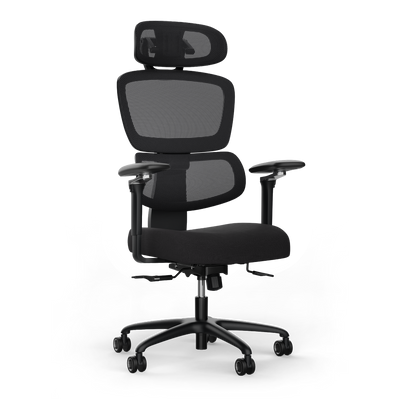
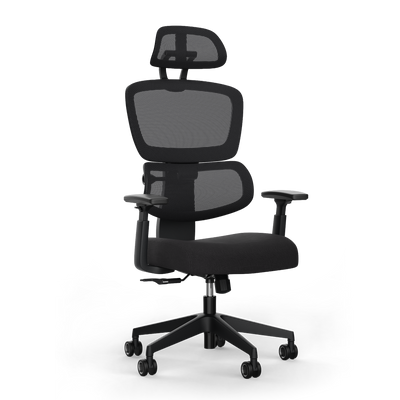
The office chair directly affects how freely your legs can stand and how evenly your weight is distributed.
These points are important:
- Adjust seat height appropriately: Your feet should have full contact with the floor.
- Use the seat surface properly: You shouldn’t hang on the front edge.
- Use the backrest: It should support you, not just be there.
- Armrests not too high: Otherwise, you raise your shoulders and shift in the seat.
If your feet don’t reach the floor properly, a footrest is often useful. This is not a small detail. Without stable contact below, the body seeks support through compensatory postures.
The desk must fit the sitting position
Even a good chair only helps to a limited extent if the desk is too high or too low. Then you raise your shoulders, lean your upper body forward, or slide your pelvis backward. Such chain reactions often end with pressure in the leg.
Check your desk with a simple glance:
| Element | How to tell if it fits |
|---|---|
| Table height | Forearms can rest comfortably |
| Monitor position | You don’t have to keep your head lowered constantly |
| Legroom | Nothing presses on knees or thighs |
| Foot area | Both feet find a stable place |
Why dynamic working is so effective
The real enemy is not just bad sitting. It is rigid sitting. Even a proper position becomes problematic if you hold it for too long.
This is the great advantage of a workspace that allows switching. When you can alternate between sitting and standing, you reduce static strain. You change pressure points, activate your muscles, and relieve your nerves more.
This is also why an electrically height-adjustable desk often achieves more in many setups than small individual corrections. It makes position changes easy in everyday life. A model like the Deskspace PRO is a practical option among several if you want to design your workspace for regular switching between sitting and standing phases.
Accessories are not just extras
Often the solution lies in small additions, not just the main furniture.
These include:
- Footrests if the desk-chair combination otherwise doesn’t fit
- Monitor risers so you don’t slump
- Standing stools or movable seating options if you want to reduce static sitting
If you want to systematically check your setup, this guide on setting up an ergonomic workspace will help you.
The best workspace does not force you into a perfect posture. It enables you to have many good postures in rotation.
This is the crucial point. Your body does not need a rigid ideal position for hours. It needs an environment where changes are possible and comfortable. This is exactly how the likelihood of your left leg falling asleep repeatedly decreases.
Summary and your next steps
If your left leg falls asleep, this is often a signal of too much pressure, too little movement, and an unfavorable sitting routine. Usually, it is temporary. However, you should not ignore it.
The most important points are clear:
- Understand the cause: Tingling and numbness often result from pressure on nerves due to poor posture.
- React immediately: Change position, stand up, walk briefly.
- Watch for warning signs: Persistent numbness, weakness, or additional pain should be medically evaluated.
- Change your habits: Sit less asymmetrically, change positions more often.
- Check your setup: Chair, desk, and foot contact influence your posture more than you might notice in daily life.
The key difference does not lie in a single exercise. It lies in your system of posture, movement, and workspace design.
If you take only one step today, make it this one. Look at your workspace from a bit of distance. Are you sitting stable, symmetrical, and without compensating posture? Or has your body long been silently compensating?
If you want to specifically improve your workspace, you will find ergonomic solutions for sit-stand workstations, chairs, and suitable accessories at DESKSPACE that make posture changes in everyday life more practical.


