

Round Back Exercises – Achieve an Upright Posture with Targeted Training

Are you sitting at your desk all day and noticing that your posture is slouching more and more? No wonder: Anyone who has an office job and sits in front of a computer for eight hours or more daily is unfortunately among the main risk group for rounded back. A rounded back (medically hyperkyphosis, colloquially also "hunchback" or "dowager's hump") often develops gradually due to poor posture in everyday life. The good news: just a few minutes of training per day with the right exercises can help to train away this unsightly and often painful poor posture. In this article, you will learn how a rounded back develops, what complaints it causes, and, most importantly, which stretching exercises and strengthening exercises you can use to effectively improve it. We also give tips on how you can counteract a rounded back in the office with ergonomic furniture – such as a suitable chair or a height-adjustable desk.
What is a Rounded Back (Hyperkyphosis)?
A rounded back refers to an excessively outward curvature of the thoracic spine. A certain curvature backward is natural – the spine has a double S-shape with a slight kyphosis in the upper back and a lordosis (inward curve) in the lower back. However, hyperkyphosis is when the backward curvature of the thoracic spine goes beyond the normal range. Orthopedists often measure this with the Cobb angle on X-rays. As a rough guideline: up to about 45° of curvature is still considered normal; beyond that, it is pathological hyperkyphosis – i.e., a rounded back. Conversely, an excessively inwardly curved lumbar spine is called hyperlordosis (swayback).
In the past, a pronounced rounded back was mainly seen in older people, but now many young people are also affected. In most cases, it is a postural rounded back: Decades of poor posture and one-sided strain lead to the thoracic spine curving further and further backward. In most cases, a rounded back simply develops due to lack of exercise and poor posture – such as constant sitting with shoulders pulled forward – not due to structural diseases. The body adapts to the posture we spend most of our time in. For example, if we sit hunched over a keyboard or smartphone for hours every day, this shortens certain muscles and weakens others over time. Typically, with a rounded back, the muscles in the upper back are too weak, while the chest and shoulder area are shortened and tense – the shoulders pull forward and the head moves forward "vulture-like". This muscular imbalance of weakened back muscles and shortened pectoral muscles promotes a forward-sloping, rounded posture.
Difference between a pronounced rounded back (left) and an upright, physiological posture (right). In the hunched posture, the head and shoulders are pushed forward, the thoracic spine is severely curved, and often there is also a swayback in the lower back.
Of course, medical causes can also be behind hyperkyphosis. Congenital deformities or diseases of the spine can lead to a rounded back at a young age – for example, Scheuermann's disease (a growth disorder of the vertebrae) or ankylosing spondylitis (a rheumatic inflammation of the spine). Likewise, osteoporosis (bone loss that promotes vertebral fractures) or spinal injuries in old age can cause a dowager's hump. Such factors are hardly influenceable. In most cases, however, the cause is not a disease, but our lifestyle – especially prolonged sitting in poor posture and lack of strengthening exercise. Even from a young age, lack of exercise and habitual poor posture promote the development of a rounded back later in life. This is also referred to as a postural rounded back, i.e., hyperkyphosis caused by posture.
Typical Symptoms and Consequences of a Rounded Back
A slight rounded back often initially causes no pain, apart from the visual change (shoulders sloping forward, head pushed forward) it is hardly noticed by those affected. Over time, however, poor posture can lead to a variety of complaints. Typical symptoms of a more pronounced rounded back include:
-
Back pain in the upper back and a feeling of stiffness in the thoracic spine area
-
Tension in the neck and shoulder area
-
Limitations in mobility, e.g., when bending backward, bending down, or twisting the upper body sideways
-
In severe cases: Impairment of breathing, because the curvature constricts the rib cage
There is often also a psychological component: The hunched posture affects self-confidence and vice versa. Many affected people find their "hump" disturbing or are ashamed of it. Fortunately, in many cases, something can actively be done about posture-related kyphosis. In the next section, we will look at which exercises can improve your posture.
Exercises for Rounded Back: Stretching and Strengthening for Upright Posture
The most effective method to address a rounded back is to resolve the muscular imbalance. This means: specifically loosening and stretching shortened muscles, and strengthening weakened muscles. Specifically, this primarily affects the chest, shoulder, and abdominal muscles (front), which are usually too tense and shortened, as well as the muscles of the upper back, which are too weak. With regular stretching exercises for the chest and front of the shoulders, and strengthening exercises for the upper back muscles, you can effectively counteract the rounded back posture. In the following, we present the best exercises that you can easily perform at home (and partly even in the office). You don't need a gym or expensive equipment – many exercises work with your own body weight and some space on a wall or floor. The most important thing is regularity: It is best to perform the exercises several times a week to achieve noticeable effects. Initial improvements in posture usually appear after a few weeks if you stick with it consistently.
Stretching Exercises for the Chest and Shoulder Area
First, we dedicate ourselves to stretching exercises to stretch out the shortened front (chest, shoulder, and neck muscles) again. This opens the rib cage, the shoulders can sink back, and the spine in the upper back straightens up. The following exercises can be easily integrated into everyday life – ideally, you should incorporate them daily or several times a week:
-
Chest Stretch in a Doorway: Stand in an open doorway or a corner. Position one forearm at a 90° angle against the frame, roughly at shoulder height or slightly above. Now slowly rotate your upper body away from the supported arm until you feel a distinct stretch in your chest and shoulder. Hold this position for about 20 seconds and continue to breathe calmly. Switch sides. Perform 3-4 repetitions per side. This stretching exercise effectively stretches the pectoral muscles and helps to open up forward-rolled shoulders again.
-
Cobra Stretch (from Yoga): Lie flat on your stomach. Your legs are extended behind you, tops of your feet on the floor. Place your hands under your shoulders. As you inhale, gently lift your upper body by partially straightening your arms – as if going into the "Cobra" pose. Your pelvis remains on the floor. Consciously pull your shoulder blades down and back, your upper body arches forward, and your gaze is straight ahead (do not tilt your head back). You should feel a pleasant stretch in your chest, abdominal muscles, and the front of your shoulders. Hold the position for 10–15 seconds, continue to breathe, then slowly lower. Repeat three times.
The Cobra exercise stretches the chest muscles and lengthens the spine. Make sure to pull your shoulders away from your ears. This exercise helps to straighten a rounded back by opening the shortened front.
-
Hanging Stretch (Decompressing): If you have a sturdy pull-up bar or another way to hang, use hanging to stretch your back. Grab the bar overhead with both hands and let yourself hang carefully, so your feet are free or only lightly on the floor. Feel your spine lengthen. This position not only stretches the chest and shoulder muscles but also lengthens the entire spine and relieves pressure on the intervertebral discs. Just 1 minute of hanging per day – all at once or divided – can improve posture in the long term. If you don't have a bar, you can alternatively hang from a door frame (carefully) or use the next exercise with the wall.
-
Wall Angels: Lean with your back flat against a wall. Your feet are a small distance in front of the wall, knees slightly bent, lower back and shoulders touching the wall. Now raise your arms to the side, elbows bent at about shoulder height, and place the backs of your hands against the wall (or as close to the wall as possible). Imagine you are drawing a snow angel on the wall: Guide your arms slowly upwards, extend them overhead, then back down again, without your elbows and hands losing contact with the wall. Repeat this gliding movement 10-15 times. The wall angel exercise mobilizes the shoulder blades and strengthens the muscles that pull the shoulder blades down and back. Make sure to keep your head straight (back of head against the wall) and avoid creating a swayback – slightly engage your abs so that your lumbar spine stays against the wall.
Strengthening Exercises for the Upper Back
After stretching the front, we now focus on strength training for the back muscles, especially in the upper back and shoulder blades. Strengthened muscles in this area automatically stabilize your spine in a more upright position. You will then have to consciously "pull your shoulders back" less often in everyday life, because your back will remain straight on its own thanks to the training. The following effective exercises particularly strengthen the muscles between the shoulder blades, the posterior shoulder area, and the deep back extensor muscles along the spine:
-
Y-Exercise (Standing Y): Stand upright, feet about hip-width apart. Raise your outstretched arms diagonally upwards so that your body forms a "Y" shape. Now consciously pull your shoulders down (away from your ears). Next, move your arms slightly backward by squeezing your shoulder blades together – but keep your arms outstretched at an approximately 45° angle (not completely sideways down). Hold this position for 5–10 seconds and feel the tension in your upper back. Then release and repeat. Do 3 sets with about 10 seconds hold time each. The Y-exercise primarily strengthens the trapezius and rhomboid muscles between the shoulder blades and promotes a proud, upright posture.
Stand upright, arms up like a Y – then squeeze shoulder blades together at the back. This exercise strengthens the upper back muscles and trains an upright posture.
-
Reverse Plank (Active Shoulder Bridge): Sit on the floor and support yourself with your hands behind your body (fingertips pointing forward). Place your feet about hip-width apart. Now lift your pelvis until your upper body and thighs form a straight line – like an inverted bridge, with only your hands and feet on the floor. Push yourself upwards from your shoulders, engaging your glutes. Hold this top position for about 5–10 seconds, then slowly lower again. Repeat at least 5 times. This exercise not only strengthens the upper back and shoulders but also the lower back, glutes, and hamstrings. A strong posterior chain helps to counteract a rounded back and at the same time improve an existing swayback, as the gluteal muscles and back extensors are strengthened.
-
Seated Rowing (with Resistance Band): If you have a resistance band, you can use it to do a rowing exercise that excellently strengthens the posterior muscles. Sit upright on the floor or a chair. Loop the band around your feet (if sitting on the floor) or secure it to a fixed object in front of you. Hold the ends of the band with outstretched arms in front of you at shoulder height. Now pull your hands towards your chest by guiding your elbows backward – as if you were rowing. Make sure to pull your shoulder blades down and back. Return to the starting position in a controlled manner. Do 3 sets of 15 repetitions. Important: Perform the movement using your back muscles and shoulders, not primarily your arms. Rowing is one of the most effective exercises for strengthening the upper back and scapular muscles, but it should be performed correctly (don't shrug your shoulders, avoid a rounded back during the pulling motion). With regular strength training of this kind, you increase the basic tone of your back muscles, so you automatically sit straighter in everyday life.
Tip: Perform these strengthening exercises about twice a week (or more often) and always combine them with the stretching exercises. Pay attention to clean execution to avoid incorrect loading. Initial improvements in posture often appear after 4–6 weeks of regular training – so have some patience and stick with it, even if initial successes are slow to appear. As soon as your back pain and tension decrease, that's a good sign – but you should continue to exercise, because longer breaks can lead to relapses.
Improving Posture in the Office: Ergonomic Tips Against Rounded Back
In addition to a targeted exercise program, it is crucial to ensure more movement and better posture in everyday life – especially if you spend most of your day in the office. Poor posture that has become ingrained over years must be gradually reduced. This works best if you adapt your environment and habits. Here are a few tips on how to prevent a rounded back in your daily work life or promote an upright posture:
-
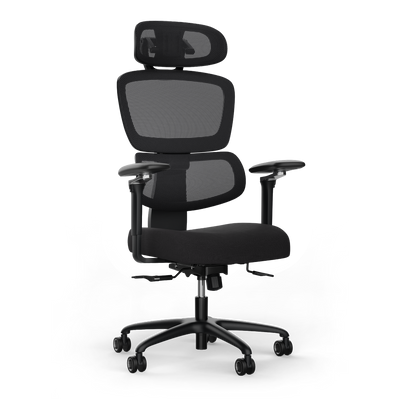
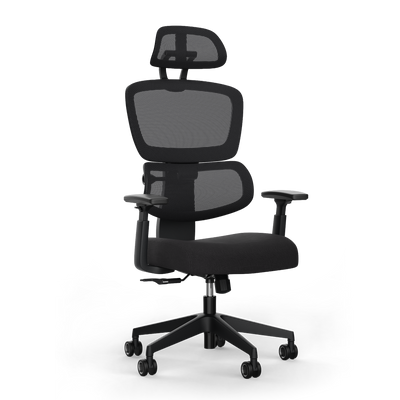
Ergonomically set up your workstation: The ideal workstation is one where you don't have to remain in the same posture all the time. Set up your desk so that you can sit upright – meaning the monitor at eye level (no constant looking down), keyboard and mouse close to your body so that your elbows are at approximately a 90° angle and your shoulders remain relaxed. An upright posture should "come easily" without you having to constantly strain. Ergonomic office chairs with adjustable height, backrest, and armrests support the physiological S-shape of the spine and prevent you from slouching. Ergonomic office furniture helps to perform tasks in an upright posture or to change position more frequently.
Recommendation: If you are looking for a high-quality ergonomic office chair, check out the ergonomic office chairs from Deskspace – they optimally support your natural spine shape and can be individually adjusted.
Equally useful: a height-adjustable desk that allows you to switch between sitting and standing. This relieves strain on the spine, prevents poor posture, and brings more movement into your workday – an important step to counteract a rounded back in the long term.
-
Change sitting position frequently: Avoid sitting in the same bent posture for hours. It is best to regularly alternate between sitting and standing – a height-adjustable desk is suitable for this, allowing you to work standing for periods. This change alone relieves the spine and promotes better posture. If standing work is not possible, at least use different sitting positions: sometimes lean upright, sometimes move forward to the edge of the chair, possibly sit on a stability ball or a stool without a backrest in between to activate your postural muscles (dynamic sitting). Modern active office chairs, for example, allow movement in all directions and thus keep the back muscles active. it is crucial to ensure more movement and better posture in everyday life – especially if you spend most of your day in the office. Poor posture that has become ingrained over years must be gradually reduced. This works best if you adapt your environment and habits. Here are a few tips on how to prevent a rounded back in your daily work life or promote an upright posture:
-
Ergonomically set up your workstation: The ideal workstation is one where you don't have to remain in the same posture all the time. Set up your desk so that you can sit upright – meaning the monitor at eye level (no constant looking down), keyboard and mouse close to your body so that your elbows are at approximately a 90° angle and your shoulders remain relaxed. An upright posture should "come easily" without you having to constantly strain. Ergonomic office chairs with adjustable height, backrest, and armrests support the physiological S-shape of the spine and prevent you from slouching. Ergonomic office furniture helps to perform tasks in an upright posture or to change position more frequently.
-
Change sitting position frequently: Avoid sitting in the same bent posture for hours. It is best to regularly alternate between sitting and standing – a height-adjustable desk is suitable for this, allowing you to work standing for periods. This change alone relieves the spine and promotes better posture. If standing work is not possible, at least use different sitting positions: sometimes lean upright, sometimes move forward to the edge of the chair, possibly sit on a stability ball or a stool without a backrest in between to activate your postural muscles (dynamic sitting). Modern active office chairs, for example, allow movement in all directions and thus keep the back muscles active.
-
Take active breaks: In most cases, a rounded back results from prolonged sitting – therefore, movement is key to counteracting it. Stand up briefly at least once an hour (preferably every 20-30 minutes). Stretch, circle your arms, take a few steps – all of this breaks up the rigid posture. Even 2-3 minutes of movement every half hour can make a big difference. You can also do small exercises at your desk, such as squeezing your shoulder blades together, stretching your neck, or stretching your upper back against the wall while standing (like the wall angel above). Such micro-breaks help prevent tension and keep the spine flexible.
-
Active Lifestyle Outside the Office: Use your free time to counteract the one-sided strain. Sports and plenty of daily exercise strengthen your back and improve posture. Particularly recommended are sports such as swimming, yoga or Pilates, climbing, or rowing – all these activities strengthen the back muscles and simultaneously stretch the front. Avoid extreme strain without training (e.g., unaccustomed heavy lifting with a rounded back) and try to consciously stand and walk straight in everyday life to train your posture awareness.
Keep at it – your back will thank you!
"Training away" a rounded back requires some patience and consistency, but it's worth it. Posture-related rounded backs can be significantly improved in most cases through targeted exercises and an adjustment of lifestyle. It's important that you gradually replace the poor posture habits you've acquired in everyday life with new, better ones – regular training, an active office routine, and ergonomic aids go hand in hand here. Remember: what has crept in over years won't disappear overnight. But with every stretching exercise, every strengthened muscle, and every small posture change, you get closer to your upright target posture. Your upper back will be strengthened, your thoracic spine will become more mobile again, and your entire posture will be more upright and healthier. Back pain and tension can thus be relieved or prevented entirely.
So, keep at it and pay attention to your body – it will thank you with less pain and a more confident demeanor. And don't forget: If you experience very severe symptoms or suspect a pathological condition (e.g., Scheuermann's disease or other spinal ailments), be sure to consult a doctor or physical therapist. For everyone else: With movement, conscious posture, and the right exercises, nothing stands in the way of a straight, healthy back! Good luck with your training and in the office – you will feel the difference.


