

Trapezius Muscle Inflammation Symptoms: Causes, Tips & Therapy

You've been sitting in front of the screen for hours. Your shoulders are hunched up. When you turn your head, there's a sharp pain between your neck and shoulder blade. Perhaps you're thinking of inflammation, or maybe just a harmless tension.
That's exactly where uncertainty often arises. Because trapezius muscle inflammation symptoms often feel like a mix of stiffness, pressure pain, headache, and radiating discomfort in everyday life. Especially with a lot of screen time, few position changes, and a forward head posture, the trapezius muscle is often involved.
First and foremost, it's important to know: such symptoms are common and usually easy to classify. If you understand how the trapezius muscle signals distress, you can more quickly distinguish between typical muscle problems, trigger points, and warning signs.
Typical Symptoms of Trapezius Muscle Inflammation
In the office, the trapezius muscle often acts like a guy wire for the head and shoulder girdle. If you stare at the screen for a long time, operate the mouse far out, or unconsciously shrug your shoulders, this muscle is under constant strain. This is precisely why irritation often manifests not just as simple neck pain, but as a whole pattern of pressure, stiffness, and radiating discomfort.

Typical pain is at the transition from neck to shoulder or between the neck and shoulder blade. Many describe it as pulling, pressing, or sharp, stabbing pain. When palpated, the area often feels sensitive, almost like a bruise in the muscle. This is often accompanied by the feeling that the neck no longer turns freely and that every head movement meets some resistance.
How to recognize an irritated trapezius muscle
These symptoms are particularly indicative of irritation in the trapezius muscle:
- Pressure pain in the upper shoulder area
- Neck stiffness, especially after prolonged sitting
- Pain when turning or tilting the head
- Hardened or knotty areas in the muscle
- Feeling of tension between the neck and shoulder blade
- Restricted mobility in the shoulder girdle
A helpful comparison is muscle soreness after exercise. There, the muscle becomes sensitive for a short time and then calms down again. With an irritated trapezius muscle, however, the symptoms often appear precisely in situations that recur constantly in everyday work, such as prolonged mouse work, talking on the phone without a headset, or a rigid screen posture.
Practical classification: If you can trigger the pain by pressing on a specific spot and it changes with head movements, this often indicates muscular involvement.
Why the pain often radiates to other areas
This is where a lot of confusion arises. An irritated trapezius muscle can send symptoms to other regions, even though the actual cause lies in the neck and shoulder area. Such trigger points function a bit like a light switch in the wrong place. You press on the muscle higher up, and the pain appears at the back of the head, at the temple, or on the side of the neck.
Symptoms described include headaches at the back of the head or temple, lateral neck pain, jaw pain, and radiation into the shoulder, back, or arm, as explained on the specialist page about trigger points in the trapezius. Tingling can also occur. This does not automatically mean that a nerve is seriously damaged. However, it shows that you should not only assess symptoms by their location.
If you are unsure whether the muscle or the cervical spine is involved, a look at typical connections with cervical spine syndrome and its typical symptoms can help.
Symptoms and their common triggers at a glance
| Symptom | Possible Trigger in Office Work |
|---|---|
| Pressure pain in the upper trapezius muscle | Long static sitting posture |
| Stiff neck | Few changes in position, rigid work at the monitor |
| Pain when turning head | Hardened muscle areas after prolonged sitting |
| Headache at the back of the head or temple | Prolonged staring at the screen, shrugged shoulders |
| Jaw pain or lateral neck pain | Tension, clenching, constant shoulder and neck tension |
| Radiation into shoulder or arm | Trigger points and persistent overuse |
| Tingling or numbness | Irritation in the muscular environment, should be clarified if persistent |
Many sufferers initially only treat the painful area. This can provide temporary relief. However, in the long term, the muscle usually only calms down when the trigger is also removed. In the office, this is often not a single wrong movement, but a workplace situation that keeps the trapezius muscle under tension for hours. This is precisely why stretching alone is often not enough.
Common causes of your neck and shoulder pain
In the office, pain rarely comes out of nowhere. It's usually the sum of posture, habit, and strain. The trapezius muscle reacts particularly sensitively to situations where your head moves forward and your shoulders slump inward.

Poor Posture in Everyday Work Life
A classic pattern is Upper Cross Syndrome. In German-language practical sources, it is described by a forward head posture, protracted shoulders, and pain in the neck, upper back, and between the shoulder blades. The same source also provides a clear measurement: medical professionals speak of a hyperkyphosis requiring treatment when the curvature of the thoracic spine exceeds 40 degrees, as described in Upper Cross Syndrome and Hyperkyphosis.
In the office, this often looks like this:
- Monitor too low. You push your head forward.
- Laptop without elevation. The upper back rounds.
- Mouse too far out. The shoulder remains constantly raised.
- No backrest use. The shoulder girdle works non-stop.
Monotonous Strain Instead of One-Time Overload
Many people wait for that one wrong lifting moment. In the office, it's usually different. The problem isn't the single stimulus, but the repetition. The constant reach for the mouse, rigid typing, lack of breaks, and little change in sitting position keep the muscle in a permanent working posture.
The trapezius muscle often reacts not to peak forces, but to prolonged, consistent strain.
Stress as an amplifier
Psychological pressure often manifests physically. Many unconsciously shrug their shoulders, clench their jaw, or breathe shallowly. This doesn't make symptoms imaginary. It often makes them more persistent.
So, if you feel more neck tension during heavy workloads, deadlines, and long video calls, there's a plausible connection. The workplace then isn't just a backdrop, but part of the cause.
Immediate relief for acute trapezius muscle pain
Acute symptoms first need relief. Not complete rest, but sensible calming of the area. The goal is to reduce tension and enable movement again.

What can help you in the short term
- Apply heat. A hot water bottle or a cherry stone pillow on the shoulder and neck can pleasantly relax the area.
- Immediately change your working position. Move the screen higher, rest your forearm, and consciously lower your shoulders.
- Gentle movement instead of fixation. Light head movements and shoulder circles are often more helpful than rigid immobility.
- Reduce irritation. Carrying a bag on the painful side, long phone calls without a headset, or intensive strength training often worsen the situation.
Three simple exercises at your desk
Lateral Neck Stretch
Sit upright. Let your right shoulder relax down. Slowly tilt your head to the left side until you feel a gentle stretch on the right side of your neck. Hold briefly, breathe calmly, then switch sides.
Shoulder Blade Back and Down
Gently pull both shoulder blades back and down. Do not arch your lower back. Hold the position briefly and release. The movement is small but precise.
Slight Chin Tuck
Don't push your head down. Pull your chin straight back, as if you were making a double chin. This brings your head back over your torso from a forward-jutting position.
If an exercise significantly worsens the pain or causes dizziness, stop it and have the cause investigated.
Self-massage for trigger points
A fascia ball against the wall can help. Lean your upper shoulder area against the ball and find a sensitive spot. Maintain controlled pressure and breathe calmly. Don't frantically roll over the entire area. For trigger points, targeted, measured pressure is usually more effective than a lot of movement.
Good everyday complements are simple strategies for a stiff neck in the office.
Why stretching alone is often not enough
Many treat the upper trapezius muscle only as a muscle that needs to be relaxed. This is often insufficient. A professionally divergent view emphasizes that the upper trapezius, when painful, is often not simply too strong or tense, but rather functionally improperly loaded and rather too weak. In such cases, targeted strengthening can be more effective than mere stretching and relaxation exercises, as described in the classification of trapezius trigger points and targeted strengthening.
That sounds contradictory at first. A muscle can feel tight yet work poorly. That's precisely why short-term relief often helps, but long-term improvement usually comes from a combination of mobilization, load management, and controlled strengthening.
When you should seek medical advice
Many complaints in the trapezius muscle area are uncomfortable, but not dangerous. Nevertheless, there are situations in which you should not wait.
Have your symptoms clarified by a doctor if any of the following apply:
- Suddenly very severe pain without recognizable cause occurs
- Tingling or numbness does not quickly subside or worsens
- Weakness in arm or hand develops
- Pain began after a fall, accident, or jerky strain
- Fever, dizziness, or very severe headaches occur simultaneously
- Symptoms persist or worsen despite adjusting daily routine and careful self-help
It is particularly important to clarify when a muscular pain pattern turns into a neurological impression. That is, when sensation, strength, or coordination are affected.
Waiting is often okay for typical tension. Waiting is not a good idea if nerve signs, an accident, or significant general symptoms are present.
Lasting Improvement Through an Ergonomic Workplace
You might recognize this from everyday office life. Your neck still feels okay in the morning, but after three hours on the laptop, there's a pull between your neck and shoulder blade, and by evening, your upper trapezius muscle is stiff and irritated again. It quickly seems as if the muscle alone is the problem. However, the actual cause often lies in the daily work environment.

Especially with recurring complaints, an important thought helps: pain in the trapezius muscle does not automatically mean that the muscle is simply "working too much". Often the problem is more complex. An unfavorable viewing angle to the monitor, shrugged shoulders at the mouse, lack of forearm support, or sitting in the same position for hours can repeatedly irritate the area. The muscle then reacts like a team member who never gets a break and constantly has to do small compensatory work.
Therefore, pure immediate relief often provides only limited relief in the long run. Heat, stretching, or massage can soothe. However, if your workplace pushes you back into the same poor posture every day, the irritation will always build up again.
What really relieves the trapezius muscle at the workplace
| Element | What it helps against |
|---|---|
| Height-adjustable desk | Against prolonged static sitting |
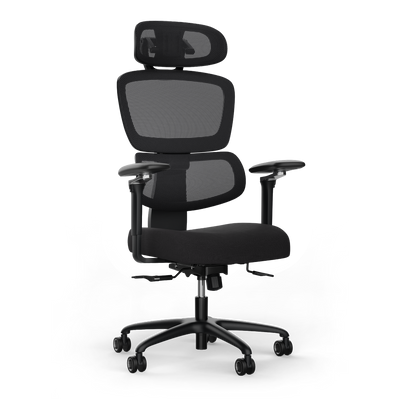
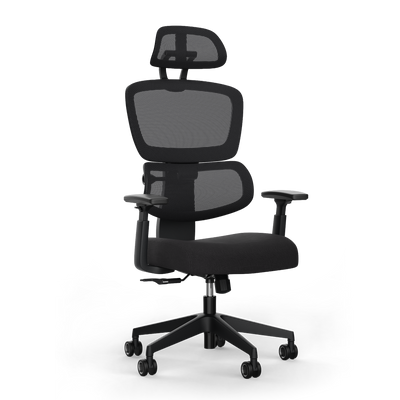
| Ergonomic chair | Against slumping and rounded back |
| Monitor arm or monitor riser | Against forward head posture and looking down |
| External keyboard and mouse | Against shrugged shoulders when using a laptop |
| Regular changes of position | Against monotonous continuous strain |
The crucial point is not the "perfect" posture for eight hours. The body likes variety. Good ergonomics provide you with a neutral starting position and make position changes easier. This is exactly what reduces the constant strain in the neck and shoulder area.
How to set up your workstation effectively
- Monitor at eye level. Your gaze should be straight ahead or slightly downwards. This way, your head doesn't have to constantly move forward.
- Keyboard and mouse close to your body. This keeps your shoulders more relaxed and your arms don't have to be constantly held up.
- Rest your forearms as much as possible. This takes the load off the upper trapezius muscle, especially during long periods of mouse work.
- Adjust seat height so your feet are stable. Secure footing helps the entire upper body work more calmly and upright.
- Actually use the backrest. The chair should support you, not just stand behind you.
- Only use a laptop with an external keyboard and mouse. Otherwise, the device almost automatically forces you into a lowered gaze and raised shoulders.
- Switch between sitting, standing, and short walks multiple times a day. Changing positions is often more effective than searching for a single ideal position.
If you want to check your setup point by point, you can find a practical guide here on setting up an ergonomic workstation.
An ergonomic workstation does not replace treatment if the muscle is acutely irritated. However, it reduces the irritation that constantly triggers symptoms in everyday office life. This is usually the difference between short-term relief and real, lasting improvement.
Summary and Key Steps
Trapezius muscle complaints are very common in everyday office life. Typical symptoms include pressure pain, stiffness, pain during movement, and, in the case of trigger points, radiating symptoms into the head, jaw, shoulder, or arm. Precisely for this reason, a clear classification is important.
The most important steps are clear:
- Acute relief. Warmth, gentle movement, and careful self-massage can relieve the area.
- Don't just stretch. A painful muscle is not automatically just tense. Often, it also needs targeted strengthening and better load management later on.
- Correct the workstation. If posture and setup provoke the symptoms daily, the pain will always return.
If warning signs such as persistent tingling, weakness, very severe pain, or symptoms after an accident occur, you need medical clarification.
However, the most important practical point is: You are not at the mercy of the pain. Those who recognize symptoms, reduce triggers in everyday work, and adapt their workstation sensibly often lay the foundation for permanently more relaxed work.
If you want to set up your workstation so that your neck and shoulders experience less strain in everyday life, you will find ergonomic solutions for home office and office at DESKSPACE. This includes height-adjustable desks, ergonomic chairs, and suitable accessories for a workstation that better supports posture, movement, and relaxed work.


