

Solid Wood Desk Tops: The Guide to Style, Stability, and Durability

A solid wood desk top is more than just a work surface. It's an investment in durability, stability, and natural aesthetics that elevates your work environment. Unlike veneered tops, a solid wood top consists entirely of real wood, making each piece unique with its own grain.
Why a Solid Wood Top is the Foundation for Your Setup
A high-quality work surface is the foundation for productivity. Coated particle boards are often an inexpensive entry-level solution, but they quickly reach their limits with intensive use. This is where a solid wood desk top shows its strengths, which go beyond mere aesthetics.
Stability that Makes a Difference
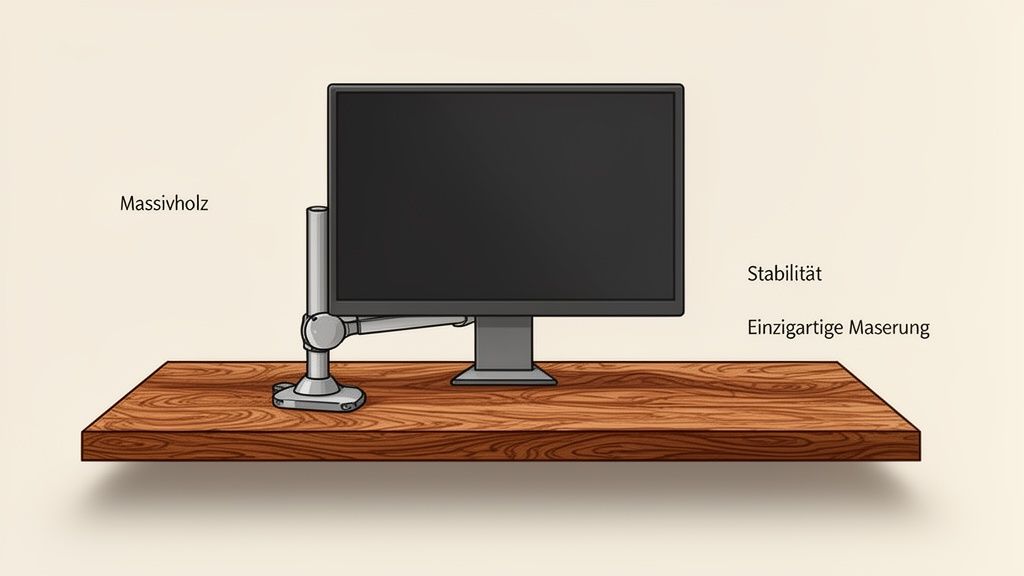
Solid wood possesses a natural density and structure that makes it robust. This characteristic is valuable for setups with heavy monitors, monitor arms, and a lot of equipment.
A solid wood top does not sag even under heavy loads. It absorbs vibrations more effectively than lighter materials. The result is a quiet and stable work environment where nothing wobbles. This construction is a prerequisite for a height-adjustable desk, whose frame requires a heavy base. You can learn more about this combination in our article about the height-adjustable solid wood desk.
Durability and Value
One advantage of solid wood is its repairability. Small scratches or dents can be sanded down and re-oiled or waxed, after which the top looks new again.
Unlike veneered tops, a solid wood top gains character over time. It develops a personal patina and will accompany you for many years.
This durability makes solid wood a sustainable choice. The home office furniture market is projected to reach an estimated 4.05 billion euros in 2025. Durable materials like solid wood play a central role in this.
A solid wood top is robust and versatile. It fits into the concept of multifunctional furniture and helps you design your setup flexibly. It is the reliable basis for a professional workspace.
Choosing the Right Wood Type for Your Needs
The choice of wood shapes the appearance of your solid wood desk top. It also determines the feel, robustness, and how it ages. Each wood has its own character that influences your work environment.
Consider what is important to you. Do you need a resilient surface for heavy equipment? Or is a particular aesthetic a priority? We present the most popular wood types for desk tops to help you make your decision.
Oak: The Robust and Timeless Choice
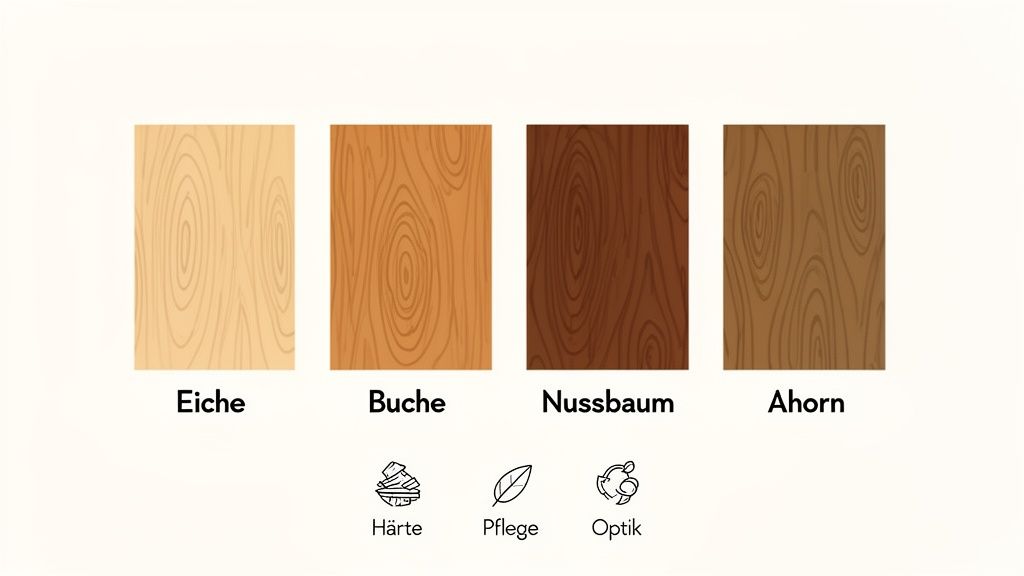
Oak wood is a classic for high-quality furniture. It is one of the hardest native woods and is extremely resistant to scratches and dents. An oak desk top is an investment for long-term use.
Its striking, calm grain suits almost any interior style. In terms of color, oak ranges from a light yellowish-brown to a rich medium-brown. If you are looking for a stable and durable work surface for intensive use, oak is the right choice.
Beech: Light and Resilient
Beech wood is also very hard and robust. It is an excellent choice for a desk top that needs to withstand a lot. Typical for beech is its light appearance and fine, even grain.
These properties give the top a calm and modern look. A beech table top can visually enlarge small rooms and suits minimalist setups. Beech darkens over time with sun exposure, giving it a warm, honey-colored tone.
Walnut: Elegant and Expressive
Walnut stands for elegance. Its characteristic dark brown color and lively grain make each top unique. Walnut is a medium-heavy hardwood and offers very good stability.
Due to its expressive appearance, walnut is popular with users who value an aesthetic setup. The dark surface creates a contrast to modern technology such as monitors and keyboards.
Choosing the wood type is a balance between function and personal style. Hardwoods like oak offer maximum stability, while woods like walnut focus on aesthetics.
Maple: Light and Elegant
Maple is one of the lightest native woods. The color palette ranges from almost white to a delicate yellow tone. Its grain is very subtle and even, giving the surface a smooth and elegant appearance.
Maple is hard, elastic, and abrasion-resistant, making it a durable option for daily use. If you are looking for a bright, friendly, and resilient work surface, a solid maple desk top is an excellent alternative to beech.
Comparison of the Most Common Wood Types for Desk Tops
This table compares the four most popular wood types, showing the differences in hardness, grain, color, and care to help you make your selection.
| Wood Type | Hardness (Brinell) | Grain & Color | Maintenance Effort | Ideal For |
|---|---|---|---|---|
| Oak | approx. 34–37 N/mm² | Striking, medium brown | Low | Intensive use, classic & modern setups |
| Beech | approx. 34 N/mm² | Fine, even, light | Low | Minimalist setups, families with children |
| Walnut | approx. 26–28 N/mm² | Lively, dark brown | Medium | Representative offices, design enthusiasts |
| Maple | approx. 30 N/mm² | Subtle, very light | Low | Bright, friendly workplaces, elegant look |
Each wood type has specific strengths. Your choice depends on what you expect from your desk. Should it be a robust workhorse, an elegant design statement, or a bright companion for every day?
Finding the Right Dimensions and Edges for Ergonomics and Aesthetics
The size and shape of your tabletop are crucial for productive work, determining the space for monitors and documents. The ideal dimensions depend on your room and working style.
First, find the right top size. A depth of at least 70 to 80 cm is important for a healthy distance from the monitor. For width, it depends on your space requirements. Widths between 140 cm and 180 cm offer sufficient surface area for most setups. Check out our selection of tabletops to get a feel for different sizes.
Why the Thickness of the Top Matters
The thickness of a solid wood desk top affects its stability and load-bearing capacity. A thicker top is more dimensionally stable and will not sag even under the weight of heavy monitors.
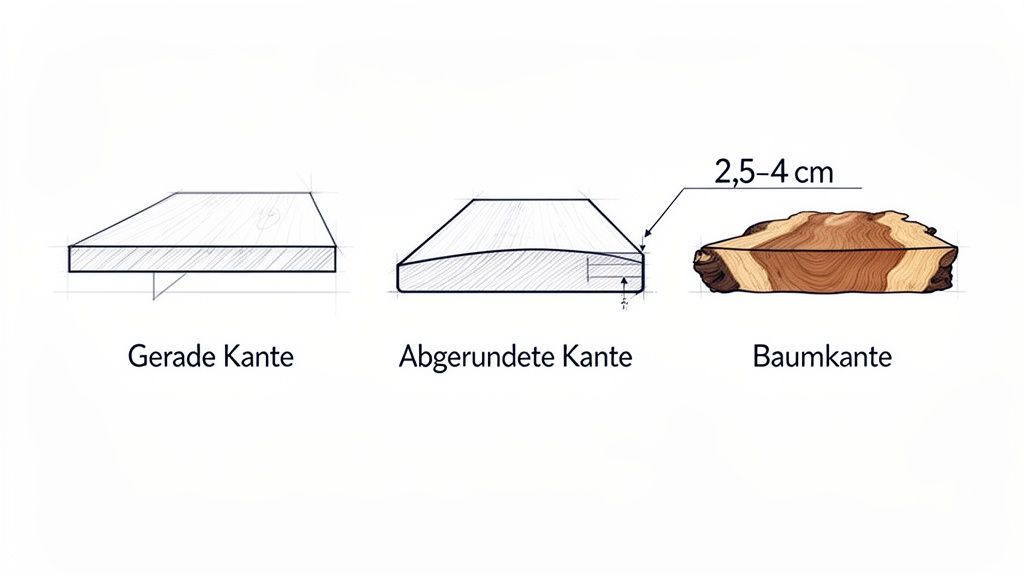
Common top thicknesses range between 2.5 cm and 4 cm. A 2.5 cm thick top is sufficient for many standard setups. A 4 cm thick top offers maximum robustness and is the choice for users with heavy equipment who expect absolute stability.
A thicker top distributes weight more evenly on the desk frame, increasing load capacity and minimizing vibrations.
Note that a thicker top weighs more. Ensure your desk frame is designed for the additional weight. High-quality frames are prepared for combination with solid tops.
Edge Profiles for Comfort and Design
The edge profile of your desk top shapes both aesthetics and ergonomics. There are various profiles with their own strengths.
- Straight Edge: The classic choice for a modern, minimalist look. It is understated and fits almost any style.
- Rounded Edge: Slightly rounded edges offer an ergonomic advantage, preventing pressure marks on the forearms during long periods of work.
- Live Edge (Tree Edge): A live edge follows the natural growth of the tree, making each edge unique. It emphasizes the organic beauty of the wood.
Choosing the edge profile is a personal decision that combines comfort and style. A rounded edge offers an ergonomic advantage, while a live edge makes your desk a unique piece of furniture.
Surface Treatment: Protecting Your Tabletop
The surface treatment is the protective shield of your solid wood top. It determines its appearance, feel, and maintenance effort, defining how well the wood is protected against daily wear and tear. The most common methods are oiling and varnishing, with very different results.
The choice depends on your personal preferences. There is no universally better solution, only the one that suits you and your workplace.
Oiled Surfaces for a Natural Wood Feel
An oiled surface is ideal if you prefer the authentic feel of wood. The oil penetrates deep into the pores, protecting the wood from within. The natural grain is emphasized, and the wood can breathe.
An oiled surface maintains direct contact with the wood. It feels warm, regulates moisture, and contributes to a pleasant indoor climate.
This protection is not as impervious to liquids as a varnish layer. Wipe up spills quickly to prevent stains. The advantage lies in easy repair:
- Local Repair: Small scratches can be easily sanded with fine sandpaper and re-oiled. The repaired area blends seamlessly into the surface.
- Regular Maintenance: To maintain protection, the top needs a refresh with care oil every one to two years, depending on use.
An oiled top is ideal if you appreciate the tactile quality of real wood and are willing to put in minimal maintenance effort.
Varnished Surfaces for Maximum Protection
Varnishing completely seals the wood, forming a robust, closed protective layer on the surface. This layer makes the wood resistant to liquids, dirt, and mechanical stress.
This sealing makes a varnished solid wood desk top very easy to clean. Dust can be removed with a damp cloth. The feel is different from oiled wood, as you touch the varnish layer, not the wood itself.
Repairing a varnished surface is more complicated. A deep scratch cannot be easily fixed. Usually, the entire top must be sanded down and re-varnished.
Varnished tops are the right choice if you are looking for a maximally low-maintenance and robust surface and accept a less natural feel. They are suitable for high-wear workplaces.
Securely Mounting Your Solid Wood Top on a Frame
A solid wood desk top is heavy. Correct assembly and a firm connection to the desk frame are crucial for safety and stability. Careless fastening can damage the top and make the desk unstable.
Step-by-Step for Stable Assembly
Assembly is easy if you follow a few points. Take your time and work carefully.
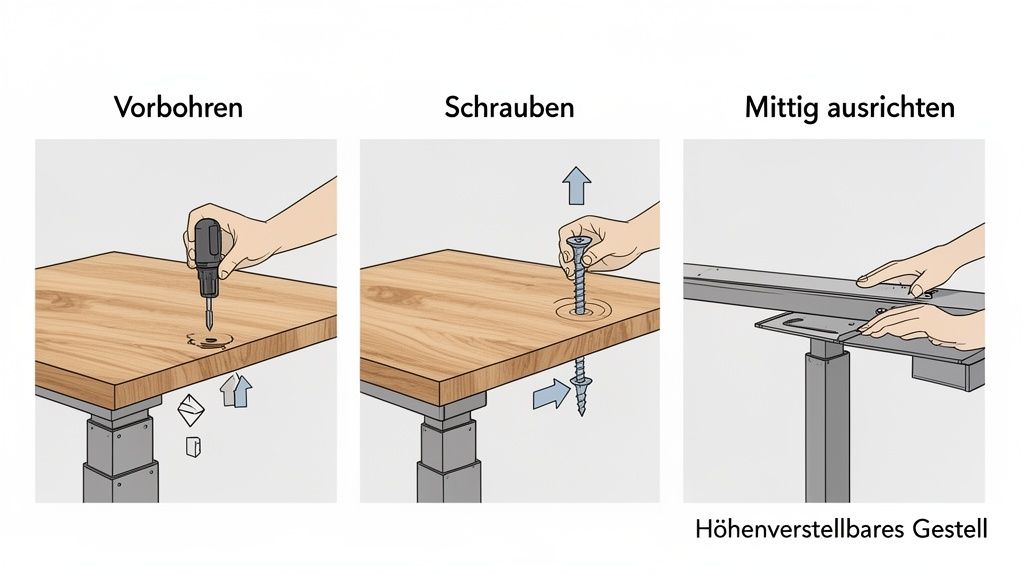
- Position the top: Place the tabletop upside down on a soft surface. A blanket protects the surface from scratches.
- Align the frame: Place the inverted desk frame centrally on the top. Measure the distances to all edges with a tape measure. This ensures even weight distribution.
- Mark drill holes: Mark the screw positions with a pencil through the mounting holes of the frame.
Pre-drilling is the most important step. It protects your wood from cracking. Solid wood can split under the pressure of a screw if no hole has been pre-drilled.
The Right Tools and Materials Make the Difference
Choosing suitable screws and the correct procedure are crucial for a secure hold.
- Pre-drilling: Choose a wood drill bit whose diameter is slightly smaller than the core diameter of your screws. Drill only deep enough for the screw to grip, but not to pass through the top.
- Select screws: Use appropriate wood screws. The length is crucial. Screws should penetrate the wood to a maximum of two-thirds of the top's thickness. Screws that are too long will damage the work surface.
- Screw in: Tighten the screws firmly with a cordless drill. Do not overtighten them to avoid damaging the thread in the wood.
Compatibility between the top and frame is essential for stability, especially with height-adjustable models. Frames like those from DESKSPACE are designed for high load capacities and have wide support surfaces. Also, check the requirements for your height-adjustable electric desk frame to ensure proper function. Proper assembly ensures the longevity of your setup.
Care and Maintenance of Your Solid Wood Desk Top
A solid wood top requires some care to stay beautiful for years. Wood is a living natural material. With the right techniques, it remains robust for a long time.
The required care depends on the surface. An oiled surface has different needs than a varnished one. Both are easy to maintain.
The Daily Routine: Keeping Everything Clean
For daily cleaning, a dry or slightly damp cotton cloth is sufficient.
Do not use aggressive cleaners. Scouring milk, harsh chemicals, or alcohol-based cleaners attack the protective layer and can damage the wood.
Use clear water or a mild soap solution. Wipe up spills immediately to prevent liquids from soaking into the wood and leaving stains.
Long-Term Care for Your Wood
An oiled solid wood top occasionally needs a refresh. Apply a new layer of care oil every 12 to 24 months, depending on usage. This nourishes the wood, protects it from drying out, and makes the surface resistant.
Varnished tops are less demanding. Their surface is sealed and does not require regular re-treatment. Protect the varnish layer from deep scratches.
Repairing Small Blemishes Yourself
One advantage of real wood is its repairability. Small signs of wear can often be fixed yourself.
- For oiled tops: Carefully sand out light scratches with fine sandpaper (240 grit or finer) in the direction of the grain. Remove dust, apply a little care oil to the spot, let it soak in, and wipe it off.
- For light dents: Place a damp cloth over the dent and glide an iron over it on a low setting. The steam causes the compressed wood fibers to swell, often making the dent disappear.
With these steps, you ensure that your work surface remains flawless for a long time.
The Most Important Questions About Solid Wood Desk Tops
Before making a final decision, questions often arise. We have collected and answered the most common ones.
How load-bearing is a solid wood top?
The load-bearing capacity depends on the wood type and thickness. A 4 cm thick oak top on a stable frame can easily support 100 kg or more.
More crucial is often the maximum load capacity of the desk frame. Ensure that the total weight of the top and equipment does not exceed the lifting capacity of the frame.
Does a solid wood top warp over time?
Wood reacts to humidity. With high-quality tops, this is not a problem.
Carefully dried and multi-layered glued wood significantly minimizes this movement. This technique ensures excellent dimensional stability.
A consistent indoor climate without extreme fluctuations also helps to keep the top in shape.
Does every solid wood top fit every desk frame?
Not without restriction. The top size must match the frame manufacturer's recommendation. A top that is too large on a frame that is too small makes the desk unstable.
Check compatibility before purchasing. Flexible frames like those from DESKSPACE are designed for a wide range of top sizes, giving you more design freedom.
Are you ready to create the foundation for your perfect setup? Discover Deskspace's high-quality and durable workspace solutions.
Find your ideal desk now at deskspace.de


