

Finding the Right Seat Cushion for Back Pain

Are you wondering if a seat cushion can relieve your back pain? The answer is yes, if you choose the right cushion and use it correctly. An ergonomic seat cushion for back problems is not a miracle cure, but it is an effective tool that specifically reduces the strain on your lower spine and intervertebral discs.
How a seat cushion helps with back problems
Back pain restricts the quality of life for many people. The figures are clear. According to the Health Atlas for Germany, 26.2 million people in Germany suffer from medically documented back pain. A main cause is long periods of incorrect sitting.
A good seat cushion addresses precisely this. It is more than just a soft pad. It changes the biomechanics of your sitting and creates a stable foundation for a healthy posture.

The mechanical effect on your back
Your spine works like a chain. When you sit on a flat chair, your pelvis almost automatically tilts backwards. Your back becomes rounded. The chain buckles in the lower region. This compresses your intervertebral discs unevenly and tenses the surrounding muscles.
An ergonomic seat cushion interrupts this process. A wedge cushion in particular slightly raises the back of your pelvis. This small change has two major positive effects.
- Pelvic alignment: Your pelvis is gently tilted forwards. You leave the harmful hunched posture.
- Natural S-curve: Your spine automatically reassumes its healthy double S-shape.
A seat cushion changes the statics of your entire upper body. It corrects posture at the base, the pelvis, thereby relieving the sensitive lumbar spine and coccyx.
Immediate relief and long-term prevention
The more upright posture immediately takes pressure off the intervertebral discs and nerve pathways in the lower back. Many users experience immediate relief from their pain.
At the same time, it is an investment in your health. The improved posture actively prevents new tension and wear and tear. A good seat cushion for back problems is a quickly implementable and effective addition to any workplace. It helps you stay healthy and pain-free during hours of desk work.
An overview of the different types of seat cushions
Anyone looking for a seat cushion will find a large selection. Which one is right for you and your ailments? The choice depends heavily on shape and material. These factors determine whether a cushion improves your posture, distributes pressure, or activates your muscles.

Wedge cushions for posture correction
A wedge cushion has a slanted shape that rises towards the back. This design gently tilts your pelvis forward when sitting. Your spine then straightens and assumes its natural S-shape. This actively counteracts the typical hunched back at your desk.
- Active posture correction: It promotes an upright sitting position and unconsciously trains the back muscles.
- Ideal for: Anyone prone to poor posture and wanting to improve their sitting habits.
Memory foam cushions (viscoelastic foam)
Memory foam, also known as viscoelastic foam, reacts to your body heat and weight. It adapts precisely to your contours. This effect ensures that pressure is distributed evenly, thus preventing painful pressure points. After getting up, the material slowly returns to its original shape.
Gel seat cushions for pressure distribution
Gel cushions usually consist of a combination of foam and a gel layer. Gel distributes pressure optimally and has a cooling effect. It prevents individual areas such as the buttocks or thighs from being overloaded. This makes them ideal for people who sit for many hours at a time and are prone to pressure pain.
Coccyx cushion with cut-out
A coccyx cushion relieves your sensitive tailbone (coccyx). For this purpose, it has a U-shaped cut-out at the back. Due to this free space, the coccyx "floats" above the chair and is freed from any pressure. This is a great relief for bruises, injuries, or chronic coccyx pain.
Comparison of seat cushion types
This table shows the properties, advantages, and ideal applications of the most common types of seat cushions.
| Cushion Type | Material | Main Benefit | Ideal for |
|---|---|---|---|
| Wedge Cushion | Mostly firm foam | Actively corrects sitting posture | Frequent sitters with a tendency to hunch |
| Memory Foam Cushion | Viscoelastic foam | Adapts precisely to the body | Individual comfort and pressure relief |
| Gel Seat Cushion | Gel and foam | Optimal pressure distribution and cooling effect | Long, immobile sitting and pressure sensitivity |
| Coccyx Cushion | Foam with cut-out | Direct relief of the coccyx | Coccyx pain, after injuries |
Each type of cushion has its strengths. Choosing the right model is the first step to alleviating your back pain with a seat cushion. Consider your personal pain points and your daily sitting habits.
How to find the right seat cushion for your needs
Finding the right seat cushion is personal. There is no universal model that works for everyone. It's about finding a solution tailored to your discomfort, your body, and your chair.
The first step is to assess your situation. Once you know your needs, you can choose a seat cushion for back problems that will truly help you.
What matters when making your decision
Four main criteria will help you narrow down your selection.
-
Type and location of your back pain: Pain in the lower back (lumbar spine) requires different support than pain in the tailbone. For lumbar spine problems, a wedge cushion is often ideal because it straightens the pelvis. For tailbone pain, a cushion with a U-shaped cutout is necessary to relieve pressure on the area.
-
Your body weight: Your weight affects how deeply you sink into a cushion. Heavier individuals need firmer foam with a higher density. Only then will the cushion retain its supportive shape. Lighter individuals often benefit from softer material that adapts better.
-
Your chair: Measure the seat of your office chair or car seat beforehand. The cushion should fill the area well, but not protrude or slip. Also pay attention to the overall height. If the cushion makes you sit too high, the ergonomics of your workplace will no longer be correct.
-
Material and care: A breathable cover is important to prevent sweating. A removable and washable cover is necessary for hygiene reasons.
The effectiveness of a seat cushion stands or falls with its perfect fit. A cushion that is too soft, too small, or designed for the wrong type of discomfort can be ineffective or cause new problems.
Why the right choice is crucial
Back pain is the most common reason for sick leave in Germany. According to statistics on yakbett.de, it is responsible for 9 percent of all sick days. The main causes are often lack of exercise and unsuitable equipment at the workplace. Ergonomic aids such as the right seat cushion can have a preventative effect here.
A seat cushion is often only one component of the solution. Find out more about when a back cushion for the chair might be a better addition to support your lumbar spine.
By carefully weighing these criteria, you will make an informed decision. You will then not buy just any cushion, but a targeted tool that corrects your posture and can relieve your pain.
How to use your seat cushion correctly
You have purchased a seat cushion for back problems. Proper use is crucial for its full effect. Incorrect positioning can, in the worst case, promote new tension. You must not only place the cushion correctly but also adapt your entire sitting posture to it.

Correct position on the chair
Place the seat cushion flat on the seat of your chair. Push it all the way back until it touches the backrest. This way you use the entire surface. Then slide your bottom all the way back as well to make contact with the backrest.
A typical mistake is to place the cushion too far forward. Then you are only half sitting on it. This disturbs the balance and impairs the function of straightening the pelvis.
Depending on the type of cushion, there are special features for alignment. These details are crucial for correct biomechanical support.
- Wedge cushions: The higher side of the cushion belongs to the backrest. Only then will the inclination that tilts your pelvis forward and straightens your spine be created.
- Coccyx cushions: The U-shaped cut-out must face backwards. Your coccyx should float exactly above this free area to avoid pressure.
- Ergonomic cushions with contours: The pre-formed hollows for the thighs face forward. They help to keep your legs in a relaxed position.
Checklist: Are you really sitting correctly?
Once the cushion is in place, check your entire posture. The interaction between the cushion and your body posture ensures optimal relief.
- Feet: Place both feet firmly and flat on the floor. Your lower and upper legs should form an angle of about 90 degrees.
- Back: Lean back relaxed. Your lower back should be in contact with the backrest of your chair or an additional lumbar cushion.
- Shoulders: Let your shoulders relax. Don't pull them up to your ears. Your arms should rest relaxed on the armrests or the desk.
Take your time to internalize this position. If you use your cushion consistently and correctly, it can work optimally and relieve your back muscles.
Seat cushions as part of your ergonomic workspace
A seat cushion for back problems can improve your sitting posture, but it is not a panacea. For your back health, the entire environment must be right. Even the best cushion cannot alone compensate for the disadvantages of a bad chair or hours of rigid sitting.
The cushion is the specialist for the details of your sitting posture. It helps your pelvis into a healthy position and straightens the spine. But for a sustainably healthy back, movement is also necessary. This is where other ergonomic aids come into play.

The synergy of cushion, chair and table
The most effective strategy against back pain at the desk is the combination of three building blocks.
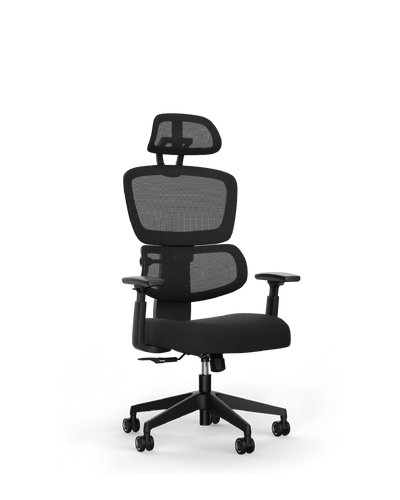
- Ergonomic office chair: It is the basis. With adjustment options for lumbar support, seat depth and armrests, it adapts to your body.
- Seat cushion: The cushion is the fine-tuning for your chair. It optimizes pressure distribution and corrects the pelvic position.
- Height-adjustable desk: It is the key to more dynamism. The change between sitting and standing relieves your spine and activates the muscles.
This trio creates a working environment that adapts to you. Your body is optimally supported in every posture.
A seat cushion perfects sitting. A height-adjustable desk ensures that you don't sit for too long. Together, they form a strong team against back pain.
How to coordinate everything correctly
For this system to work, the elements must be coordinated. The goal is a neutral, relaxed posture.
Start by setting up your office chair. Then place your seat cushion and adjust the chair height. Your feet should be flat on the floor and your knees should form a 90-degree angle. Finally, adjust the height of the desk. Your forearms should rest loosely at a right angle on the tabletop when sitting and standing.
The Burden 2020 analysis shows that 61.3 percent of Germans suffered from back pain in the last year. The Health Atlas from Joviva confirms that ergonomic seat cushions can improve posture. Around 70 percent of users report noticeable relief from their complaints.
By viewing your seat cushion as part of a larger whole, you create a health-promoting workplace. Our guide shows you how to set up your workplace ergonomically.
When a seat cushion reaches its limits
A good seat cushion helps prevent and alleviate posture-related pain. It can improve your sitting posture and relieve pressure on the spine. However, it does not replace medical treatment.
Pain can be warning signals from your body that you should take seriously. They indicate that the cause lies deeper and that you need professional help.
Warning signs when you should consult a doctor
A seat cushion can temporarily mask the symptoms of more serious problems, but it cannot cure them. Consult a doctor or physiotherapist immediately if you notice any of the following signs:
- Severe, persistent pain: The pain does not subside even at rest and disturbs sleep.
- Radiating pain: If the pain radiates from your back into a leg or arm, a nerve could be irritated, e.g. by a herniated disc.
- Numbness or tingling: Numbness or tingling in the legs, feet, arms, or hands are neurological symptoms that you must take seriously.
- Loss of muscle control: Difficulties with bladder or bowel control are a medical emergency.
- Complaints after an accident: Back pain after a fall or injury must always be medically clarified to rule out serious damage.
A seat cushion is intended for prevention and relief. It is not a therapy for structural damage or acute diseases of the spine.
In such cases, a seat cushion is at best a complementary measure after a clear diagnosis. The treatment belongs in the hands of specialists. They can find the exact cause and initiate the right therapy.
Taking responsibility for your own health means interpreting your body's signals correctly. This way you know when a seat cushion is the solution and when consulting a doctor is the right step. To treat minor tension yourself, you can find help in our article on relieving tension in the back with home remedies.
Frequently asked questions about seat cushions
Are you considering a seat cushion but still have questions? That's normal. Here we answer the most common ones.
How quickly does a seat cushion work?
Many users experience immediate relief. A better posture directly takes pressure off the spine. However, deeper-seated tension does not disappear immediately. It can take several days to weeks for muscles and connective tissue to adapt to the new posture. Consistent use is the key to success.
Does a seat cushion fit every chair?
Yes, a seat cushion can be used on almost any chair. However, its effectiveness depends on the base.
A seat cushion is an optimization. On a worn-out or unsuitable chair, it can help, but it cannot compensate for the chair's shortcomings. You achieve the best effect in combination with a good, ergonomic office chair.
Seat cushion or ergonomic office chair. What's better?
A seat cushion does not replace a fully ergonomic office chair. It is an upgrade for your current chair.
An ergonomic chair is a complete system that a cushion cannot offer.
- Adjustable lumbar support for the lower back.
- Adjustable armrests to relieve the shoulder and neck area.
- Dynamic seating mechanics that promote movement.
A seat cushion optimizes the seating surface. It improves your pelvic position and ensures ideal pressure distribution.
When should I replace my seat cushion?
The lifespan of a seat cushion depends on the material, use, and body weight. High-quality cushions made of cold foam or viscoelastic foam often last several years with daily use.
Look for these signs that it's time to replace it:
- The cushion feels "worn out."
- It no longer returns to its original shape after you get up.
- Comfort and relief decrease.
At the latest, it's time for a new model to continue enjoying the ergonomic benefits.
The right seating solution is a crucial step towards greater well-being at the workplace. At Deskspace, you'll find a selection of ergonomic furniture that is perfectly coordinated. They help you work healthily and productively. Discover our TÜV-certified, height-adjustable desks and ergonomic chairs, used by over 25,000 customers. Visit Deskspace and design your ideal workplace.