

Relieving Upper Back Tension: Effective Exercises and Ergonomics

To relieve tension in the upper back, a combination of targeted stretching exercises, regular movement breaks, and an ergonomically designed workplace can help. Small adjustments to your sitting posture and short exercises often provide noticeable relief after just a few minutes.
Why the Upper Back Gets Tense
Tension in the upper back is rarely the result of a single movement. It develops gradually and is the result of postural patterns that establish themselves over weeks and months. In everyday office life or a home office, muscles are often subjected to one-sided and continuous strain.

Causes in Everyday Work
The main cause is a rigid, forward-slumped sitting posture. Staring at the screen for hours often causes the head to unconsciously move forward. This forward head posture increases the strain on the neck and shoulder muscles. Every inch the head moves forward multiplies the weight the cervical spine has to bear.
This continuous strain leads to overuse, especially of the trapezius muscle and the muscles between the shoulder blades. The muscles stiffen, blood circulation deteriorates, and painful trigger points can develop.
Another factor is workplace ergonomics. Many people work at a setup that doesn't fit their body size.
- Monitor too low: Forces the head and neck into an unnatural, downward-tilted position.
- Incorrect chair height: Prevents an upright sitting posture and promotes a rounded back.
- Unadjusted desk height: Often causes you to shrug your shoulders and constantly tense your neck muscles.
Such ergonomic deficiencies lead to muscular imbalances over time. While the back muscles become overstretched and weaker, the chest muscles shorten. This imbalance pulls the shoulders forward and reinforces poor posture.
Chronic tension is the sum of many small, daily incorrect strains. It doesn't appear overnight but is the result of an unsuitable work environment and ingrained habits.
Acute Pain versus Chronic Tension
One must distinguish between acute pain and chronic tension. Acute pain can be triggered by a sudden, incorrect movement, such as lifting a heavy object. It is usually sharp and intense.
Chronic tension builds up slowly. It often manifests as a dull, pulling pain that worsens throughout the day. Affected individuals often describe a feeling of stiffness between the shoulder blades or a burning pain in the neck. These complaints are a signal of continuous overuse.
The widespread prevalence of such problems is no coincidence. Back pain is common in Germany. In 2021, according to an analysis by the Scientific Institute of the AOK, 26.2 million people suffered from medically documented back pain. This corresponds to 31.4 percent of the population. More details can be found in the German Health Atlas.
This article will help you understand the origin of your pain. If you know the root of the problem, you can take the right measures to achieve lasting improvement and relieve your upper back tension.
Five Effective Exercises for Immediate Relief
When the upper back hurts, quick relief is needed. These five simple and effective exercises specifically loosen acute tension. You can perform them immediately and without any aids directly at your workplace.

1. Seated Cat-Cow
This exercise mobilizes the entire thoracic spine, releases blockages between the shoulder blades, and brings movement into the back.
Slide to the front edge of your chair. Your feet are firmly on the floor. Place your hands loosely on your knees. As you inhale, push your chest forward, slightly arch your back, and lift your gaze slightly (Cow).
As you exhale, round your back, tuck your chin to your chest, and actively spread your shoulder blades apart (Cat). Repeat this sequence 10 to 15 times.
2. Shoulder Blade Squeeze
This movement counteracts the weakened muscles from a hunched posture and helps you sit upright.
Sit upright and let your arms hang relaxed by your sides. Consciously pull your shoulder blades back and down together. Imagine you want to crack a nut between them.
Hold this tension for about five to ten seconds. Keep your shoulders down and away from your ears. Slowly release the tension. Repeat this about 10 times.
Slow and controlled execution is important for this exercise. It's not about speed, but about consciously engaging the muscles between the shoulder blades.
3. Doorway Chest Stretch
Shortened chest muscles pull the shoulders forward and cause tension in the upper back. This stretch provides balance.
Stand in an open doorway. Place your forearms on either side of the frame, with your elbows slightly below shoulder height. Take a small step forward with one foot until you feel a distinct stretch in your chest and front shoulders.
Hold this position for 20 to 30 seconds. Breathe deeply into your chest to deepen the stretch.
4. Side Neck Stretch
Upper back tension often radiates into the neck. This gentle stretch relieves the side neck muscles and the trapezius muscle.
Remain seated upright in your chair. Reach over your head with your right hand to the left side. Gently tilt your head to the right. To intensify the stretch, actively pull your left hand towards the floor.
Hold this stretch for about 20 seconds and then switch sides. Avoid jerky movements. If you want to do more for your mobility, you can incorporate additional chair exercises into your routine.
5. Arm Circles Backward
This dynamic exercise loosens the entire shoulder girdle. Arm circles promote blood circulation and release superficial tension.
Stand upright, feet about hip-width apart. Begin to move your arms in large, controlled circles backward. Make sure the movement comes from your shoulders, not your elbows.
Perform 15 slow circles backward. Focus on actively squeezing your shoulder blades together with each rotation.
Overview of Immediate Relief Exercises
The table summarizes the five exercises concisely. It shows you which muscles you target and how often you should perform the exercise.
| Exercise | Target Muscles | Recommended Duration/Repetitions |
|---|---|---|
| Seated Cat-Cow | Thoracic spine, shoulder girdle | 10–15 repetitions |
| Shoulder Blade Squeeze | Rhomboids, middle trapezius | 10 repetitions (hold 5–10 sec.) |
| Doorway Chest Stretch | Chest muscles, front shoulder | 20–30 seconds hold per side |
| Side Neck Stretch | Lateral neck muscles, trapezius | 20 seconds hold per side |
| Arm Circles Backward | Shoulder joint, shoulder girdle | 15 repetitions |
Incorporate these exercise sessions into your daily work routine several times a day. Two to three short breaks can make a big difference in relieving upper back tension and preventing it in the long term.
Ergonomically Setting Up Your Workspace
The best way to combat tension is to prevent it from occurring. An ergonomically designed workplace is the foundation. It prevents forced postures that strain your muscles. With targeted adjustments, you optimize your setup so that your body is noticeably relieved.

From the office chair to the mouse position, every detail counts. The interaction of all components creates a neutral and healthy posture that you can maintain for extended periods.
Correctly Adjusting Your Office Chair
Your office chair is the foundation of your posture. Incorrectly adjusted, it forces your body into an unnatural position.
Start with the seat height. Adjust the chair so that your feet are flat on the floor. Your knees should form an angle of about 90 degrees. Your thighs should be parallel to the floor or slope slightly downward.
Next, the seat depth. There should be two to three finger widths of space between the back of your knee and the front edge of the seat. This ensures good circulation.
Finally, the armrests. They should be high enough for your forearms to rest comfortably, keeping your shoulders relaxed. If they are too high, you'll shrug your shoulders. If they are too low, you'll slump.
Correctly Adjusting Monitor Height and Distance
An incorrectly positioned monitor is a major cause of neck and shoulder pain. Height and distance are crucial for keeping your neck in a neutral position.
The top edge of your screen should be at eye level or slightly below. Your gaze should be slightly downward, without having to bend your head. This relieves strain on the cervical spine and neck muscles.
The ideal distance to the screen depends on its size. A good rule of thumb is an arm's length, about 50 to 80 centimeters. This allows you to see the entire screen without having to move your head.
Practical test for monitor height: Sit upright and close your eyes. When you open them again, your gaze should land on the upper third of the screen.
The Benefits of a Height-Adjustable Desk
Sitting for hours is a strain on your back. The key to a healthy work day is alternating between sitting and standing. A height-adjustable desk makes this possible.
Regular changes in posture promote blood circulation and relieve pressure on your intervertebral discs. When standing, you activate your core and leg muscles. This stabilizes your spine and improves your posture in the long term. This dynamic approach is an effective measure to prevent upper back tension. Our guide shows you how to set up your workspace ergonomically.
Correctly Positioning Keyboard and Mouse
Don't underestimate the position of your keyboard and mouse. Incorrect placement can lead to poor postures that extend from your wrists to your upper back.
Make sure your keyboard and mouse are at a height where your forearms form an angle of about 90 degrees with your upper arms. Your wrists should be as straight as possible.
The keyboard should be directly in front of you. Place the mouse close enough so you don't have to reach sideways. An ergonomic or vertical mouse can also help keep your wrist in a neutral position.
Here's a checklist to quickly review your setup:
| Component | Optimal Setting | Reasoning |
|---|---|---|
| Office Chair | Feet flat, knees 90 degrees | Stable base, relieves lower back |
| Monitor | Top edge at eye level | Neutral neck position, prevents head tilt |
| Desk | Allows posture changes | Promotes dynamism, prevents static strain |
| Keyboard/Mouse | Straight wrists | Avoids overuse in shoulders and arms |
A well-set-up workspace is a necessity. It is your daily ally in the fight against tension and the basis for pain-free work.
Long-Term Strategies for a Strong Back
Immediate relief and ergonomics are important for resolving acute upper back tension. For lasting pain relief, however, this is usually not enough. The key is to specifically build up your back muscles. A strong back can withstand the daily stresses of desk work.

A strengthening program doesn't have to be complicated or time-consuming. It's about activating the muscles that atrophy during a sedentary lifestyle. These are primarily the muscles between the shoulder blades, the rhomboids, and the middle part of the trapezius muscle. They are the antagonists of your often shortened chest muscles.
This imbalance, a muscular imbalance, pulls your shoulders forward and promotes a rounded back. A targeted strengthening program breaks this pattern. It stabilizes your spine, straightens you up, and makes you more resilient against new tension.
Your Strengthening Program Against Tension
This program consists of three fundamental and effective exercises. You will need a simple resistance band or a similar exercise band.
1. Resistance Band Rows This exercise specifically targets the muscles between the shoulder blades and helps you straighten up.
- Execution: Sit on the floor with your legs extended. Loop the resistance band around the soles of your feet and grasp the ends. Sit up straight, straighten your back, and pull your shoulders back and down.
- Movement: Pull the band in a controlled manner towards your upper body. Guide your elbows close to your body. Squeeze your shoulder blades together at the end of the movement.
- Volume: Do 3 sets of 12–15 repetitions.
2. Resistance Band Face Pulls Face Pulls strengthen the posterior shoulder muscles and external rotators. These muscles prevent your shoulders from rolling forward and provide stability.
- Execution: Attach the resistance band at about eye level, for example, to a doorknob. Grasp the band with both hands and step back until there is tension.
- Movement: Pull the band towards your face. Your elbows lead the movement and go out and up. At the end, your hands are next to your ears.
- Volume: Here, 3 sets of 15 repetitions are ideal.
More important than high resistance in these exercises is clean technique. Consciously feel the muscles working. Slow, controlled execution is more effective than fast pulling.
3. Wall Angel The Wall Angel increases the mobility of the thoracic spine and simultaneously activates the postural muscles. It counteracts poor postural patterns.
- Execution: Stand with your back against a wall. Your feet, glutes, upper back, and head should touch the wall. Bring your arms into a "U" position so that both your upper arms and forearms lie flat against the wall.
- Movement: Slowly and controlledly slide your arms up the wall, without losing contact. Go only as high as you can without arching your lower back. Then slowly return.
- Volume: Repeat the movement 10 times for 2–3 sets.
A Simple Weekly Plan to Start
Consistency is key to success. Incorporate these exercises firmly into your week. A simple plan can help you stick with it.
| Training Day | Exercises | Focus |
|---|---|---|
| Day 1 | Rows (3x15), Face Pulls (3x15) | Strengthening pulling muscles |
| Day 2 | Rest or active recovery (walking) | Regeneration |
| Day 3 | Wall Angel (3x10), Rows (3x12) | Posture correction and strength building |
| Day 4 | Rest or active recovery (stretching) | Regeneration and flexibility |
| Day 5 | Face Pulls (3x15), Wall Angel (3x10) | Stability and mobility |
Adjust this plan to your daily routine. Two to three training sessions per week are a good and effective goal. You can combine these exercises with a general back workout without equipment to strengthen your entire core. Long-term pain relief is an active process. With these exercises, you build a back that can meet the challenges of modern working life.
Establishing Healthy Habits in Everyday Work
An ergonomic workspace and exercises are of little help if your daily habits counteract them. The art of relieving upper back tension lies in breaking small, unconscious routines.
It's about developing an awareness of the causes in everyday work. The goal is to offer you simple and implementable alternatives so that tension doesn't even arise.
Micro-Breaks as a Fixed Routine
Hours of rigid sitting are harmful to your muscles. This static load leads to fatigue and promotes tension. The solution is micro-breaks. These are interruptions of 30 to 60 seconds that you should take every 20 to 30 minutes.
Use these breaks to change your posture. Stand up, stretch, look out the window, or briefly close your eyes. This breaks the monotony and promotes blood circulation in your muscles.
To ensure micro-breaks aren't forgotten, there are practical aids:
- Timers or apps: Many applications remind you to take your movement breaks.
- Calendar reminders: Block fixed, short slots in your calendar.
Incorporating More Movement into Your Workday
You don't have to run a marathon to do your back some good. It's the small bursts of movement that can easily be integrated into your day.
Make it a habit to stand up and walk a few steps during every phone call. Use your lunch break for a short walk. This stimulates circulation, loosens muscles, and clears your head.
Small changes make a big difference. Go to a colleague instead of sending an email. Take the stairs instead of the elevator. Every step counts.
The economic costs of physical inactivity and back problems are high. In 2022, they led to 96.7 million days of incapacity to work in Germany. This corresponds to production loss costs of 12.4 billion euros. With preventive measures, you not only help your health. You can find more about the background in the Health Atlas.
Stress Management for Muscle Relaxation
Psychological stress is an often underestimated factor for muscle tension. When stressed, the body releases hormones that increase muscle tone. The neck and upper back area are particularly sensitive to this.
Learn to actively manage stress. Simple exercises that you can do directly at your desk are often sufficient.
Here are two proven methods:
| Technique | Instructions | Duration |
|---|---|---|
| Breathing Exercise | Sit upright. Breathe deeply through your nose for 4 seconds, hold your breath for 4 seconds, and slowly exhale through your mouth for 6 seconds. Repeat this 5–10 times. | 2–3 minutes |
| Progressive Muscle Relaxation | Tense muscle groups (shoulders, fists, face) for 5 seconds and then consciously relax for 15 seconds. Feel the difference. | 5 minutes |
Such techniques help you calm your nervous system and relieve tension in your muscles. Integrate them specifically into your day, especially when things get hectic. This way, you prevent psychological pressure from manifesting physically.
Still Have Questions? Here Are the Answers
Here you will find the answers to the most frequently asked questions about upper back tension.
When should I see a doctor for back pain?
Most tension can be treated with exercises yourself. However, be alert if the pain is very severe or suddenly and intensely occurs.
A doctor's visit is also necessary if the pain radiates into your arms or legs or if you notice numbness. If the symptoms do not improve after a few days or worsen, have it checked out. The same applies if symptoms such as fever, dizziness, or unexplained weight loss occur.
Tension: Is heat or cold better?
For typical muscle tension caused by prolonged sitting or poor posture, heat is almost always the better choice. It promotes blood circulation, makes the tissue supple, and loosens stiff muscles.
What helps:
- Place a hot water bottle or a cherry pit cushion on the painful area for 15 to 20 minutes.
- A warm bath to relax the entire back musculature.
- Heat patches from the pharmacy for long-lasting relief on the go.
Cold is more often used for acute injuries or inflammation, such as a strain. It helps reduce swelling. For normal tension, heat is more effective.
Can my sleeping position cause tension?
Yes, your sleeping position has a big impact on your back and neck. Lying on your stomach is critical because your head is turned to the side for hours. This twisting strains the cervical spine and can lead to severe tension.
A good sleeping position keeps the spine in its natural, straight alignment. This allows muscles and intervertebral discs to regenerate overnight.
The supine position (on your back) with a flat pillow that supports the natural curve of your neck is considered ideal. The side sleeping position is a good alternative. The pillow should fill the space between your shoulder and head so that your head doesn't tilt sideways. An additional pillow between your knees stabilizes the pelvis and relieves the lower back.
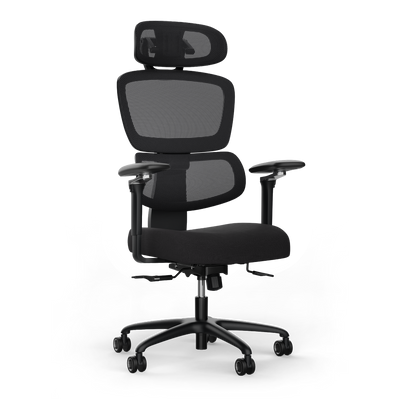
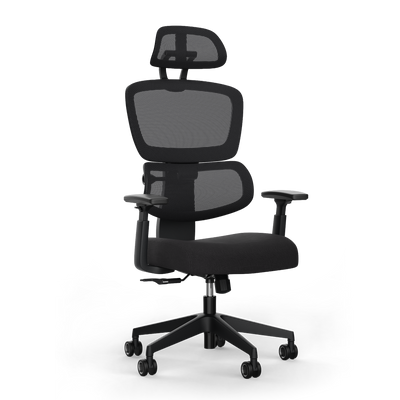
An ergonomic workplace is the basis for a healthy back. At Deskspace, you'll find TÜV-certified, height-adjustable desks and ergonomic chairs that actively support a healthy posture. Find your perfect setup now on deskspace.de


