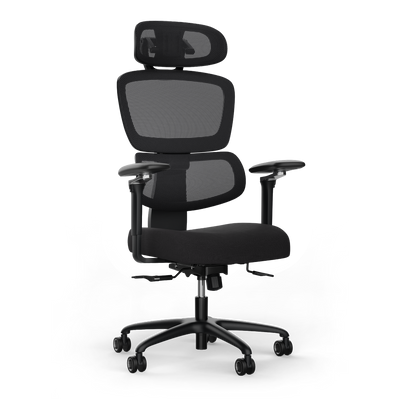
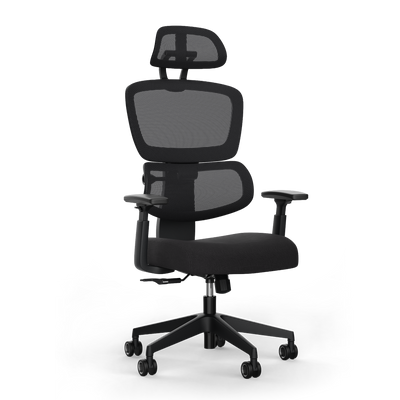


Office Chair with Seat Heating: The Complete Guide 2026

You might know the situation. It’s cool in the home office in the morning, your hands are still cold, and even though the laptop is running, your body doesn’t really get going. You sit, raise your shoulders, unconsciously tense your hips, and notice after a short time that your sitting posture isn’t relaxed.
This is exactly where an office chair with seat heating becomes interesting. Not as a luxury item, but as a tool that compensates for a specific disadvantage of many modern workplaces. Especially if you work in a poorly insulated room, don’t want to heat the whole room in the morning, or tend to feel cold and have muscle tension during long sitting periods.
Introduction Why an office chair with seat heating makes sense

A cold workplace not only disrupts comfort. It also changes your behavior. Many people then sit more stiffly, change positions less often, and develop tension more quickly in the lower back or pelvic area. This is not a minor issue but everyday life in many homes and offices.
In Germany, around 17 million office workers spend about 8 hours sitting at their workplace daily. Over a working lifetime, this adds up to approximately 80,000 hours. This scale shows why ergonomic solutions should not only provide support but also improve physical well-being during long sitting phases. The figure comes from an analysis of well-being in the office and is described here.
Warmth is not just comfort
An office chair with seat heating provides a local heat source where cold often first becomes uncomfortable: the seat surface. This warmth can help keep your muscles less tense. This is especially noticeable on cool days because your body isn’t constantly working against the ambient temperature.
This is especially relevant if you:
- work early in the morning and the room isn’t properly warm yet
- work in an old building, basement office, or attic where temperatures fluctuate greatly
- sit focused for long periods with little spontaneous movement during the workday
- want to save on heating without warming the entire room strongly right away
If you want to improve your overall work environment, you shouldn't just look at the chair. Room temperature, drafts, and sitting duration all play a role. This fits with the guide on the optimal temperature in the office.
Why this topic is more important today
The workplace is often distributed today. Sometimes you sit in the company office, sometimes at home. This makes conditions less standardized. Offices usually have regulated temperatures. At home, it’s often different. There, warmth quickly becomes a matter of practicality.
An ergonomic chair corrects posture. A seat heater can additionally help you hold that posture more comfortably.
This is the crucial point. A good chair supports. A heated chair can help in the right situation to make sitting feel less cold, hard, and tense.
What a seat heater in an office chair really does
Many simply imagine a warm surface under a seat heater. That is too simplistic. The real effect lies in the interaction of temperature, muscle tone, and subjective well-being.
What you actually notice in everyday life
When the seat surface is pleasantly warmed, your body often responds with less protective tension. This mainly affects the area of the buttocks, pelvis, and lower back. You don’t automatically sit more ergonomically, but you often sit more relaxed.
This can be helpful in several situations:
- When starting the workday cold, heat relaxes faster than a cold padded seat.
- During long concentration phases, the sitting sensation remains more constant instead of becoming more uncomfortable with each hour.
- With muscle stiffness, many find mild heat relieving, especially in the lumbar area.
- In poorly heated rooms, localized heat is often experienced as more practical than turning up the room heating.
Heat does not replace ergonomics
This often causes confusion. Seat heating does not solve the fundamental problem of a bad chair. If seat height, seat depth, backrest, or armrests do not fit, the strain remains. Heat can only complement.
An unsuitable chair with heating remains unsuitable. An ergonomically sensible chair with heating can, on the other hand, provide a real added benefit.
Important point: Heat does not automatically improve your posture. However, it can help you stay less tense while maintaining good posture.
Advantages and disadvantages of an office chair with seat heating
| Advantages | Disadvantages |
|---|---|
| Targeted warmth on the seat surface at cold workplaces | Higher purchase costs than comparable models without heating function |
| Can subjectively reduce muscle tension | Electronics make the chair technically more complex |
| More comfortable during long sitting periods in cool rooms | If used incorrectly, heat can be set too long or too high |
| Can significantly increase comfort when working from home | Not medically equally suitable for every person |
| Practical for changing room temperatures | Battery or power supply must fit the usage |
Superficial warmth or real benefit
Not all heat feels the same. Purely short-term heat can even be disturbing. Useful is an even, controlled warmth that does not overwhelm. Good systems therefore do not work on the principle of "as hot as possible" but on the principle of "pleasant and controllable."
This is what distinguishes a simple heat effect from a functional seat heater. Ideally, you no longer consciously notice it after a short time. You only notice that you feel less cold and sit more relaxed.
Technical features and modes of operation
With an office chair with seat heating, it’s worth looking beneath the surface. The function only makes sense if technology, safety, and ergonomics fit together.

How the heat is generated in the chair
Flat heating elements lie within the seat cushion. They release heat upwards through the padding. Distribution is important here. Spot heat is unpleasant. Even warmth is suitable for everyday use.
The quality therefore depends not only on the heating element but also on:
- Cushion construction
- Cover material
- Temperature control
- Position of the heating zones
A dense, thick cushion stores heat differently than mesh or thin fabric. Therefore, you should never evaluate the heating function separately from the entire seat construction.
Two levels are more than just a comfort feature
Modern seat heaters often operate with a two-level control. Typical temperatures are 31 to 34 degrees Celsius at level 1 and 42 to 47 degrees Celsius at level 2. Additionally, occupancy detection sensors can automatically turn off the heater when no one is sitting on the chair. These details are described for a specific climate chair model, which you can find here.
In practice, this means:
- Level 1 is suitable for longer sitting and gentle continuous warmth.
- Level 2 is mainly intended for short warming phases.
- Sensors prevent unnecessary energy consumption and increase safety.
Cable or battery
The power supply determines how flexible the chair is in everyday use.
| Option | Practical advantage | Possible disadvantage |
|---|---|---|
| Wired | Constant power supply | Cable can get in the way at the workspace |
| Battery-powered | More freedom of movement, cleaner look | Battery needs to be charged |
If you often rearrange your workspace or want a tidy look, a battery system often looks more elegant. In fixed office setups, however, a wired chair can be completely sufficient.
For wired solutions, a cleanly switchable power supply can be useful, for example via a switched power adapter, if the setup is arranged accordingly.
Control and safety
Simple models have only one switch. Better systems offer clearly recognizable heating levels and automatic shut-off. This sounds trivial but is crucial in everyday use.
Pay attention to these technical points:
- clear controls instead of hidden buttons
- automatic shut-off when not in use
- stable electronics without loose contacts
- clean integration without noticeable technology in the padding
Good technology is hardly noticeable. You don't have to constantly readjust it but can focus on your work.
The heating function must not interfere with ergonomics
A common mistake when comparing models is focusing only on the heating function. If the seat surface becomes harder due to the technology or the mechanics suffer, the additional feature is of little use. A well-designed chair integrates the heating so that seating comfort, mobility, and support are maintained.
That's why it's always worth asking: Is the heating part of a good chair or just an add-on in a mediocre product?
Purchase criteria for your heated office chair
If you want to buy an office chair with seat heating, you should check the heating function only third. First come ergonomics and safety. Then comfort details.
The market is growing. The office chair market was estimated at 17.63 billion US dollars in 2024 and is forecast to grow to 24.85 billion US dollars by 2032. According to the source, this growth is driven in part by hybrid work and upgrading to ergonomic models in 62 percent of companies. This makes additional features like seat heating more visible but says nothing about whether a particular model really suits you. You can find the market data here.
Check first, then buy
Start with these basic questions:
- Does the chair fit your body type
- Can the seating position be adjusted precisely
- Is the heating function controllable and sensibly integrated
- Is the construction durable in the long term
If weaknesses are already visible at points one or two, the heating function won't help you.
These ergonomic features are mandatory
A heated chair should meet at least the same ergonomic standards as a good chair without heating.
Pay special attention to:
-
Synchronous mechanism
Backrest and seat move in coordination. This supports dynamic sitting. -
adjustable seat height
Your feet must be able to rest fully on the floor. -
Lumbar support
The lower back needs contact, not pressure. -
Adjustable armrests
They relieve shoulders and neck only if height and position are correct. -
appropriate seat depth
Too short or too deep seat surfaces quickly cause pressure or insecurity.
Safety features you should not ignore
With electronics in the chair, clean workmanship is mandatory. Therefore, check not only design and fabric but also technical reliability.
| Criterion | Why it is important |
|---|---|
| Electrical safety | Heating function must work reliably and be controllable |
| Automatic shut-off | Prevents unnecessary continuous operation |
| clean cable management or secure battery integration | Reduces malfunctions and wear |
| transparent warranty conditions | Technology only makes sense long-term if service is considered |
Material and everyday suitability
The best heating function is of little use if the cover and padding don’t match your usage profile.
A few typical considerations:
- Those who sit for long periods daily need padding that doesn’t sink in too softly.
- Those who sweat quickly should pay attention to breathable materials.
- Those who use the chair in mixed home office and office daily use benefit from a durable, easy-care surface.
- Those who value a calm appearance should look closely at the controls and battery integration.
Buying decision in one sentence
Don’t buy a chair just because it’s warm. Only buy it if it convinces ergonomically and the heating function solves your real problem.
Safety, care, and health aspects
Many assume that a seat heater is automatically harmless as long as it feels good. That is too simplistic. Heat can be useful, but it is not a given.

Who should be cautious
There are medical contraindications for the continuous use of seat heaters. Caution is especially important with venous problems, diabetes, or certain skin conditions. This is exactly what the source on seat heating in office chairs points out.
This does not mean that a heated chair is fundamentally unsuitable. However, it means that if you have pre-existing conditions, you should not decide based solely on comfort.
How to use the function properly
In everyday life, a simple principle has proven effective. Start gently, then check if you still need the heat.
Practically, this means:
- Start with a low setting instead of maximum heat right away.
- Activate only during cold phases instead of continuously out of habit.
- Pay attention to body sensations. If the heat feels dull, too strong, or unpleasant, reduce it.
- Do not fall asleep or sit motionless for long while the heater is on.
If you have pre-existing health conditions, the safest rule is simple. Use the heating function regularly only after consulting a medical professional.
Care without risk to electronics and materials
Care is usually uncomplicated if you do not clean too wet or too aggressively.
Pay attention to these basic rules:
- Disconnect power or turn off the device before cleaning.
- Use only slightly damp cloths for surfaces.
- Do not use aggressive cleaners on upholstery, switches, or connectors.
- Keep seams, controls, and charging points dry.
- Clean mechanism and casters separately to prevent moisture from reaching sensitive areas.
If you are also working on muscular complaints, additional measures can help. These include heat, movement, and simple routines against everyday stiffness. A practical overview can be found with these home remedies for back tension.
What safety means in practice
Safety does not only mean that nothing overheats. Safety also means that you use the function appropriately. A good office chair with seat heating makes it easy for you to act sensibly. It heats in a controlled way, is easy to operate, and does not encourage blind continuous use.
Integration into a dynamic workstation
A common misconception is: If the chair is especially comfortable, I sit better. In reality, too much comfort can also cause you to stay in the same position for too long.

That is why an office chair with seat heating should always be part of a dynamic workstation. That is, a setup that supports rather than prevents movement.
Heat and movement must work together
The combination of seat heating and dynamic ergonomics is crucial. According to the given source, chairs with synchronous mechanism can increase blood circulation by up to 25 percent. Additionally, intelligent seat heaters should encourage movement, for example by prompting a change of position after 45 minutes. This information is available in the linked ergonomics overview here.
The logic behind it is clear:
- Heat can make sitting more comfortable.
- Mechanics keep the body in micro-movement.
- Regular changes prevent rigid static postures.
This is how you use the function sensibly
Do not use the heating function the same way all day. It is more sensible to switch according to tasks and time of day.
An example from everyday work:
| Situation | Sensible use |
|---|---|
| Cold morning | Activate the heating function briefly to start relaxed |
| Focus phase while sitting | Low heat and active seat mechanics |
| Phone calls or meetings | Then consciously stand up or switch to the standing position |
| After a long sitting phase | Turn off heating, change position, move briefly |
The best combination in the setup
The whole thing becomes especially coherent with a height-adjustable desk. Then the seat heater takes a supportive role during the sitting phase, not the main role of the entire workplace.
Think in this pattern:
- Sitting phase for focused detailed work
- Standing phase for calls, emails, short coordination
- Change positions instead of sitting still for hours
- Heat selectively only when it serves a noticeable purpose
A good workplace does not make you sedentary. It makes changes easier.
Those who internalize this use the seat heater correctly. Not as an invitation to sit continuously, but as help for more comfortable and consciously controlled sitting phases.
Frequently Asked Questions (FAQ)
Can a seat heater be retrofitted on any office chair
Technically, there are retrofit solutions, such as heated pads. Practically, they are often just a compromise. They change the seat height, slip more easily, and rarely fit cleanly to the chair's ergonomics.
If you want to work regularly with heat, an integrated solution is usually more sensible. Then padding structure, control, and safety are coordinated.
Does an office chair with seat heating consume a lot of electricity
You should always check the specifications of the respective manufacturer. Without reliable product data, no serious consumption value can be given. In everyday life, a seat heater warms only the seating area locally, not the entire room. This is a different approach than classic room heating.
Less important is the theoretical power question than the practical control. Automatic shut-off and sensible heat settings make a significant difference.
Is a heated office chair also suitable for gaming
Yes, that can make sense if you have long sessions and sit in a cool room. However, ergonomics remain crucial here as well. Many hours of sitting require good support for the back, arms, and pelvis.
Pay special attention to stable mechanics, a suitable seat surface, and clean adjustment options. Heat alone does not make a chair suitable for long-term use.
Does seat heating also work with fabric, leather, or mesh
Basically yes. However, the perception of heat can vary depending on the material. Fabric often feels immediately pleasant and neutral. Leather or faux leather often feel colder at first when cold, so they benefit subjectively especially. For mesh solutions, it depends heavily on the construction.
Therefore, you should not only look at the material but at the combination of upholstery, padding, and heating zone.
How long should I use the seat heater at a stretch
There is no universal rule that can be given without medical context. For everyday use, cautious handling is sensible. Start with a low setting and use the function specifically during cool phases rather than continuously.
If you have health risks or tend to sensitivity disorders, extra caution is advisable.
Does a seat heater help with back pain
It can be perceived as pleasant with muscular tension. But back pain has very different causes. Heat can help but does not replace good sitting posture, movement, or medical evaluation for persistent complaints.
If pain occurs regularly, you should first look at ergonomics, movement changes, and strain patterns.
Is a battery better than a cable
It depends on your setup. A battery looks tidier and allows more freedom of movement. A wired system saves you from charging. At fixed workplaces, cables are often unproblematic. In flexible home office setups, a battery can be more practical.
The better solution is the one you reliably use every day.
How do I recognize a good model
Not just the heating function alone. You can recognize a good model by the fact that it convinces as a chair and the heating function complements it cleanly.
Check these points before buying:
- Ergonomics first. Seat height, backrest, armrests, and mechanics must fit.
- Keep operation simple. You should be able to control the heating function directly.
- Take safety features seriously. Automatic shut-off is a strong plus.
- Evaluate materials honestly. The upholstery must suit your daily use.
- Check warranty and service. Technology needs reliable conditions.
If you want to make your setup not only warmer but overall more ergonomic, you can find height-adjustable desks, ergonomic chairs, and suitable accessories for home offices, team areas, and professional workplaces at DESKSPACE. A sensible approach always combines good movement, proper support, and features that truly help in everyday life.


