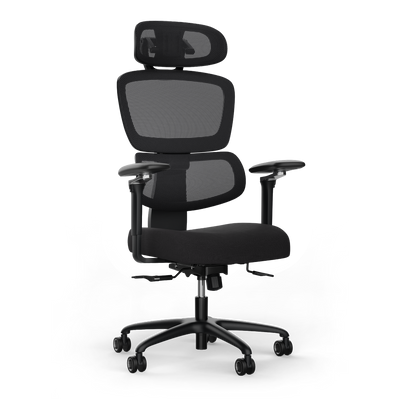
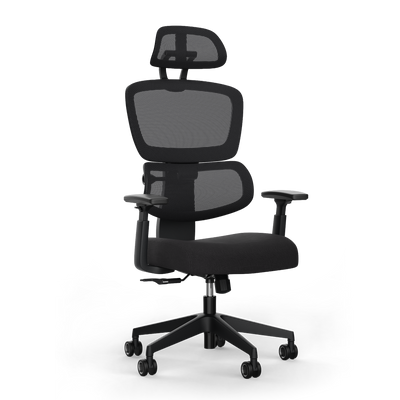


The Right Home Office Chair for Your Health

A suitable office chair in your home office is more than just a place to sit. It's an investment in your health and productivity. An unsuitable chair leads to tension, back pain, and concentration problems. An ergonomic home office chair increases your well-being.
Why the right chair is crucial in the home office
Since the home office has become commonplace for many, equipment has come into focus. For a quick email, a kitchen chair is sufficient. For a full workday, it's unsuitable. In the long term, poor posture leads to health problems that impair your performance.
An ergonomic office chair supports your body optimally. It adapts to your measurements and promotes a healthy, upright posture. The result is less strain on your back and neck. You also benefit from better concentration and efficiency.

The new reality of working
The world of work has changed. The home office rate in Germany is about 24 percent of employees. This is a doubling compared to 13 percent in 2019. These figures show: mobile working is an integral part of everyday life. A good chair is essential for your daily well-being.
An ergonomic chair is not a luxury. It is the basis for healthy and productive work from home. It prevents discomfort and ensures your ability to work in the long term.
Health as a priority
Investing in a high-quality chair is active health prevention. Instead of treating the consequences of poor posture, you prevent them from the start. In the long run, the costs of absenteeism or medical treatments can exceed the purchase price of a good chair.
To understand the necessity, the principle of a risk assessment helps. This records all potential risks in the workplace. A bad chair is such a risk.
This guide gives you the knowledge for an informed decision. We guide you through the most important factors:
- Ergonomics: The basics for healthy sitting.
- Adjustment options: How to adapt a chair to your body.
- Materials and quality: What to look for when choosing.
Our goal is clear: you should understand why the individual adjustability of a chair is the most important aspect. You should find the right model for you.
The basics of an ergonomic office chair
An office chair is not ergonomic just by its appearance. Ergonomics is the science of adapting working conditions to people, not the other way around. For your home office chair, this means: it must adapt to your body, not you to it.
A good ergonomic chair helps you maintain a neutral posture. This is the position in which your joints, muscles, and ligaments are least stressed. The goal is to prevent long-term damage such as tension or disc problems.

The most important adjustment options
A good ergonomic chair can be adjusted in many places. Each function serves the purpose of optimally supporting your body. It is important to know and correctly use these settings.
The four central adjustment features are:
- Seat height: The correct height is crucial. It ensures that your feet are flat on the floor. Your thighs rest relaxed and parallel to the floor.
- Seat depth: It prevents the seat edge from pressing into your kneecaps. There should be about three fingers' width of space between your kneecap and the front edge of the seat. This ensures good blood circulation.
- Backrest: An adjustable backrest, ideally with lumbar support, supports the natural S-shape of your spine. This relieves pressure on the lower back area.
- Armrests: Correctly adjusted, they relieve strain on the neck and shoulders. Your forearms should rest loosely at a 90-degree angle on the armrests. You should not shrug your shoulders.
Do you want to find the perfect setting for yourself? In our guide, we explain step by step how you can adjust your office chair ergonomically.
Dynamic sitting through synchro-mechanism
Sitting rigidly for hours harms the back. Our body is made for movement. This is where the synchro-mechanism comes into play. It is the most important feature of a modern office chair.
This mechanism couples the movement of the seat with that of the backrest. When you lean back, the backrest reclines more than the seat. The ratio is usually 2:1 or 3:1.
The synchro-mechanism is the engine for dynamic sitting. It automatically encourages you to make small posture changes. This better supplies your intervertebral discs and keeps your back muscles active. You stay in motion while sitting.
The open angle between the torso and thighs improves blood circulation. Your back remains optimally supported in every position because contact with the backrest is maintained.
Certificates as proof of quality
Many chairs are advertised as "ergonomic". Independent certificates offer reliable guidance.
Look for these test seals:
- GS-Mark (Tested Safety): This seal confirms that the chair meets the requirements of the German Product Safety Act. Stability, durability, and material safety are tested.
- IGR-Certificate (Interessengemeinschaft der Rückenschullehrer/innen e.V. - Interest Group of Back School Teachers): This seal is only awarded to products whose ergonomic properties have been proven in tests. They must have a positive effect on back health.
Such certificates are based on test procedures and scientific criteria. A chair with GS and IGR seals is a safe investment in your health.
Overview of ergonomic adjustment features
This table summarizes the most important ergonomic functions and their benefits.
| Feature | Function and Benefit | Recommended Setting |
|---|---|---|
| Seat Height | Relieves legs and promotes circulation. | Feet flat on the floor, knees at a 90-degree angle. |
| Seat Depth | Prevents pressure on kneecaps and supports thighs. | 2 to 3 fingers' width of space between kneecap and seat edge. |
| Lumbar Support | Supports the natural curvature of the lumbar spine. | Adjust height so the curve is in the lower back. |
| Armrests (4D) | Reduces strain on shoulders, neck, and arms. | Forearms at a 90-degree angle to the tabletop, shoulders relaxed. |
| Synchro-mechanism | Enables dynamic sitting and activates muscles. | Adjust resistance to your body weight. |
Ergonomics is the interplay of many adjustable components. A chair that adapts to you is the foundation for healthy working.
Material, Castors, and Load Capacity
The quality of an office chair often lies in the details. The interplay of upholstery fabric, castors, and load capacity determines whether a chair is durable and suitable for your workplace.

The right upholstery fabric
The upholstery of your chair influences the seating comfort and maintenance effort. Each fabric has specific properties.
The most common materials are:
- Mesh fabric: Very breathable. On warm days, mesh fabric prevents heat buildup. This ensures a cool sitting climate.
- Fabric upholstery: The classic. Fabric covers are soft, robust, and available in many colors. They create a cozy atmosphere.
- Faux leather: Looks elegant and is very easy to clean. The disadvantage is the lower breathability compared to fabric or mesh.
The decision depends on your preferences. If you sweat easily, a mesh back is sensible. If you are looking for a soft, classic sitting feeling, fabric upholstery is suitable.
The right castors for your floor
An often underestimated detail is the castors. Wrong castors can damage the floor or restrict mobility. There are two types.
Hard floor castors have a soft rubber coating. This protects sensitive floors such as parquet, laminate, or tiles. They also roll quietly and smoothly.
Soft floor castors are made of hard plastic. They are designed for carpeted floors, where they glide effortlessly. On a hard floor, they would slip and leave marks.
The rule of thumb is: soft castors for hard floors, hard castors for soft floors. The right choice protects your floor and makes the chair more maneuverable.
If you want to learn more, read our article about rubber castors for office chairs.
Load capacity as a quality feature
The maximum load capacity is an indication of stability and manufacturing quality. A model for more weight has a more robust base, a stronger gas lift, and a more durable mechanism. This means more safety and a longer lifespan.
Standard chairs are often approved for up to 110 kg or 120 kg. High-quality models go beyond that.
| Load Capacity Class | Maximum User Weight | Practical Significance |
|---|---|---|
| Standard | up to 120 kg | Sufficient for average users, often simpler components. |
| Increased | 120 kg to 150 kg | Offers more stability and is safe for a wide range of users. |
| Premium | over 150 kg | Robust construction with high-quality components for maximum safety. |
Our Deskspace chairs are tested for a user weight of up to 200 kg. Such a load capacity shows that no compromises were made in construction and materials. This also gives users below this weight limit an additional safety reserve. Pay attention to a load capacity that is above your body weight. It is a sign of durability.
Choosing the right chair for your daily work
Every workday is different. There isn't one perfect chair for everyone. Which chair is right depends on your habits and requirements. We look at typical user groups and what matters to them in a home office chair.
If you recognize yourself in a profile, you'll quickly see what you should pay attention to. This way, you'll find the model that best supports you.
For Home Office Power Users and Remote Teams
You spend eight hours or more at your desk. For you, maximum ergonomics is a necessity. Your body needs dynamic support so you can work concentrated and without tension.
Pay attention to these features:
- Full adjustability: Seat height, seat depth, 4D armrests, and an adjustable lumbar support are indispensable.
- High-quality synchro-mechanism: It is the heart of dynamic sitting. Your circulation remains active.
- High load capacity: A chair designed for more weight offers more stability and durability.
When equipping remote teams, durability, service, and easy warranty processing also count. Models with high load capacities of up to 200 kg and IGR certification are a good investment in the team's health.
For Gamers and Creators
Your desk is a gaming center or a creative universe. Here, it's about ergonomics, aesthetics, and freedom of movement. Long sessions demand a chair that supports you in every position.
Creators and gamers have specific demands.
A good chair for gamers or creators does not restrict movement but must provide support in intense moments.
For this target group, the following properties are crucial:
- 4D armrests: They relieve arms and shoulders when working with a mouse and keyboard. The armrests must be precisely adjustable in height, width, depth, and angle.
- Flexible backrest: A backrest with a large recline angle is perfect for breaks.
- Design and materials: Aesthetics play a big role. High-quality materials and a suitable design are often decisive.
Chairs for changing users and open-plan offices
In agile offices, multiple people often share a workstation. A chair here must be flexible and easy to use.
A chair for such environments must be robust and self-explanatory. Demographic distribution shows that in the home office, especially 35- to 44-year-olds and professional groups such as IT specialists need professional equipment. These findings can be transferred to modern offices. If you want to know more about the spread of home office in Germany, you can find further insights here.
The key factors are:
- Intuitive operation: Levers and buttons must be easy to understand so that every user can quickly adjust the chair.
- Robust construction: Where many people use a chair, it is subjected to more stress. A high load capacity is a must.
- Universal fit: The model should be suitable for a wide range of body sizes and weights.
The combination with a height-adjustable desk
An ergonomic chair is the basis. It unfolds its full potential in combination with the right desk. The combination of home office chair and height-adjustable desk is a system for a healthy and dynamic workplace.
This duo enables active work. The regular change between sitting and standing compensates for the negative consequences of prolonged sitting.

Synergy for body and mind
When you stand up, you activate your muscles. This gets the circulation going and improves oxygen supply to the brain. Your concentration and productivity increase.
At the same time, you relieve your spine and intervertebral discs. Dynamic work prevents tension and back pain. Chair and desk work together to support you in every position.
Correct adjustment when sitting
Chair and desk must be coordinated. Adjustment always starts with the chair.
- Adjust chair height: Sit so that your feet are flat on the floor. Your knees form an angle of approximately 90 degrees.
- Adjust desk height: Lower the desk until your forearms rest loosely on the tabletop. Your shoulders remain relaxed. Your elbows also form a 90-degree angle.
This basic setting ensures a neutral and relaxed posture when sitting. Your armrests should ideally be at the height of the tabletop.
Correct adjustment when standing
Switching to standing requires a new adjustment of the desk. Your chair is rolled to the side.
The correct standing height is reached when your forearms also rest at a 90-degree angle on the tabletop and your shoulders are relaxed. Your neck and back form a straight line.
Avoid leaning on the table. A relaxed stance is crucial. We show you how to use a height-adjustable desk optimally in your daily work.
The combination of a flexible chair and a height-adjustable desk is the basis for a modern workplace. It gives you the freedom to adjust your working position and remain productive in the long term.
Care, Warranty, and Service
Your new home office chair has arrived. With the right care and reliable service, you ensure that your chair serves you for many years.
Regular care maintains its appearance and ensures its function. Dust and dirt can accumulate in the mechanism. A simple routine is sufficient.
Small steps for a long chair life
The longevity of your chair begins with care. Depending on the material, your chair needs specific attention.
Here are some recommendations:
- Upholstery: Remove dust from mesh and fabric covers with the vacuum cleaner's upholstery nozzle. Remove light stains with a damp cloth and mild soap solution.
- Mechanism: Regularly free moving parts from dust. After a few months, check the screws and tighten them if necessary. This ensures lasting stability.
- Castors: Remove hair and lint from the castors. A regular check keeps the castors smooth.
What warranty and service say about quality
A long warranty is a quality promise from the manufacturer. When a provider like Deskspace offers up to 10 years of warranty, it demonstrates confidence in their materials and construction.
A good partner also supports you after the purchase. Services like a risk-free trial period and fair return conditions distinguish a good offer from an excellent one.
A well-thought-out service package makes all the difference. A 100-day trial period gives you security to test the chair in everyday use. Free shipping and uncomplicated returns show that your satisfaction is paramount.
Shipping also plays a role. Delivery within one to three days means you can start healthier working without delay.
Frequently Asked Questions about Home Office Chairs
Do you still have questions before you decide? Here we answer the most common points so you can make the right choice for yourself.
How long does a good home office chair last?
A high-quality chair is an investment. With normal use and care, you can expect a lifespan of seven to ten years.
Crucial factors are a strong gas lift, a solid metal base, and durable fabrics. A long warranty period, like the up to 10 years at Deskspace, is a good sign.
Are armrests necessary?
Armrests are not a luxury, but an important part of ergonomics. Without them, the weight of your arms hangs on your shoulders and neck. Tension is the result.
Armrests absorb this weight and relieve strain on the shoulder-neck area. 4D armrests are best, as you can adjust them in every direction: up, down, sideways, forward, and backward.
Is a gaming chair sufficient?
Gaming chairs and office chairs pursue different concepts. Gaming chairs often have a racing seat look and fixed side bolsters that promote passive sitting. Real home office chairs are designed for active, dynamic sitting.
The difference lies in the mechanism. A good office chair has a synchro-mechanism that moves with you. Many gaming chairs only offer a rocking function with a fixed angle. For an eight-hour day, a certified, ergonomic office chair is the better choice.
How do we equip an entire team in the home office?
Equipping remote teams is a challenge. Home office use varies regionally. In Berlin, over 31% of employees work from home. In other regions, it's less.
It is important that everyone has an ergonomically optimal workplace. Models that are easy to adapt to different body types are ideal. You can find more about the spread of home office in Germany at the statistical offices.
An ergonomic workplace is the basis for your health and productivity. At Deskspace, you will find the right chair for your home office. With tested quality, 100 days of risk-free testing, and up to 10 years warranty.


