

Footrest for the Office: More Ergonomics and Productivity

An office footrest is often considered an accessory. The question is whether it's really necessary. The answer is yes. It's more than just a comfortable place to rest your feet. It's a tool for your health, posture, and productivity at your desk.
The position of your feet affects your entire body posture. A footrest can significantly reduce the strain on your lower back and legs.
Why an office footrest is indispensable
Long hours of sitting at a desk put stress on the body. Often, feet dangle in the air, are tucked under the chair, or wrapped around the chair legs. This leads to an unstable and unhealthy posture.
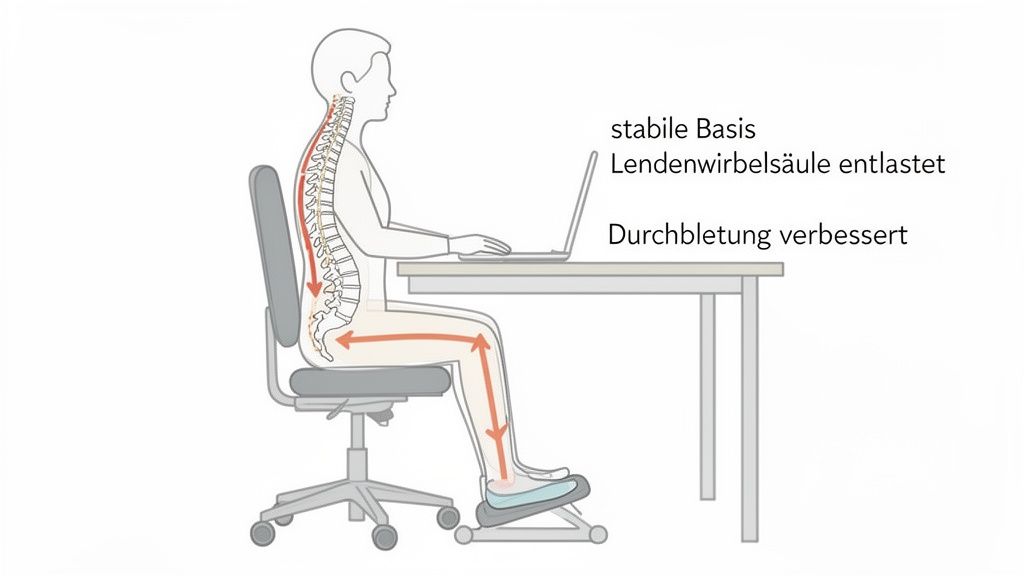
A footrest gives you a stable base. Your feet rest flat, allowing your knees to form a healthy angle of approximately 90 degrees. This is the foundation for an ergonomically correct sitting posture.
Relief for back and legs
If your feet don't have firm support, your pelvis tilts backward. This forces your lumbar spine into an unnatural, rounded position. The pressure on your intervertebral discs increases. A good office footrest directly counteracts this.
Through a stable foot position, the pelvis straightens. It supports the natural S-curve of your spine. The result is less tension in the lower back. Studies show that around 60 percent of office workers complain of back pain. A footrest can reduce pressure on the lower spine by up to 30 percent by providing support for the feet.
Promoting circulation
Poor sitting posture also impairs blood circulation in the legs. Sharply angled legs put pressure on the veins. This can lead to tired, heavy legs or swelling. A footrest ensures an optimal angle in the backs of the knees and allows blood to circulate freely.
A stable base for the feet is the foundation for healthy posture and sustainable productivity at the workplace.
Investing in a footrest is an active contribution to your well-being. It's a small but effective step if you want to set up your workplace ergonomically. Those who want to delve deeper into the topic will find many other useful tips for a healthy work environment in general guides on home office ergonomics.
What types of footrests are there?
Choosing the right office footrest is a personal decision. What works for one person may not be suitable for another. The market offers many models that differ in function, material, and design. A thoughtless decision can negate the ergonomic benefits.
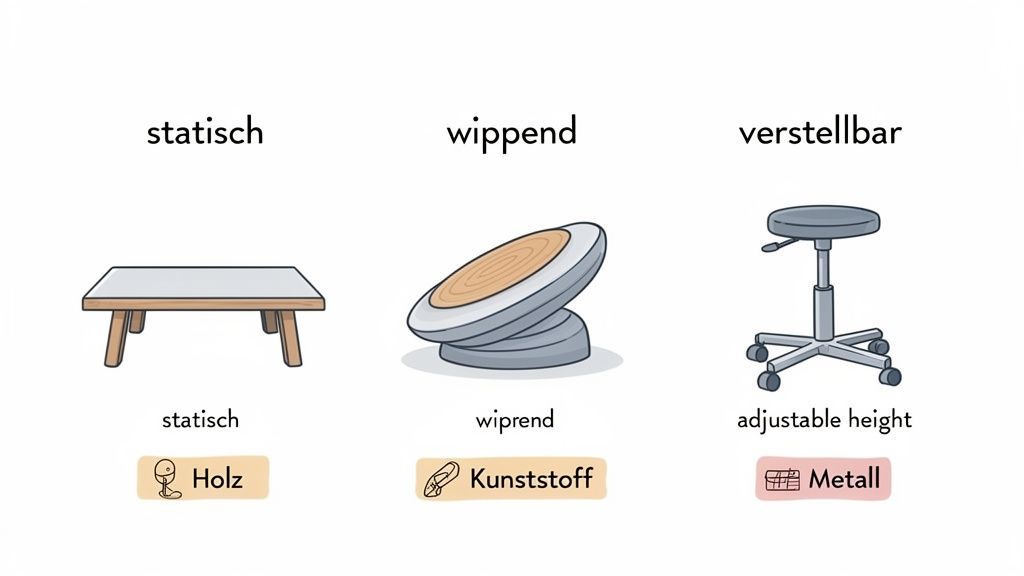
Most models can be divided into three categories. Each serves a different purpose, from stable support to active movement promotion at the desk.
Static and adjustable footrests
Static footrests are the basic version. They offer a fixed, usually slightly inclined surface. Their purpose is to bring the feet to the correct height. Their biggest advantage is their stability.
Adjustable models go a step further. Here you can adjust the height and often the angle of inclination to suit your needs. This flexibility helps to achieve the ergonomic 90-degree rule for knees and ankles. This is independent of your height or chair height.
An individually adjustable footrest is the basis for personalized ergonomics. It adapts to you, not the other way around.
Such models are suitable for workplaces used by several people. They offer a good compromise between firm support and individual adjustability.
Dynamic and rocking footrests
Dynamic footrests are designed for movement. They are also called rocking footrests or foot swings. They stimulate blood circulation in the legs while working.
Gentle rocking movements activate the calf muscles and ankle joints. This helps prevent stiffness and heavy legs from prolonged sitting. They are a good choice for people who tend to move or want to consciously promote their circulation. Keep in mind that they offer less stable support. The question is whether you prioritize firm footing or active movement.
Some office chairs have such a function integrated. You can read more about this in our guide on the office chair with footrest.
Comparison of materials
Material is more than just a matter of aesthetics. It determines stability, durability, and the feel under your feet.
- Plastic: Lightweight, easy to clean, and usually the cheapest option. Good plastic is suitable for everyday use, but can lose stability with intensive use.
- Wood: Brings a warm, natural atmosphere and is very stable. Wooden models are durable and fit well into a cozy home office. They are usually rigid and hardly adjustable.
- Metal: Stands for maximum robustness and durability. Footrests made of steel or aluminum can withstand high loads and are almost always adjustable. They are the choice for professional office environments.
The choice of material is a trade-off between aesthetics, function, and budget.
Comparison of the most common footrest types
This table summarizes the most important types. This way, you can quickly find the right footrest for your needs.
| Type | Main feature | Materials | Ideal for |
|---|---|---|---|
| Static footrest | Fixed, stable support | Plastic, wood, metal | Users who need stable and immovable support for correct foot height. |
| Adjustable footrest | Adjustable height and tilt | Metal, high-quality plastic | Flexible workplaces, multiple users, or individuals requiring precise ergonomic alignment. |
| Dynamic footrest | Movable, rocking surface | Plastic, wood | Active users who want to promote blood circulation and encourage micro-movements while sitting. |
It's important that the footrest suits your body and daily work routine. Consider your priorities: stability, flexibility, or movement. Then you'll find the right model for you.
How to choose and adjust your footrest correctly
Having a good office footrest is only half the battle. The correct adjustment unleashes its full ergonomic effect. Incorrect adjustment can negate the benefits or lead to new tension.
Correct adjustment is simple. It's about finding a neutral and stable posture that you can maintain effortlessly. You lay the foundation for this with the right height and the appropriate angle of inclination.
Step-by-step to the perfect setting
The first step begins with the office chair. Make sure your chair is at the correct height. Your thighs should be parallel to the floor, while your feet should just barely touch the floor or only with your toes. This is the starting position. We explain in detail how you can ergonomically adjust your office chair in our guide.
When the chair fits, the footrest comes into play. Slide it under the desk and rest your feet on it.
-
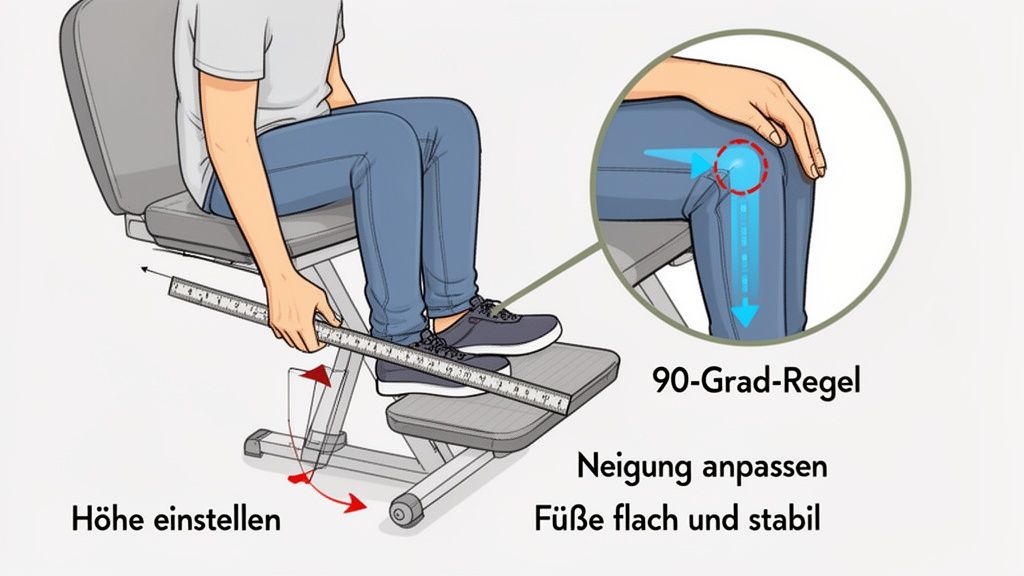
Adjust height: Adjust the height of the footrest so that your knees form an angle of approximately 90 degrees. Your thighs should remain parallel to the floor. This position relieves the knee joints and the lower back.
-
Adjust tilt angle: Your feet should rest completely and flat on the support. Find the tilt angle at which your ankles have a natural angle of about 90 degrees. You should not feel like you have to bend your feet.
-
Check positioning: You should be able to place your feet comfortably and about shoulder-width apart on the support. Make sure it stands stably and does not slip.
This process takes only a few minutes, but it makes a big difference to your comfort and health.
The 90-degree rule for knees and ankles is a guideline. Find the position that feels most natural and comfortable for you.
Integration into your existing setup
A footrest works best in conjunction with other ergonomic elements. Especially with a height-adjustable desk, it shows its potential. If you lower your DESKSPACE desk for sitting, the footrest ensures optimal posture even at a lower table height.
The process is simple. First, you adjust the chair and footrest correctly. Then you adjust the height of the desk so that your forearms are at a 90-degree angle on the table top. This creates a continuous ergonomic chain from your feet to your neck.
The health benefits of a footrest
An ergonomic office footrest is more than a comfort extra. It is a tool to counteract the negative consequences of sitting for hours. Behind it lie simple biomechanical principles with effects on the entire body.
The main task of the footrest is to stabilize posture. When the feet dangle in the air, the pelvis tends to tilt backward. The result is an unhealthy curvature in the lower back, which increases pressure on the intervertebral discs. This is a common cause of back pain.
Better circulation in the legs
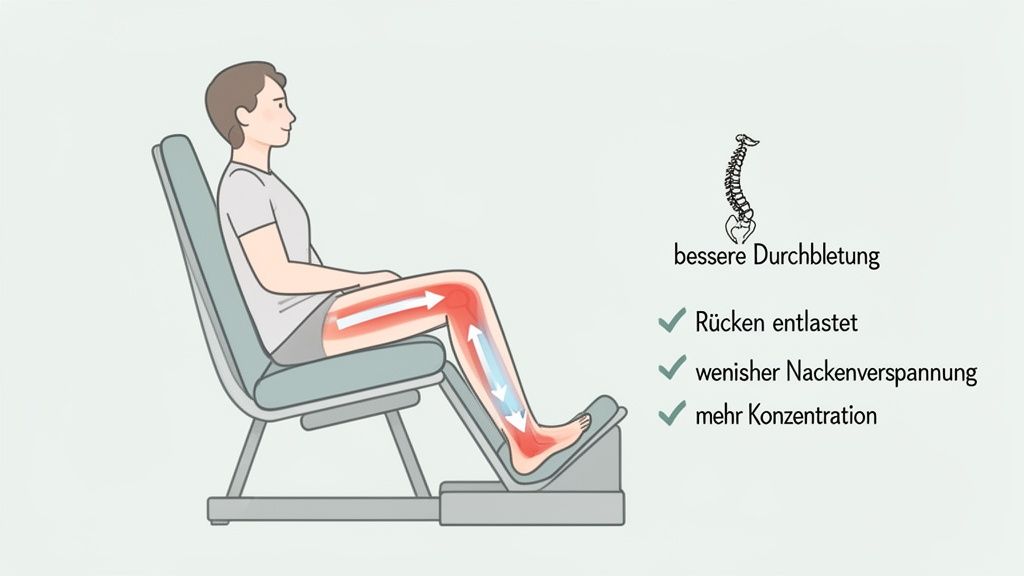
Anyone who sits all day knows the feeling of heavy, tired legs. This is no coincidence. If the feet hang free or the thighs press against the edge of the chair, the veins in the backs of the knees are constricted. Blood flow back to the heart is slowed down, which can lead to swelling.
A footrest provides a remedy here. It raises the feet and ensures an ideal angle in the knee and ankle joints. This minimizes pressure on the veins and allows blood to circulate freely. Used correctly, a footrest can improve blood circulation by up to 35 percent.
Reduction of neck and shoulder tension
Feet and neck are connected. The body functions like a chain. If the foundation is unstable, adjustments must be made further up.
Firm support for the feet provides stability to the torso. You subconsciously need to exert less muscle strength to stabilize your posture. This relieves the muscles in the shoulder and neck area. It can thus prevent tension and headaches.
Good posture starts with the feet. A footrest provides the stable base that allows the rest of the body to align itself in a relaxed position.
In addition to the direct benefits, general physical and mental fitness is a crucial factor for productivity.
Increased concentration and well-being
The physical benefits of a footrest directly impact your mental performance. When your body expends less energy compensating for poor posture, more mental capacity remains for your tasks.
The main benefits at a glance:
- Spine relief: Prevents "slumping" in the lower back and reduces pressure on the intervertebral discs.
- Improved blood circulation: Prevents heavy legs and the risk of venous diseases.
- Reduced muscle tension: Alleviates tension in the neck, shoulders, and back.
- Increased comfort: Promotes a relaxed and healthy sitting posture for several hours.
With a footrest, you invest directly in your well-being and create the foundation for focused and productive work without physical discomfort.
Care and maintenance: How to keep your footrest fit for a long time
A high-quality office footrest is an investment in your health. With minimal care, it will bring you joy for a long time. The effort is minimal.
Regular cleaning ensures a good appearance and hygiene. Dust and dirt can attack surfaces and, in the case of adjustable models, impair the mechanism. A few simple steps will keep your footrest in top shape.
Cleaning by material
Each material has its own characteristics. The wrong cleaning agent can cause damage.
-
Plastic: Plastic surfaces are easy to care for. A damp cloth and a drop of mild dish soap are sufficient. Do not use harsh cleaners, as they can make the material brittle.
-
Wood: Wood should not get too wet. Wipe wooden surfaces only with a damp, soft cloth. Depending on the treatment, the wood will appreciate a suitable wood care product. This protects the material and refreshes its shine.
-
Metal: Metal parts are robust. A damp cloth is sufficient here too. For stubborn stains, you can use a mild all-purpose cleaner. Dry everything thoroughly to avoid water stains.
A quick safety check for mechanics and function
For an adjustable or dynamic footrest, a periodic check of the mechanism is worthwhile. This ensures safety and smooth operation.
A quick check guarantees that your ergonomic support remains safe and functional long-term.
Pay attention to these three points:
-
Check screws and joints: Every few months, check if screws and connections are still tight. If necessary, carefully retighten loose parts.
-
Lubricate mechanism: If adjustment is difficult, a drop of multi-purpose oil can help. Apply it sparingly to moving joints and wipe off excess oil.
-
Secure anti-slip properties: Check the underside. The rubber feet or anti-slip pads are important for a secure stand. Clean them with soap and water if necessary to restore grip.
Frequently asked questions about the office footrest
Here we answer the most common questions about choosing the right footrest. The answers are short and precise.
Do I need a footrest with a height-adjustable desk?
Yes. A height-adjustable table doesn't solve all ergonomic problems. The footrest plays a different role. It's your anchor when sitting. It provides a stable base, relieves the lower back, and prevents restless legs.
The correct procedure is: First, adjust your chair to your height. Then, the footrest comes into play to support your feet. Only after that do you adjust the desk to the appropriate height. This completes the ergonomic chain.
Is a footrest only useful for short people?
That's a common misconception. For shorter individuals, a footrest is often essential to bridge the distance to the floor.
But taller people also benefit. A footrest promotes a conscious, stable sitting posture. An adjustable model that can be flexibly adapted to any body height is important.
Can a footrest help with back pain?
Yes. Back pain from sitting often starts at the feet. Without firm support, the pelvis tilts backward. This forces the lumbar spine into an unnatural curve and increases pressure on the intervertebral discs.
A good office footrest stabilizes the feet, straightens the pelvis, and helps the spine maintain its natural S-curve. The result is noticeable relief in the lower back.
Static, dynamic, rocking – which type is best for me?
The answer depends on your work style and needs.
- Static or adjustable footrest: Your choice for maximum stability and correct posture. Adjustable models have an advantage because you can precisely adjust the height and angle.
- Dynamic or rocking footrest: Perfect for people with restless legs or those who desire more movement. The rocking movements activate the calf pump and keep circulation flowing.
Ask yourself: Are you looking for a solid base for posture correction? Or do you need a tool that keeps you moving? Both approaches have their advantages.
How high should I set my footrest?
The perfect height is achieved when your knees form an angle of approximately 90 degrees and your thighs are parallel to the floor. Your feet should rest relaxed with their entire soles on the support.
There is no general centimeter specification. The height is a combination of body size, chair, and desk. Therefore, height-adjustable models are often the better investment.
Should I use the footrest with or without shoes?
Both are possible. Many footrests have a textured or massaging surface. This feels best barefoot or with socks and can stimulate circulation.
In the office, using it with shoes is standard. Secure, non-slip grip is important. Make sure the material is robust and easy to clean if you use it with street shoes.
Does a footrest make me more productive?
Indirectly, yes. Physical discomfort is a concentration killer. A nagging back or tense shoulders steal focus.
A footrest reduces these discomforts. By improving your posture, you have more mental energy for your tasks. You no longer waste energy trying to compensate for an uncomfortable position, and you remain focused for longer.
Ready to create the foundation for a healthier and more productive workplace? Discover ergonomic solutions at Deskspace that integrate into your daily work routine.


