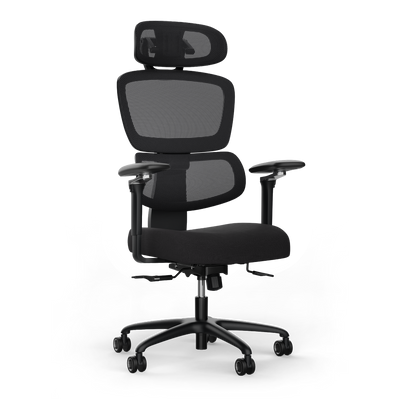
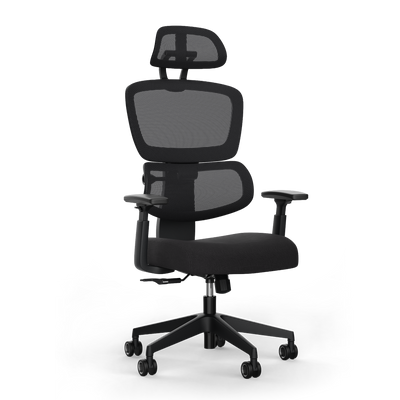


Finding the Right Cushion for Office Chairs

A cushion for your office chair is more than just a soft base. It is a specialized tool that steps in where an office chair reaches its limits. A well-thought-out adjustment can positively influence your health and concentration.
From seating problem to ergonomic solution

For many, long hours of sitting are part of the daily work routine. The hours at the desk often take their toll in the form of tension, back pain, or an unhealthy posture.
Even a high-quality office chair cannot always optimally support every individual body shape. This is where the search for a sensible addition begins. This search often leads to an ergonomic seat cushion designed to alleviate the typical problems of prolonged sitting.
Why a cushion often makes all the difference
An ergonomic seat cushion optimizes the interface between your body and the chair. It's about targeted support, not just padding. The main advantages are:
- Pressure relief: It takes pressure off sensitive areas such as the tailbone and sit bones. This prevents pain and numbness and can improve circulation.
- Posture correction: Specially shaped cushions, such as wedge cushions, gently tilt the pelvis forward. This helps you maintain the natural S-shape of your spine and counteract a rounded back.
- Promotion of active sitting: Some cushions, due to their shape or material, encourage micro-movements. This permanent, gentle activity of the core muscles prevents stiff tension.
The idea of optimizing sitting is not a 21st-century trend. Already in the 19th century, as desk work increased, people sought ways to improve comfort. A 2021 study by the RKI (Robert Koch Institute) found that about 45% of adults in Germany suffered from back pain in the last 12 months. This shows the need for modern, ergonomic aids.
The basis for more concentration and productivity
A good cushion for your office chair is an investment in your health and performance. When your body is properly supported and you sit pain-free, your mind has more capacity for what matters. You stay more alert, tire slower, and can concentrate better on your tasks.
A cushion is one piece of the overall puzzle. The foundation for pain-free work remains a well-designed workstation. In our guide, we show you how to set up your workstation ergonomically.
This article gives you the knowledge to sustainably improve your work and quality of life with this targeted adjustment.
How a seat cushion improves the ergonomics of your workstation

A good seat cushion is a precise tool. It specifically supports the biomechanics of your body while sitting. The improvements are often immediately noticeable and lead to lasting relief.
The logic behind it is simple. A central advantage is targeted pressure relief. When you sit for hours on a hard or flat office chair, your body weight rests on a few points. The tailbone and sit bones are particularly affected.
This constant stress can disrupt circulation and lead to numbness, tingling, or pain. A suitable cushion for office chairs distributes this weight more evenly. Special cutouts completely relieve pressure from the sensitive tailbone.
How a cushion actively corrects your posture
Another crucial point is the influence on your pelvic position. Many ergonomic seat cushions are wedge-shaped or have an anatomically shaped surface.
This shape serves a purpose. It gently tilts your pelvis forward. This inclination automatically straightens your lumbar spine and promotes the natural S-curve of the back. This actively counteracts the typical rounded back.
You can imagine it this way: a properly aligned pelvis is the foundation for a healthy spine. If the pelvis is stable and slightly tilted forward, the rest of the spine follows into an upright position. This relieves pressure on the intervertebral discs and the back muscles.
The effects of this posture correction are:
- Relief of intervertebral discs: An upright posture ensures even pressure distribution.
- Less muscle tension: Your back and neck muscles have to do less holding work.
- Activation of core muscles: Some cushions promote micro-movements that activate your deep core muscles.
Noticeable effects on health and concentration
These physical improvements lead to concrete results in everyday life. Less pain means more well-being and better concentration. Your body doesn't waste energy trying to compensate for poor posture.
Data from the Federal Statistical Office in 2022 showed that around 62% of working people sat for more than six hours a day. This highlights the importance of small aids. Modern cushions for office chairs made of memory foam adapt to your body, relieve pressure points, and can improve circulation. The effectiveness is confirmed in studies on pressure distribution.
A seat cushion can be easily combined with a lumbar cushion. Such a back cushion for the chair supports the lower back by closing the gap between your lumbar spine and the chair backrest. You can read more about this in our article on the right back cushion for your chair.
In summary, an ergonomic seat cushion optimizes your chair through three effects: pressure relief, posture correction, and muscle activation. It is a simple, effective measure for a healthier workplace.
Overview of the most important cushion types
Anyone looking for the right cushion for their office chair is faced with a large selection. Wedge cushions, orthopedic cushions, models with gel or a ring. Not every cushion is suitable for every purpose.

We'll look at the most common cushion types and their strengths. The right choice depends on what you want to achieve. Are you looking for improved comfort, posture correction, or a solution for a pain point?
Wedge cushions for an upright posture
The wedge cushion is a classic in ergonomics. Its shape, higher at the back and sloping forwards, has a direct effect on your posture.
The angled seat surface gently tilts your pelvis forward. This straightens your spine and brings it into its natural S-curve. A wedge cushion is an active posture trainer that counteracts a rounded back. It is ideal for anyone who wants to proactively improve their posture.
Orthopedic cushions and coccyx cushions
These specially shaped cushions are experts in pressure relief. They are recognizable by the U-shaped cutout in the rear area. This leaves the tailbone free.
The purpose is to relieve the tailbone region. This helps after injuries, bruises, or with chronic pain (coccydynia). At the same time, the ergonomic shape optimally distributes your weight to the sit bones and thighs. This prevents numbness.
Donut cushions for targeted relief
A donut cushion is a ring-shaped cushion with an opening in the middle. This design ensures that the perineal and anal areas are not subjected to any pressure.
Donut cushions are mainly used for medical reasons. For example, after operations in this area or for hemorrhoids. They are less suitable for general office use, as they reduce the seating area and can lead to an unstable sitting position.
Lumbar supports for the lower back
A lumbar support is not a seat cushion, but an important addition for healthy sitting. It is placed between your lower back and the chair backrest.
A lumbar support fills the gap between the lumbar spine and the backrest. It supports the natural curvature of your lower back and prevents stress on the intervertebral discs.
Lumbar supports are valuable if your office chair has no or insufficient lumbar support. They contribute to a stable and pain-free posture.
Gel cushions and memory foam cushions
Modern cushions for office chairs often combine different materials. Especially gel and memory foam (viscoelastic foam) have proven successful.
- Memory foam: This material reacts to body heat and pressure. It adapts to your contours and ensures good pressure distribution. After getting up, it returns to its original shape.
- Gel inserts: Gel is often combined with foam. It helps with pressure distribution and has a cooling effect. This is useful if you tend to overheat during prolonged sitting.
These cushions are good all-rounders for anyone who wants to sit more comfortably and reduce pressure points.
For an overview, we have summarized the properties of the cushion types in a table.
Cushion types for office chairs in direct comparison
This table compares the most common cushion types in terms of their main purpose, material, and suitability for different user needs to facilitate your selection.
| Cushion Type | Main Purpose | Typical Material | Ideal for |
|---|---|---|---|
| Wedge Cushion | Active posture correction, pelvic alignment | Composite foam, cold foam | Users who want to improve their sitting posture and avoid a rounded back. |
| Orthopedic Cushion | Targeted pressure relief for the tailbone | Memory foam, gel | People with tailbone pain or after injuries in this area. |
| Donut Cushion | Pressure relief for the perineal and anal areas | Foam, inflatable | Medical indications such as after operations or for hemorrhoids. |
| Lumbar Support | Support for the lumbar spine | Memory foam, foam | Users whose office chair does not offer adequate lumbar support. |
| Gel/Memory Foam Cushion | Maximum pressure distribution and comfort | Memory foam, gel | Anyone who wants to increase general seating comfort and reduce pressure points. |
As you can see, there is a suitable cushion for almost every need. In the next section, we will discuss how to find the right model for you.
Step-by-step guide to the perfect seat cushion
The search for the right cushion for your office chair is not a trivial matter. The right choice determines whether the cushion unfolds its ergonomic effect. With the right approach, you will find a model that makes your working day more pleasant.

The first step is to match the cushion to your office chair. If it's too big or too small, it will slip, interfere with the seating mechanism, and not provide a stable base. It must fit the seat to fulfill its purpose.
Instructions: How to measure your chair correctly
The right size is the basis. Take a tape measure and measure the usable seating area of your office chair.
- Measure width: Measure at the widest point of the seat.
- Measure depth: Measure from the front edge of the seat to the backrest.
The cushion should fill the seat well without overhanging. A note for chairs with shaped seats: The cushion should lie completely on the flat main seat surface and not extend beyond sloping edges.
Your body weight: a decisive factor
Your body weight influences how much a cushion is compressed and what firmness you need. A cushion that is too soft will give too much under higher weight and lose its supportive function.
A cushion that is too firm can create pressure points for lighter individuals instead of relieving them. Therefore, check the manufacturer's specifications for the recommended weight range. This ensures that the material works optimally for you.
Consider your personal needs
A cushion for your office chair should be tailored to your individual needs. Do you have specific complaints or do you want to achieve a specific goal?
- For tailbone pain: An orthopedic cushion with a U-shaped cutout is useful here. It ensures that the region is relieved of pressure.
- For posture correction: If you slump in your chair, a wedge cushion can be the solution. It gently tilts your pelvis forward and promotes an upright sitting position.
- For more comfort: Even without complaints, a memory foam or gel cushion can increase comfort. It distributes pressure better and makes long working days more bearable.
With this selection, you address the cause of your seating problems. If you want to delve deeper into the topic, you will find more information on seat cushions for back pain in our guide.
Attention: Keep the ergonomics of your workstation in mind
An often overlooked point: a seat cushion raises your sitting position by a few centimeters. This can affect the ergonomics of your workstation.
Therefore, pay attention to these adjustments:
- Chair height: Adjust your office chair lower so that your feet are flat on the floor and your knees form an angle of approximately 90 degrees.
- Desk height: Then check the height of your desk. Your forearms should form a right angle when your hands rest on the keyboard. With a height-adjustable desk, this is quickly done.
- Armrests: Also readjust the armrests. They should support your forearms at the correct height.
Only if you consider these points will the cushion for your office chair seamlessly integrate into your ergonomic setup.
Where an ergonomic seat cushion makes the difference
A good seat cushion for an office chair is more than just soft padding. It's a multi-talent that helps wherever prolonged sitting is part of everyday life. Its ability to relieve pressure and promote better posture makes it a useful aid not only in the office.
Depending on where you use it, the cushion plays to its strengths differently. For some, it's about optimizing a good chair; for others, it's about alleviating pain.
For power users in the home office
Especially in the home office, we often sit for hours. Even a good ergonomic office chair doesn't always fit every body shape perfectly. This is where a seat cushion comes in to optimize a good foundation.
- Fine-tuning the sitting position: A cushion can raise or tilt the seat. This helps align the pelvis optimally and promotes an upright posture.
- Comfort upgrade: Materials like memory foam or cooling gel inserts make sitting more comfortable and prevent fatigue.
- Budget-friendly upgrade: Is your office chair okay but not perfect? A cushion is a cost-effective solution to improve ergonomics without buying a new chair.
Thus, a cushion for office chairs becomes a smart upgrade for anyone who performs a lot in the home office.
For gamers during long sessions
Gaming nights can be long and require concentration. Uncomfortable sitting distracts from the game and can worsen reaction time.
An ergonomic seat cushion helps you as a gamer to stay productive longer. Better pressure distribution can reduce numbness or pain. Your back and neck are relieved, so you can concentrate on the match. Cushions with gel inserts are popular because they can provide a cool seating surface.
An ergonomic cushion is to gamers what a good graphics card is to a PC. It optimizes performance by minimizing disruptive factors and increasing endurance.
In companies as a contribution to employee health
For companies, employee health and productivity are paramount. Offering ergonomic seat cushions is a simple, effective measure for workplace health promotion.
The advantages for companies are:
- Prevent back ailments: Ergonomic cushions can help reduce the number of sick days due to musculoskeletal complaints.
- Increase employee satisfaction: Such offerings show appreciation. This strengthens team morale.
- Flexible and individual help: Cushions fit almost every chair and offer a quick solution for individual seating problems.
With a small investment, companies can do a lot for the well-being and performance of their team.
Beyond the office: The everyday helper
The strengths of an ergonomic cushion do not end at the office door. It also proves its practical value in everyday life.
- On long car journeys: Car seats are often a compromise. A seat cushion relieves pressure from the tailbone and improves posture.
- For people in wheelchairs: Those who sit permanently need excellent pressure relief to prevent pressure sores (decubitus). Special orthopedic cushions are an important aid here.
- At events or when traveling: Whether in the stands at the stadium, in an airplane seat, or on a park bench, a portable seat cushion can make an uncomfortable seating area more comfortable.
A well-designed cushion for office chairs is an all-rounder that can improve your quality of life in many situations.
Care and durability: How to enjoy your cushion for a long time
A good ergonomic cushion for your office chair is an investment in your health. To ensure it retains its shape and supportive effect for a long time, proper care is essential. With simple steps, you can ensure hygiene and extend the lifespan of your cushion.
Most high-quality seat cushions have a removable cover. This is the first line of defense against dirt and should be washed regularly. Always observe the manufacturer's care label.
Washing instructions for the cover:
- Temperature: Wash the cover on a gentle cycle at 30 or 40 degrees. Higher temperatures are often not necessary and can strain the fibers.
- Detergent: A mild fine detergent is a good choice. Avoid bleach or fabric softener.
- Drying: Hang the cover to air dry. The dryer often generates too much heat.
How to clean the cushion core
The cushion core itself does not belong in the washing machine. The mechanical stress and water would destroy the structure of the foam.
Smaller stains on the core can be removed with a slightly damp cloth and mild soap. Gently dab the affected area. Let the core dry completely in the air before putting the cover back on.
When is it time for a new cushion?
Even the best seat cushion loses its elasticity over time. It is important to recognize the signs, because if the support diminishes, it loses its ergonomic benefit.
Look for these signs:
- Permanent indentations: If you see a clear sitting hollow that no longer disappears, the foam has lost its resilience.
- Perceived difference: If the cushion feels softer and you sink deeper, it no longer offers the necessary support.
- Visible damage: Tears, crumbling material, or deformations of the core signal that a replacement is necessary.
As a rule of thumb: With daily, intensive use, a replacement after two to three years is sensible. This ensures that your cushion for your office chair supports you optimally.
Still have questions? The most important answers about seat cushions
A seat cushion can be a great asset, but it often raises questions. Here you will find clear answers to the most common questions.
How long does a good seat cushion last?
The lifespan depends on material, care, and use. With daily use, you can expect a high-quality memory foam or gel cushion to last for about two to three years.
Eventually, the elasticity decreases. You'll notice this by permanent indentations or if you sink deeper. These are signs that it's time for a replacement.
Does a seat cushion fit every office chair?
In principle, yes, but the fit is important. A cushion for office chairs should fill the seat without overhanging the edges or slipping. Therefore, measure the width and depth of your seat before purchasing.
This is especially important for chairs with shaped, sloping seats. If a cushion that is too large rests on the edges, it can wobble and impair your sitting stability.
Is a seat cushion even worth it for me?
A cushion is an addition, but it cannot fix a bad chair. It is worthwhile in these situations:
- For optimization: You have a good chair but want to increase comfort or achieve specific posture correction.
- For acute complaints: After injuries or for tailbone pain, an orthopedic cushion is often a great help.
- As a temporary solution: Your chair is not optimal, but a new one is not currently possible. Then a cushion can improve ergonomics cost-effectively.
A seat cushion should not be a permanent solution to cover up the shortcomings of an unsuitable chair. It optimizes, but it does not replace a missing synchronous mechanism or adjustment options.
Can a seat cushion also worsen ergonomics?
Yes, that can happen. Every cushion raises your sitting position by a few centimeters. This can disturb the ergonomics of your workstation.
The solution is simple: readjust your workstation. Adjust the height of your office chair and armrests. Check if you need to raise your desk so that your arms rest at the correct 90-degree angle.
Which cushion is suitable for heavier people?
For people with higher body weight, the firmness of the cushion is crucial. A model that is too soft would be compressed too much and lose its supportive function.
Look for cushions made of high-density memory foam or firmer composite foam. Many manufacturers specify a recommended weight range. This is a good guide to finding a model that remains dimensionally stable even under higher loads.
Ensure an ergonomic basis that requires no compromises. Discover certified office chairs and height-adjustable desks from DESKSPACE and create a workstation that truly supports you. Find your perfect setup now on deskspace.de.


