

Hip pain when sitting? Causes & quick relief

You have been sitting at your desk for hours. At first, there is a slight pull in the groin. Then the outside of the hip becomes sensitive. Later, a dull pressure signals deep in the buttocks, often exactly when you stand up.
Many ignore this for too long. They briefly change their sitting position, stand up once, and sit down again. The problem remains. hip pain when sitting is rarely just bad luck. Usually, it is a combination of long sitting, unfavorable angles, too little position change, and a poorly adjusted workplace.
The issue is widespread. In Germany, about 300 hip joint implantations per 100,000 inhabitants are performed annually. This shows how common hip problems are. Long, rigid sitting can increase existing strain. A study on young athletes also showed that 30% suffered from hip pain and almost 40% had hip impingement, an important cause of pain when sitting (Overview of hip pain and hip problems).
If you have discomfort when sitting, you don’t need general tips. You need a clear assessment. Where does the pain come from? What helps immediately? Which exercises bring long-term relief? And how must your workplace be set up so that the hip is not irritated again every day?
That is exactly what this is about. Not perfect theory, but measures you can really implement in your workday.
Introduction: When the desk becomes a source of pain
The typical course almost always looks similar. In the morning, you sit down without discomfort. By noon, the hip becomes stiffer. In the afternoon, you shift your weight more often from one side to the other. In the evening, you notice when standing up that something is wrong.
The nasty thing is not just the pain. It is the habituation. Many accept the discomfort as a normal price for office work. That is a mistake. The hip reacts very sensitively to prolonged stress in a bent position. When you sit for hours in the same posture, pressure, muscle tension, and friction increase exactly on the structures that should actually change and be relieved in everyday life.
Often, it is not one big cause that is the problem. It is the sum of small things. A chair that is too low. A sitting position that is too deep. A pelvis that tilts backward. Legs that are constantly crossed. Breaks that are skipped. A desk you have to sit at even though your body needs movement.
Important: Hip pain when sitting is not automatically a sign of osteoarthritis or serious damage. Often, the triggering factors can be clearly identified in everyday life and specifically changed.
Those who want to tackle the problem at its root must bring three things together:
- Understand which structures are irritated when sitting
- Relieve when the pain is acute
- Adjust so that the workplace and habits do not further provoke the hip
The true causes of hip pain when sitting
Not every hip hurts for the same reason. The location of the pain often already gives a clue. Groin, outer side of the hip, and deep buttock usually indicate different mechanisms.
This overview helps to classify:
FAI and groin pain when sitting
A common cause is femoroacetabular impingement, or FAI for short. This occurs when structures in the hip joint come closer together during certain movements, especially flexion and internal rotation. This is exactly the position you take when sitting for a long time.
An athlete study showed that 38.7% had FAI and more than half of those were symptomatic. The pain was typically in the groin, especially during flexion and internal rotation. Such complaints often worsen with sitting activities and frequently improve with movement. It was also notable that only 2.8% knew the diagnosis beforehand (Dissertation on femoroacetabular impingement in athletes).
This is relevant in everyday life because many misinterpret the pain. They think of a tense muscle, although the joint itself is irritated in an unfavorable position. A deep armchair, a too low office chair, or slouching often significantly worsen this.
Typical signs are:
- Groin pain: Especially when sitting for a long time or when standing up
- Pinching sensation: With a bent hip
- Twisting pain: When you turn the leg inward or twist yourself in the chair
Piriformis, nerve irritation, and buttock pain
If the pain is rather deep in the buttock and sometimes radiates toward the leg, often the joint itself is not the main cause. Then it is worth looking at the piriformis muscle. This small muscle lies deep in the buttock. When it becomes tense or shortened under constant strain, it can irritate the sciatic nerve.
This happens especially easily when you sit still for a long time, put more weight on one side, or twist yourself permanently while working. Many only notice this late because the pain is not directly perceived as a hip problem. It feels more like buttock pain, a pull in the back of the thigh, or diffuse pressure.
The mechanics behind it are simple. Constant flexion reduces the hip's range of motion. At the same time, the gluteal muscles work too little. Other structures take over. The result is not a stable balance but a protective pattern. And protective patterns hurt in the long run.
Lateral hip pain and pressure from outside
When the outer hip hurts, irritation in the area of the greater trochanter is often behind it. Important tendons attach there. Also, bursae and surrounding tissue react sensitively to pressure and friction.
The problem is often worsened by uneven sitting. Leaning on an armrest, pulling one leg under the body, or letting the pelvis tilt sideways puts unilateral strain on the outer hip. This is combined with shortened hip flexors and weaker gluteal muscles. Then the pelvic alignment is no longer correct.
What prolonged sitting changes biomechanically
The hip is made for movement, not rigid fixation. Several things happen simultaneously during prolonged sitting:
- The hip flexors remain shortened.
- The gluteal muscles work too little.
- The pelvis often tilts backward.
- The hip angle becomes too narrow.
- Pressure on soft tissues and nerves increases.
This explains why pure pain treatment is often not enough. If you only stretch but continue sitting in the same unfavorable position, the irritation keeps recurring. If you only buy a better chair but remain motionless for hours, part of the problem also remains.
Rule of thumb: The more precisely you locate the pain, the more targeted your actions can be. Pain in the groin often indicates stress on the joint flexors. The outer side usually points to pressure and tendon irritation. Deep buttock pain is more often due to muscle tension or nerve irritation.
When you should seek medical help
Not every hip pain is suitable for self-help. There are clear situations where you should not continue experimenting with seat height, stretching, or breaks.
You should take these warning signs seriously
Have symptoms medically evaluated if any of the following signs occur:
- Sudden severe pain: Especially without a clear explanation or after a sudden movement
- Hardly able to bear weight: When you cannot properly put weight on the leg
- Severe movement restriction: When lifting, turning, or walking is clearly blocked
- Numbness or spreading tingling: Especially with symptoms extending into the leg
- Fever or general feeling of illness: In combination with hip pain
- Pain after a fall or accident: Even if you can still walk
- Night pain: When the pain wakes you from sleep or gets significantly worse at rest
These signs do not automatically mean something serious. But they are too relevant to be handled with home office tips.
When waiting is not a good idea
If your symptoms remain the same over a longer period or increase despite good measures, you need an examination. This also applies if you have already adjusted your workplace, stand up regularly, and simple exercises bring no clear change.
It's useful to briefly note before the appointment:
| Observation | Example |
|---|---|
| Pain location | Groin, outer side, buttocks |
| Triggers | Sitting, standing up, stairs, turning |
| Time until pain | immediate or after prolonged sitting |
| Relief | Walking, standing, heat, changing posture |
| Accompanying signs | Tingling, weakness, stiffness |
This way you don't just describe that it hurts. You show when, where, and how.
Self-help has clear limits
For typical office-related patterns, a lot often helps. But self-help does not replace a diagnosis if structural problems, inflammation, or stronger nerve irritations are involved. The clearer you draw this line, the faster you get the right treatment.
Immediate measures to relieve acute pain
If your hip hurts during work, you don't need a full training session. You need quick relief. The goal is to reduce pressure, open the hip angle, and avoid further irritating sensitive structures.

First relieve pressure
The first measure is simple but effective. Stand up. Not later. Not after the next call. Immediately.
Even short standing breaks interrupt the compressed sitting position. Walk a few steps. Consciously stretch the hip backward. Straighten your upper body. Many already feel after a short relief whether the pain comes more from flexion stress, pressure, or muscle tension.
If you can't stand up, at least change the geometry:
- slide all the way back against the backrest
- place both feet flat on the floor
- open the angle in the hip
- take the legs out of any twist
Heat or cold
Not everything reacts the same. That's why a simple distinction is worthwhile.
- Heat often works better for muscle tension, stiffness, and dull aching.
- Cold is more useful when the area seems irritated, sensitive, or inflamed.
If you're unsure, start cautiously. Use the measure briefly and observe how the hip reacts. More is not automatically better here.
Two quick movements at the desk
Relieve short hip flexors
Place one foot slightly back. Straighten up. Gently push the pelvis forward without arching your lower back. You should feel a slight stretch at the front of the hip. No rocking. No pulling.
Release gluteal tension
Sit upright. Place both feet firmly on the floor. Rest one ankle loosely on the opposite knee if this is pain-free. Lean forward only slightly. As soon as you feel a pull in the gluteal area, stay there briefly and breathe calmly.
Less is more here: Acute pain often responds better to short, clean relief than to aggressive stretching.
Immediate measures for hip pain
| Measure | Duration/Frequency | Effect |
|---|---|---|
| Stand up and walk | short and regular during workday | takes pressure off joints and soft tissues |
| Correct sitting position | right at the onset of pain | opens the hip angle and reduces twisting |
| Gentle hip flexor stretch | short and controlled | relieves the front of the hip |
| Piriformis-near relief while sitting | gentle and only pain-free | can reduce tension in the gluteal area |
| Heat | as needed | relaxes tense muscles |
| Cold | as needed | calms irritated tissue |
What usually does not work well acutely
There are a few typical mistakes:
- Pushing away the pain: Staying in the position often increases irritation.
- Overstretching: Irritated tissue often reacts with more tension.
- Sitting even deeper: Soft sofas or slumped chairs often worsen the hip angle.
- Only shift to one side: This provides short relief but shifts the problem.
Acute relief is important. But it does not replace the cause. If you keep repeating the same sitting posture and habits, the complaints will return.
Preventive exercises for a strong and mobile hip
Acute relief is good. The hip usually improves permanently only when you regain mobility and control. Simple exercises help exactly here, balancing daily life instead of overwhelming it.
This is especially important for deep gluteal pain and sitting-related nerve irritation. The Piriformis Syndrome affects 6-8% of office workers in Germany. Chronic sitting can shorten the piriformis muscle by 15-25%. Targeted stretches like the pigeon pose, combined with regular standing breaks, can reduce symptom recurrence by up to 60% (Hip pain, groin pain, and piriformis syndrome).
This training graphic helps with orientation:

Exercise 1 Seated Figure-4 Stretch
This exercise targets the deep gluteal and posterior hip.
Here’s how:
- Sit upright on the front half of the chair.
- Place both feet firmly on the floor.
- Place your right ankle on your left knee.
- Keep your back long.
- Lean forward slowly and slightly until you feel a stretch in the right buttock.
- Breathe calmly and stay briefly in the position.
- Then switch sides.
Depth is not important. What matters is that you don’t collapse forward. Otherwise, you shift the load to the lower back.
Exercise 2 Hip Flexor Stretch in Half-Kneeling
Long sitting shortens the front of the hip. This stretch directly compensates for that.
Procedure:
- One knee comes to the floor.
- The other foot stands stable in front.
- Align pelvis and upper body upright.
- Gently push the pelvis forward.
- Hold the tension at the front of the hip.
- Repeat the exercise on the other side.
Many make the same mistake here. They arch their lower back instead of really extending the hip. That’s why the abdomen stays slightly active. The movement comes from the pelvis, not the lumbar spine.
Exercise 3 Glute Bridge
If the gluteal muscles work too little, other structures take over. The glute bridge is a simple countermeasure.
Here’s how to do it:
- Lie on your back.
- Place your feet hip-width apart.
- The arms rest loosely beside the body.
- Press your feet into the floor.
- Lift the pelvis in a controlled way.
- Consciously tense the buttocks at the top.
- Lower down slowly again.
Control counts here. Not momentum. If you feel the movement in the lower back instead of the buttocks, the execution is too rushed or too high.
Exercise 4 Controlled Pelvic Movement While Sitting
This small exercise seems unspectacular. That’s exactly why it is often underestimated.
Tilt your pelvis slowly and slightly forward and back while sitting. Not big. Not hurried. You move only from the pelvis, not from the shoulders. This breaks up rigid sitting and keeps the hip in slight motion.
What works better in practice than intensity
Many start too ambitiously. This often leads to more irritation instead of progress. Better is:
- regular instead of intense
- clean instead of deep
- several short sessions instead of rare long ones
Practical tip: If you feel pressure or pulling in the buttocks along with hip pain, the article on Buttock Pain When Sitting is a useful addition. The patterns often overlap.
Common mistakes in exercises
| Error | Consequence |
|---|---|
| Stretching too much | Protective tension increases |
| Training through pain | Irritation remains |
| Irregular practice | little transfer to everyday life |
| Only stretch, do not strengthen | Imbalance remains |
If you integrate these exercises cleanly and consistently into your daily routine, you not only change the sensation of pain. You change the hip's resilience.
Your ergonomic workstation against hip pain
If your hip is irritated every day at the same workstation, it’s not enough to just treat the body. Then you have to change the environment. Otherwise, you’re working against a setup that puts you back into the same problematic position every day.

Why a fixed seat is often part of the problem
The hip rarely suffers only because of sitting duration. More decisive is the combination of duration, angle, and lack of variation. This plays a major role especially with lateral hip pain.
The Greater Trochanteric Pain Syndrome, or GTPS, affects 10-25% of the population and is worsened by prolonged sitting. Long sitting increases pressure on the tendon attachments by up to 40%. Alternating between sitting and standing at a height-adjustable desk can reduce this risk by 35-50%. Ergonomic chairs that promote an open hip angle of 90-110° further reduce muscular imbalance (Hip pain and Greater Trochanteric Pain Syndrome).
This is the central point. A good workstation does not create one perfect posture. It allows many good postures in alternation.
How to adjust the chair properly
An ergonomic chair only helps if the setting fits the hip. This is what matters:
Seat height
The hip should not be lower than the knees. An open angle is better. If you sit too deep, the front of the hip remains compressed permanently. This worsens discomfort in the groin and joint.
Seat depth
You should be able to lean back without the front edge pressing into the back of your knees. If the seat surface is too long, you slide forward and lose the stable pelvic position. Then the typical hollow back–rounded back cycle begins.
Backrest
The backrest should support you, not press you into passivity. A slight recline is often better than sitting rigidly at a right angle. For the hip, the main thing is that you don’t slump.
Dynamics
A seat surface or mechanism that allows micro-movements is useful. The hip responds positively to small shifts in weight. Static sitting is almost always worse than controlled movement.
Why the desk directly affects the hip
Many only pay attention to the chair. That is too limited. If the desk is too high or too low, it pulls the whole body into an unfavorable posture.
Typical consequences:
- You raise your shoulders and tilt your pelvis backward
- You slide forward to reach the keyboard and mouse
- You twist because the monitor and input devices are not centered
- You sit too long because the workplace doesn’t support posture changes
A height-adjustable desk doesn’t solve every problem. But it creates a crucial opportunity. You can consciously interrupt the sitting phase without leaving your workplace.
The key is switching: Sitting remains useful. Standing too. The problem only arises if you do either one for too long without variation.
What works in practice
From an ergonomic perspective, these principles have proven especially effective:
- open hip angle instead of deep sitting position
- regular switching between sitting and standing
- monitor centered in front of you
- keyboard and mouse close to the body
- no permanent rotation in the pelvis
- active use of the backrest instead of sitting on the edge
Anyone who wants to properly set up their workplace will find the right basics in this guide to ergonomically setting up the workplace.
Which features make the difference
With hip complaints, design questions are not decisive, but functions are:
| Feature | Why it’s important for the hips |
|---|---|
| Height-adjustable desk | enables position changes without interrupting work |
| Adjustable seat height | opens or closes the hip angle deliberately |
| Adjustable seat depth | prevents sliding forward in the pelvis |
| Dynamic seating mechanism | promotes micro-movement instead of static posture |
| Stable monitor position | reduces twisting in the upper body and pelvis |
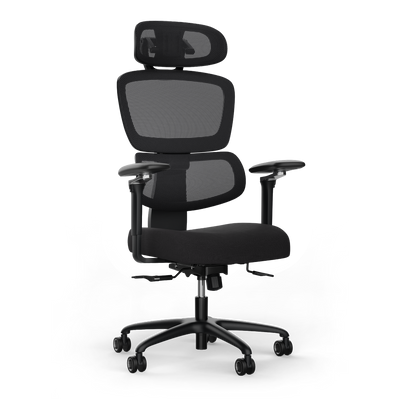
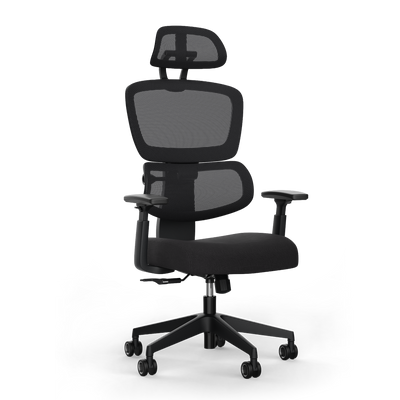
A practical option in the Deskspace range is the combination of a height-adjustable desk and a dynamic chair like the MOVE PRO. The brand name is not important here, but the function is. You can precisely adjust the seat height, allow micro-movements, and vary the workplace between sitting and standing throughout the day.
What doesn’t work well
Not every solution really helps:
- very soft chairs: feel comfortable at first but often let the hips sink
- rigid kitchen chairs for long workdays: little adjustment, little support
- permanent sitting on a gym ball: too little relief and too little variability in the workday
- just a seat cushion without other adjustments: can change pressure but cannot replace the setup
A good workplace doesn’t take all the work off your hips. It ensures that the load is distributed, interrupted, and better controlled. That’s exactly what many complaints lack.
Optimize posture and habits in everyday life
Even a well-adjusted workstation is of little use if your habits constantly strain your hip unevenly. This happens more often than many think.
Asymmetrical sitting habits are a frequently overlooked factor. According to a DGUV study, 51% of office workers sit asymmetrically, for example with crossed legs. This increases the risk of muscle tension like piriformis syndrome by 40%. Dynamic chairs that promote micro-movements can reduce this one-sided strain by up to 29%. Women are also more often affected by certain types of hip pain due to their pelvic anatomy (Overview of hip pain and asymmetrical sitting).
You should stop these everyday patterns
- Constantly crossing legs: tilts the pelvis sideways
- Sitting on one buttock: causes one-sided pressure
- Rotating toward the monitor: twists hip and torso at the same time
- Wallet in the back pocket: creates localized misalignment
- Staying too long in one position: even if it is well adjusted
Better routines with little effort
You don’t need a complicated method. These habits are often enough:
- Consciously place both feet parallel again and again.
- Change your sitting position before pain starts.
- Plan fixed standing phases between focused work blocks.
- Align mouse, keyboard, and monitor centrally.
- Use reminders if you tend to forget breaks.
If you notice that especially the front of your hip constantly feels tight, you should also look into releasing psoas tension. The connection with sitting-related hip strain is very common in everyday life.
Regeneration also counts
With recurring irritation, it’s not just about posture and movement. Some also benefit from reducing overall inflammation-promoting habits. If you want to explore this topic further, the article on anti-inflammatory nutrition is a useful complementary perspective.
Everyday reminder: The hip does not forgive one bad posture. It reacts to hundreds of repetitions of the same bad posture.
Frequently asked questions about hip pain when sitting
Can a wallet in the back pocket cause hip pain
Yes. A wallet raises one side and changes the pressure distribution. This causes you to sit crookedly automatically. This can promote deep buttock pulling, irritation in the piriformis area, and an unstable pelvis. For short distances, this is often unproblematic. For long desk times, it is not.
Do special seat cushions help
Sometimes. A seat cushion can reduce pressure peaks. However, it does not automatically solve the underlying problem. If the chair is too low, the seat depth is wrong, or you sit still for too long, the cause remains. Cushions are more of a supplement than a main solution.
Should I sit on a hard or soft surface
Neither extremely hard nor extremely soft is ideal. Too hard surfaces create point pressure. Too soft surfaces let the pelvis sink and close the hip angle. Better is a stable, supportive seat surface with controlled give.
Why does the hip only hurt badly when standing up
Because irritated structures after prolonged bending and compression only become noticeable during the transition. The tissue was under pressure while sitting. When standing up, the hip must extend, stabilize, and bear weight. This often reveals how severe the irritation really is.
What is better for hip pain while sitting: standing or sitting
Neither, if you do it for too long. Sitting relieves some structures but irritates others. Standing can relieve pressure from bending but also becomes problematic if you stand rigidly. The most effective solution is switching.
What do I do if nothing improves despite measures
Then you need a medical evaluation. This is especially true with significant movement restrictions, radiating symptoms, night pain, or complaints after a fall. Even good ergonomics cannot replace a diagnosis if the cause lies deeper.
Are exercises or workspace adjustment more important
Both. Exercises improve mobility and muscle control. Workspace adjustment prevents you from provoking irritation daily. Often, one alone is not enough.
In the end, the matter is clear. hip pain while sitting rarely disappears by ignoring it. It improves when you correctly identify the pain location, reduce acute triggers, exercise specifically, and design your workspace so that movement remains possible.
If you want to make your workspace consistently more hip-friendly, you can find height-adjustable desks, ergonomic chairs, and accessories for variable, customizable setups in the home office and office at DESKSPACE. The key is not a single product, but a workspace that allows posture changes and adapts to your body.


