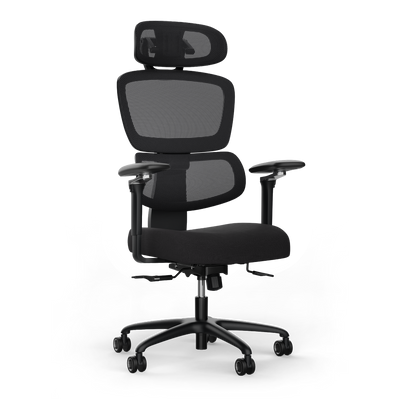
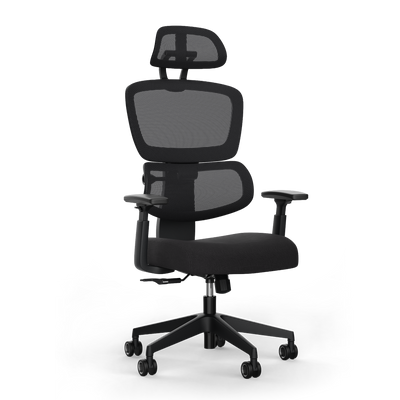


IKEA Markus Office Chair: Is it still worth buying?

The IKEA office chair Markus is common in many offices. That's understandable. It's affordable and widely available. For occasional sitting, this might be sufficient. However, those who work many hours daily at a desk quickly notice the ergonomic limitations of the chair.
A critical assessment of the IKEA office chair Markus
Almost everyone knows it. The IKEA Markus is a staple in Germany in the segment of affordable office chairs. Its recipe for success is simple. It offers a fair price, constant availability, and many positive customer reviews. But for whom is this chair truly the right choice?

Market position and target group
The Markus targets price-conscious buyers. They are looking for a quick and simple solution for their home office. It is the classic chair for occasional home office use, a teenager's room, or a student's workstation. Its basic functions, such as height adjustment and a simple tilt mechanism, are a clear upgrade compared to a kitchen chair.
The numbers confirm this. The IKEA Markus costs between 155.60 EUR and 189 EUR, depending on the version. Over 2,600 reviews on the IKEA website with an average of 4.5 out of 5 stars show that it meets expectations in this price range. The chair is designed for a load of up to 110 kg. The seat height can be adjusted from 46 to 57 cm. This suits many users. Its durability in a private environment is also demonstrated by the active second-hand market. You can find current prices and availability of the Markus on idealo.de.
The Markus is a classic entry-level model. It offers solid basic comfort for short work periods. However, it does not meet the criteria of a professional, ergonomic office chair for daily use.
What are the differences compared to professional office chairs?
The crucial difference to a professional office chair lies in the lack of adjustment options. The Markus provides a solid basis. However, it lacks important ergonomic functions that make a difference during hours of use.
- Limited mechanism: The simple tilt mechanism is the biggest weakness. Here, the entire seat shell tilts backward. Professional chairs use a synchronized mechanism. This means that the seat and backrest move in an ergonomically sensible angle to each other. This actively supports the body with every movement.
- Rigid armrests: The armrests are fixed and not adjustable. This often leads to tension in the shoulder and neck area. The arms cannot be rested at the correct height.
- No seat depth adjustment: The seat depth is fixed. This is particularly a problem for very tall or short people. If the seat is too short or too long, the important support for the thighs is missing. Blood circulation in the hollows of the knees is disturbed.
- Static lumbar support: The curve in the backrest offers some basic support for the lower back. However, it cannot be individually adjusted to one's own spine.
This clarifies the initial situation. The IKEA Markus is an economical choice for anyone who only occasionally sits at a desk. If you spend several hours daily in a home office, you should invest in a model with more comprehensive ergonomic functions for your health.
Analysis of ergonomics and adjustability
A good office chair must support your body when you spend many hours at your desk. Ergonomic functions are a necessity here, not a luxury. The IKEA Markus provides basic equipment. This is sufficient for occasional use, but quickly reaches its limits in daily use.

The basic functions of the IKEA Markus
Let's look at the functions of the Markus. Its adjustment options are limited to a few essential functions. This is a solid foundation. However, too much is missing for truly dynamic and healthy sitting.
- Height adjustment: You can continuously adjust the seat height to your body size and desk height. This is the absolute basic requirement for ergonomics.
- Tilt mechanism: The chair has a tilt function with adjustable resistance. The entire seat shell tilts backward. This is suitable for a short relaxation break.
- Locking function: You can lock the backrest in the upright position. This prevents constant tilting back but does not promote an active sitting posture.
- Integrated lumbar support: A fixed curve is built into the lower back area. It is intended to support the lumbar spine. Since it is not adjustable, it does not fit every back shape.
This equipment makes the IKEA Markus better than a kitchen chair. However, it does not yet make it a fully functional, ergonomic tool for continuous use.
What the Markus lacks in ergonomics
The decisive point that distinguishes the Markus from professional office chairs is the lack of adjustment options. These are not optional functions. They are crucial tools to prevent postural damage and tension during long periods of desk work.
Professional ergonomics means that the chair adapts to your body, not the other way around. Missing adjustments force your body into a rigid or unnatural posture. This leads to discomfort in the long run.
Here are the most important features you won't find in the Markus:
- Synchronized mechanism: Unlike the tilt mechanism, with a synchronized mechanism, the seat and backrest move in an ergonomically sensible ratio. When you lean back, the seat only tilts slightly. This promotes blood circulation and supports your body's natural urge to move.
- Adjustable armrests: The Markus's armrests are rigid. Professional chairs offer at least 3D or 4D armrests. You can adjust these in height, width, depth, and angle. This is the only way to effectively relieve your neck and shoulders.
- Seat depth adjustment: The seat depth is fixed, and this is a major disadvantage. Ideally, there should be about three fingers' width of space between your knee crease and the front edge of the seat. This prevents pressure on your thighs and ensures good blood circulation. Since the Markus does not allow adjustment, it is often unsuitable for very tall or short people.
- Adjustable lumbar support: A fixed lumbar support cannot match the individual curvature of every spine. Professional models have a height-adjustable and often also depth-adjustable support. This supports your lumbar area specifically and precisely.
The seat area is also a topic. The IKEA Markus swivel chair is available in Germany in two sizes. One variant has a seat width of 53 cm and a seat depth of 47 cm. The larger version has a width of 57 cm and a depth of 49 cm. This is a difference of about 8% in the seat area.
The price difference from 159 EUR to 189 EUR is also noticeable. User reviews show that the larger variant is the better choice for people who appreciate more freedom of movement. The maximum load capacity remains identical for both models at 110 kg.
Materials, durability, and warranty in comparison
The longevity of an office chair depends on its materials. A chair for daily, hours-long use must be robustly built. Here, budget models like the IKEA Markus and professional ergonomic office chairs diverge.

What's inside the IKEA Markus? A material analysis
The IKEA office chair Markus relies on a mix of affordable but functional materials. This is fair for its price. Its construction is intended for normal home use, not for continuous use in an office environment.
- Mesh backrest: The high backrest is made of polyester mesh fabric. This ensures good ventilation. However, with daily use, the mesh loses tension over time.
- Seat cushion: Simple polyurethane foam is used here. Initially, this is comfortable. With daily use, the cushion quickly loses density. A worn-out feeling is a typical sign of age.
- Frame and mechanism: The aluminum and steel base ensures solid basic stability. However, the tilt mechanism and gas lift are only designed for a load of up to 110 kg. They wear out faster with intensive use than components of professional chairs.
This choice of materials makes the IKEA Markus a sensible solution for occasional sitting. For a demanding eight-hour day in the home office, the components are not designed. Signs of wear after a few years are likely. A relevant article about the IKEA office chair mat helps to protect your floor, at least.
The quality standards of DESKSPACE models
Professional office chairs like those from DESKSPACE use higher-quality and more durable materials. These are certified for intensive daily use of eight hours or more.
A professional office chair is an investment in your health and productivity. High-quality materials and robust construction ensure that the ergonomic functions are maintained even after years of intensive use.
What makes DESKSPACE chairs different is evident in the details:
- Covers: Instead of polyester fabrics, highly abrasion-resistant, breathable fabrics are used. These are tested for tens of thousands of abrasion cycles. This way, they retain their shape and function even after years.
- Padding: Instead of simple foam, dimensionally stable cold foam or molded foam with high density is used. This ensures better pressure distribution and prevents the seat from sagging.
- Mechanism and frame: The synchronized mechanism and base are made of reinforced steel or aluminum. They are designed for higher loads. DESKSPACE models are TÜV tested and certified for a user weight of up to 150 kg. This is a clear sign of robustness.
Warranty and service: More than just a number
An often overlooked point is warranty services and customer service. IKEA offers a 10-year warranty for the Markus. This covers material and manufacturing defects.
DESKSPACE goes a step further. It's about the entire package that gives you security as a customer.
| Feature | IKEA Markus | DESKSPACE Models |
|---|---|---|
| Warranty Period | 10 years | Up to 10 years |
| Trial Period | 365-day return policy (for unused items) | 100 days risk-free home trial |
| Service Focus | Replacement for material defects | Personalized advice & fast service |
The 100-day trial period at DESKSPACE is crucial here. You can try out the chair at your leisure in your own working environment. If it doesn't suit you, it can be returned free of charge. This service gives you the certainty of making the right decision for your health and comfort.
Direct comparison with professional alternatives
The IKEA office chair Markus offers a solid foundation for its price. If you sit at a desk for many hours daily, you will quickly notice its limitations. The limited ergonomic functions are not sufficient for intensive workdays. Here, the difference to professional, certified office chairs like the DESKSPACE models becomes apparent.

Mechanics in focus: Tilt mechanism vs. synchronized mechanism
The heart of an office chair is its mechanism. The IKEA Markus uses a simple tilt mechanism. When you lean back, the seat and backrest tilt together at a fixed angle. This is suitable for a short break. For dynamic sitting, it is hindering because the angle between the upper body and thighs does not open.
Professional office chairs like the DESKSPACE MOVE use a synchronized mechanism. Here, the backrest and seat move in a coordinated relationship. The backrest tilts more than the seat.
Why is this important? The advantages are clear:
- Promotes blood circulation: The open sitting angle ensures that your thighs are not compressed.
- Actively supports: The mechanism adapts to your natural movements and optimally supports your back.
- Keeps muscles fit: Through constant, subtle movement, your core muscles remain active, and tension is prevented.
Adjustability: When the chair adapts to you
A professional office chair adapts to your body. Not the other way around. Here, the IKEA Markus shows its biggest weaknesses. Its armrests are rigid, the seat depth is not adjustable, and the lumbar support is fixed.
The DESKSPACE MOVE offers precise adjustment to your body measurements with 3D armrests, seat depth adjustment, and a height-adjustable lumbar support. The result is a noticeably better posture. Shoulders, neck, and lower back are relieved.
The crucial point is active adaptability. While the IKEA Markus offers passive support, DESKSPACE models enable dynamic and personalized support. This is crucial for your health during daily hours of desk work.
Certifications: What seals say about quality
Certificates are independent proof of safety, ergonomics, and durability. While the IKEA Markus was designed for home use, DESKSPACE models are certified for professional continuous use.
- TÜV Certification: This seal confirms that the chairs have passed strict safety and quality tests. They are tested for load capacity, stability, and the durability of all materials. DESKSPACE chairs are therefore designed for a higher user weight (e.g., up to 150 kg) than the Markus (110 kg).
- IGR Seal (Institute for Health and Ergonomics): This seal certifies that a product demonstrably promotes the health and performance of the user. It is confirmation of the high ergonomic quality of DESKSPACE chairs.
These certifications give you the assurance that you are investing in a product that not only lasts a long time but also protects your health.
Feature comparison: IKEA Markus vs. DESKSPACE models
To clarify the differences, we have contrasted the most important features in a table.
| Feature | IKEA Markus | DESKSPACE MOVE |
|---|---|---|
| Mechanism | Simple tilt mechanism | Synchronized mechanism |
| Armrests | Rigid, not adjustable | 3D adjustable (height, depth, width) |
| Seat Depth Adjustment | Not available | Yes, 5 cm adjustment range |
| Lumbar Support | Fixed integrated | Height adjustable |
| Max. Load Capacity | 110 kg | 150 kg |
| Certification | None specific | TÜV tested, IGR certified |
| Warranty | 10 years | Up to 10 years |
| Trial Period | 365 days (unused) | 100 days home trial |
This overview makes it clear. The switch from the IKEA Markus to a professional model like the DESKSPACE MOVE is a leap from a passive seating option to an active work tool. It specifically promotes your health.
Now what? Which chair is right for you?
The question remains: When is the IKEA Markus sufficient, and when is a professional DESKSPACE chair a better investment? There is no general answer. It depends on you, your daily work routine, and your demands.
Choosing an office chair is important. Many of us spend seven to eight hours sitting daily. A chair that doesn't fit can cause long-term health problems. It's about finding the chair that fits your life.
In these cases, the IKEA office chair Markus is a good choice
The IKEA office chair Markus is a reasonable and budget-conscious solution when the conditions are right. In the following situations, it is a good choice:
- For occasional home office use: You work from home only a few days a week or rarely sit for more than a few hours at a time. For such short periods, the basic functions of the Markus are sufficient.
- As a budget-friendly initial setup: As a student or when setting up a first home office, money is often tight. Here, the Markus is a great upgrade compared to a kitchen chair, without breaking the bank.
- For a teenager's room or hobby room: For homework or occasional PC use, the Markus is a robust and durable option.
In these scenarios, the Markus is a good decision. You get a product with a very good price-performance ratio.
When you should switch to a DESKSPACE model
As soon as sitting becomes the core of your workday, a professional, ergonomic office chair is a necessity. Here are concrete examples of when switching to DESKSPACE makes sense.
A professional office chair is an investment in your health and productivity. For hours of sitting, the higher acquisition costs quickly pay off with less pain and more concentration.
For the health-conscious power user You sit at your desk for more than four hours daily and are already noticing neck or back pain.
- Your problem: Rigid sitting on a simple chair forces your body into an unhealthy posture. You lack the dynamic support to relieve your spine.
- Your solution: The DESKSPACE MOVE. With its synchronized mechanism, seat depth adjustment, and adjustable lumbar support, it promotes active sitting and adapts to your body. This can alleviate existing complaints.
For companies and startups that value quality You are furnishing office workstations and need to consider durability, safety, and the health of your employees.
- Your problem: You need chairs that are built and certified for daily eight-hour use. The load capacity limit of 110 kg for the Markus and missing certificates are often a disqualifying factor.
- Your solution: DESKSPACE models like the MOVE are TÜV tested and bear the IGR certificate for ergonomics. They are designed for a load of up to 150 kg. This meets the requirements of professional associations and shows appreciation for your employees.
Conclusion: Your best choice for a healthy workplace
The choice of the right office chair influences your health and concentration. The IKEA office chair Markus is a strong statement for its price and a sensible choice for occasional work. It is better than an ordinary kitchen chair.
Those who sit for many hours daily will quickly encounter the limits of the Markus. Missing adjustment options such as the synchronized mechanism, rigid armrests, or the non-adjustable seat depth are insufficient in the long run. This can lead to tension and poor posture.
An investment in your health
Here lies the difference to a professional, certified office chair. A fully adjustable model from DESKSPACE is a direct investment in your well-being and productivity.
An ergonomic workplace is not a luxury but a necessity. In the long run, the decision for a high-quality chair pays off with less pain and more energy in everyday work.
A chair that precisely adapts to your body helps you sit actively. The certified quality and durable materials ensure that this support is maintained even after years of intensive use.
Make the right decision for yourself
Weigh up which solution suits you. Be honest with yourself and answer these questions:
- How many hours do you sit at your desk on average per day?
- Are you already struggling with back or neck problems?
- Do you plan your workspace as a long-term setup?
If you only work at your desk occasionally, the IKEA office chair Markus is a solid option. As soon as you spend most of your workday sitting, switching to a professional ergonomic chair is the smarter and healthier decision.
Frequently asked questions about the IKEA Markus
Here we clarify the most important questions about the IKEA Markus.
How long does the IKEA Markus last?
The lifespan depends on usage. With daily, multi-hour office work, the first signs of fatigue appear after about two to three years. The seat cushion loses firmness, and the mesh fabric of the backrest sags.
With occasional home office use, it can serve you well for longer. IKEA offers a 10-year warranty. This refers to material and manufacturing defects. Normal wear and tear from daily use is excluded.
Is the chair suitable for people over 110 kg?
No. The IKEA Markus is officially designed for a maximum load of 110 kg. Continuous use with a higher body weight is not recommended. This stresses the gas lift and the mechanism and quickly becomes a safety risk.
Professional office chairs show their strength here. Models like the DESKSPACE MOVE are TÜV tested and certified for a user weight of up to 150 kg. This provides more safety and is a sign of more robust construction.
What is the biggest ergonomic disadvantage?
The biggest weakness of the IKEA Markus is its lack of adaptability. It forces you into a rigid posture. This is evident in three points:
- Rigid armrests: They are not height-adjustable. This often leads to tension in the shoulder and neck area.
- Fixed seat depth: The seat surface has a one-size-fits-all design. For tall people, it is often too short; for shorter people, too long.
- Simple tilt mechanism: This mechanism does not promote active sitting. A good synchronized mechanism moves the backrest and seat in a healthy angle to each other.
Your body has to adapt to the chair, instead of the chair supporting your body. Professional models give you the flexibility for healthy working.
Are you ready to invest in a workplace that promotes your health? Discover the ergonomic office chairs from Deskspace and find the model that suits you.


