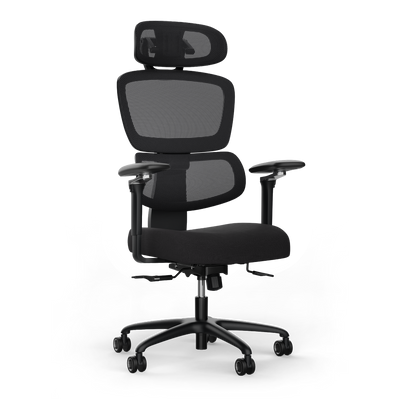
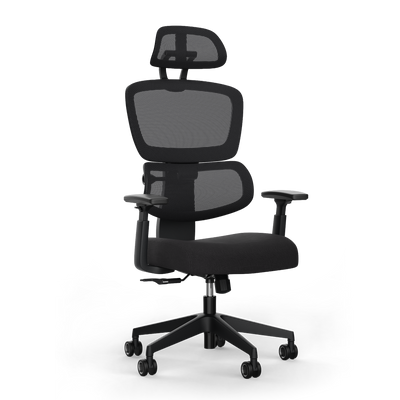


Desk Chair for Teenagers: The Ultimate Guide

If you're currently looking for a desk chair for teenagers, you probably already know the situation. Your child is doing homework, sliding forward, propping their head up, shrugging their shoulders. Later, the same often happens while gaming or studying on a laptop. The chair quickly becomes an afterthought. And that's exactly the mistake.
An unsuitable chair is not only uncomfortable. It forces the body into a posture that becomes a habit over months and years. This is especially critical during adolescence. The body changes, proportions shift, and the workstation must keep up.
Many parents therefore only buy a new chair when the old one is visibly too small or broken. Ergonomically, that's too late. A suitable desk chair for teenagers should not only work today, but also throughout the next growth spurts.
Bad posture rarely results from laziness. Most of the time, the workstation simply no longer fits the current body height.
In addition, there's a second point that is often underestimated. A well-adjusted chair not only affects the back and neck, but also concentration. If feet can't find support, the desk edge is too high, or shoulders are constantly tense, learning becomes more strenuous than necessary.
Therefore, this purchase is not about just any piece of furniture. It's about a long-term decision for health, sitting habits, and daily learning. That's exactly what you should pay attention to.
Growth in Focus: Why Your Child Needs a Special Chair
Monday evening, math homework. Your child sits upright at first, ten minutes later they slide forward, prop an elbow on the table, and pull one leg under the seat. Many parents then see restlessness or bad habits. Often, the simpler reason is: the chair no longer fits the body.
That's why teenagers often need a different desk chair than adults. During this phase of life, body proportions change rapidly. Legs experience a growth spurt, the upper body catches up later, or vice versa. A chair that fit in spring can already lead to feet no longer having firm support or the backrest pressing in the wrong place by autumn.
This is not a minor detail, but the foundation for healthy sitting. A chair functions like a well-adjusted bicycle. If the saddle and handlebars don't fit the body height, you can still ride, but you'll be cramped. Something similar happens with a desk chair. The body finds an alternative posture to compensate for the lack of support.
What Makes Teenagers Different
The spine is still developing, and at the same time, sitting times are increasing: school, homework, studying on a laptop, creative hobbies, or gaming. A youth chair must therefore be adaptable and do more than just provide a comfortable seat.
Here's what matters:
- Adjustable seat height. Feet should be able to rest firmly on the ground so that legs and pelvis are not constantly under tension.
- Proper back contact. The backrest should provide meaningful support even if your child grows a few centimeters in a few months.
- Use for various situations. Concentrated study usually requires a different posture than a short break or relaxed reading.
The recommended adjustment range for children's and youth chairs, as stated in professional practice, shows how great this need for adjustment is. The seat height should be able to grow with the child significantly, instead of being designed for only one fixed body height. Therefore, what matters is not whether a chair fits just right today, but how many developmental stages it can still meaningfully accompany.
Why Adult Chairs Are Often Not a Good Long-Term Solution
Many adult chairs are built for longer thighs, wider seats, and different proportions. A teenager often sits in them like borrowed shoes. You get by somehow, but nothing fits correctly.
The consequences are quickly visible in everyday life. Your child sits on the front edge, doesn't lean back at all, or rests their feet on the chair base instead of the floor. This seems harmless, but it's usually a sign that the height, seat depth, or backrest shape don't match.
| Area | Typical problem with the wrong chair | Good solution |
|---|---|---|
| Seat height | Feet don't find secure support or knees are bent too sharply | Height can be adjusted to current leg length |
| Seat depth | Pressure behind the knees or insufficient support under the thighs | Seat surface better fits body height |
| Backrest | The back loses contact with the backrest | The backrest supports at an appropriate height and shape |
| Use over several years | The chair only fits for a short period | The adjustment range accompanies growth and changed use |
For parents, this is the crucial perspective. You are not just buying a chair for the next school semester. You are investing in a workstation that accommodates growth, facilitates concentrated learning, and remains sensibly adjustable even after the next growth spurt.
This also includes practical questions later in the selection process, such as a trial period, spare parts, and warranty. Because a good youth chair should not only feel comfortable today, but reliably last for years.
The Most Important Ergonomic Adjustment Options Explained

A good youth chair doesn't need a long list of levers, but rather adjustment options that suit a growing body. For parents, one question is particularly helpful: Which function solves which daily sitting problem?
This is how technology becomes a meaningful health decision.
Seat Height
The seat height is the first and most important basis. It influences whether the feet are securely on the ground, whether the knees remain relaxed, and whether the pelvis can sit calmly. If this point isn't right, the other settings often get out of balance right away.
For a chair that grows with the child, the height should be adjustable enough so that your child isn't sitting too high or too low again after the next growth spurt. For practical purposes, a single numerical value is less important than the visible effect: the feet are fully on the floor, and the legs don't have to compensate.
Seat Depth
Seat depth is often underestimated when buying. Yet, it determines whether the seat acts like a suitable support or like a bench that is too long.
If the seat surface is too deep, your child can barely bring their back to the backrest without it pressing behind their knees. If it's too short, the thighs lack support, and sitting becomes restless faster. Especially for teenagers who grow several centimeters in a short time, an adjustable seat depth is therefore much more than an extra. It extends the useful lifespan of the chair.
Backrest Height and Backrest Shape
The backrest shouldn't just touch the back. It should accompany it in a natural posture. This is particularly important for teenagers because body size, shoulder height, and sitting habits can change significantly in just a few years.
Pay attention to whether the backrest is high enough and has a comprehensible shape. A good backrest helps your child to lean back without sliding forward or tilting backward in the lower back. Mesh can be comfortable because air circulates better. However, the shape is crucial first, not the cover.
Lumbar Support
Lumbar support supports the lower back. This sounds complicated technically, but in practice, it's easy to understand. The area just above the pelvis needs support so that the back doesn't slouch.
For teenagers, this support doesn't have to be hard or strongly pronounced. It should rather work like a well-placed hand in the lower back. Noticeable, but not intrusive. If your child only leans back briefly and then slides forward again, the shape often doesn't fit well enough.
Armrests
Armrests are only useful if they truly support the posture. Armrests that are too high pull the shoulders up. Models that are too wide or rigid prevent the chair from getting close enough to the table.
Therefore, adjustable armrests are usually the better solution. However, for smaller teenagers or with narrow desks, a model without armrests might be more sensible. It's not important for a chair to have as many parts as possible. What's important is that nothing disturbs the working position.
Rocking Mechanism and Mobility
Teenagers rarely sit completely still. This is not a flaw, but normal. A rocking mechanism or a movable back system can help to allow small changes in posture, instead of forcing the body into a rigid position.
You can think of it like walking on a path instead of standing on a tile. Small movements keep sitting more lively and comfortable. For longer study periods, this is often more helpful than a chair that only works well in one position.
Always Check the Desk Too
Even a well-adjustable chair only works in conjunction with a suitable desk. If the work surface is too high, your child will raise their shoulders. If it's too low, they will constantly lean forward.
Therefore, never check the chair in isolation. It is part of a learning space that should function for years. If you want to fine-tune the individual settings in everyday life, this guide on adjusting your desk chair correctly will help you.
For the purchasing decision, this means something very concrete: don't just look for a comfortable first impression. Look for adjustability that accommodates growth, handles different uses between homework and screen time, and remains sensibly adjustable even after months. This is exactly the difference between an arbitrary piece of furniture and a long-term investment in health and concentration.
Guide to Correct Posture and Chair Adjustment
Even the best desk chair for teenagers is of little use if it's adjusted incorrectly. The good news is: you don't need special training for this. A quick joint check is often enough.
How to Adjust the Chair Step-by-Step
-
Adjust seat height
Your child sits all the way back in the chair. Their feet are flat on the floor. Their knees are relaxed and bent. If their legs are dangling or their knees are pointing sharply upwards, the height is not right. -
Check with the desk
Now bring the arms into play. The forearms should be able to rest loosely on the desk surface without the shoulders being shruged. If your child tenses their shoulders, the desk is usually too high or the chair is too low. -
Make back contact
The back should touch the backrest. Not just briefly, but in a normal working posture. If your child is only sitting on the front edge, the seat depth or backrest shape is often not right. -
Check the seat surface
There should be some space between the front edge of the seat and the back of the knee. Otherwise, pressure will build up, and sitting will quickly become restless. -
Align screen or notebook
Even a well-adjusted chair is of little help if your child works sideways or too low. The work materials should be directly in front of the body.
How to Recognize Good Posture
A useful guide is the 90-degree rule. It's not a rigid law, but a very good starting point.
| Area | What you want to see |
|---|---|
| Feet | Full contact with the floor |
| Knees | Relaxed bend |
| Hips | Calm, stable sitting position |
| Shoulders | Relaxed, not shruged |
| Head | Not permanently tilted sharply forward |
Guidelines for Ergonomic Seat and Desk Height
The following values are not exact rules for every child. However, they serve as practical guidance for everyday use. The actual sitting position always remains decisive.
| Body Height (cm) | Recommended Seat Height (cm) | Recommended Desk Height (cm) |
|---|---|---|
| 120 to 160 | within the individually suitable adjustment range | within the individually suitable adjustment range |
| up to about 160 | coordinate with the chair | coordinate with the chair |
Since no finer intermediate values by body height are available in the verified data, you should not buy based on rigid tables. Always prioritize the real sitting test.
If feet, pelvis, and forearms are all relaxed and positioned simultaneously, the adjustment is usually already very close to a good solution.
Dynamic Sitting Is Not an Extra
Teenagers should not freeze in a perfect pose for minutes. Healthy sitting means movement while sitting. Sometimes a little more upright, sometimes slightly forward, sometimes leaning back briefly. A good chair supports exactly that.
Therefore, don't just pay attention to whether a chair allows a position, but whether it makes position changes easy. This helps the body and often concentration. This is especially important when switching between writing, reading, and screen work.
Choosing Material, Safety, and Durability
A youth chair is heavily used in everyday life. Homework, studying at the screen, short gaming sessions, quickly sitting down with momentum. That's why the purchase is less about design than a decision about health, safety, and lifespan.
Materials influence not only the look but also the sitting behavior. A mesh back can be more comfortable in warm rooms because air circulates better. Fabric often feels a little warmer and softer. For parents, it's primarily practical how easy the surface is to clean and whether it still looks neat after many months.
Upholstery and Suitability for Everyday Use
Teenagers rarely sit as still and evenly as in a catalog photo. The chair must therefore withstand friction, movement, and daily use well. Pay attention to cleanly finished seams, upholstery that doesn't stretch out quickly, and padding that regains its shape after standing up.
Mesh can be useful if your child sweats easily or the room is often warm. Fabric often fits better if a slightly calmer, softer seating surface is desired. Neither variant is automatically better. They must fit your child's daily life.
Realistically Assess Load Capacity and Adjustment Range
Many parents buy for the current size. However, teenagers often grow faster than one might think when buying. A chair that fits just right today may soon seem too small or reach its limits.
Therefore, don't just superficially check the manufacturer's specifications. How high does the seat height really extend? What body height is the model designed for? How much weight is allowed? Such information shows whether the chair is only suitable for the next school year or can sensibly grow with the child for several years.
This is the core of the decision. You are not just buying a piece of seating furniture, but a tool for a developmental phase.
Base, Castors, and Tested Safety
A good chair should feel safe, even when your child turns sideways or stands up quickly. The base should therefore be stable and not create a wobbly feeling. Castors must match the floor. They behave differently on hard floors than on carpets. If the castors do not match the environment, the chair quickly becomes noisy, unsteady, or difficult to move.
Clear information on tested safety, such as GS or other verifiable quality tests, is also helpful. Such information does not replace a test sit, but it provides additional security for a product that is used daily.
If an existing chair only partially fits, an ergonomic seat cushion for children can be a supplementary solution in individual situations. However, it does not replace a properly adjustable chair.
Warranty and return policies also deserve a close look. Especially with teenagers, the fit often only becomes apparent after a few days of real-world use. A fair trial period and a clear warranty help parents make a good long-term decision instead of simply accepting a bad purchase.
Learning vs. Gaming: Finding the Right Chair
Many parents ask the same question: Does my child need a learning chair or a gaming chair? The short answer is: The label isn't what matters; it's the posture the chair allows.

Your child sits differently when learning than when playing
When writing, reading, or researching, the posture is usually more active. The upper body leans forward slightly, the arms work closer to the edge of the desk, and the gaze switches between notebook, keyboard, and screen.
When gaming, many teenagers sometimes lean back. At the same time, arms and hands remain active. Therefore, the chair should be able to do both: provide a concentrated position close to the desk and a more relaxed posture during calmer phases.
| Usage | Typical Posture | What the chair should be able to do |
|---|---|---|
| Learning | Upright to slightly leaning forward | Good proximity to the desk, gentle back contact |
| Gaming | Alternating between active and reclined | Movable backrest, stable arm position |
| Mixed daily use | Frequent position changes | Flexible adjustability instead of rigid design |
Why race car seat aesthetics are often distracting
Many gaming models look supportive and dynamic. However, rigid side bolsters, fixed headrests, or striking shell designs are not automatically ergonomically beneficial. If they prevent your child from sitting freely, moving forward, or positioning their arms loosely, the design isn't helpful.
A good ergonomic office chair is often the more versatile choice for many teenagers. It looks more neutral but generally allows for more genuine adjustment.
A chair for teenagers should not prioritize one use. It should allow for learning, reading, video calls, and gaming without forcing a specific posture.
Therefore, when comparing specific models, pay attention to these points:
- Backrest with movement. It should allow for various sitting postures.
- Armrests without interference. They should not prevent moving close to the desk.
- Neutral seat design. Less show, more adjustability.
The Purchase Decision: A Checklist for Parents

Ultimately, a long list of features is no help if you can't make a clear decision in the store or during a conversation with your child. This checklist brings the purchase to the point.
The Practical Checklist
-
Does the adjustment range truly suit growth?
Check if the seat height, backrest, and seat surface are still practical not only today but also in the next phase of growth. -
Can the chair be coordinated with the desk?
A good chair alone is not enough. The combination of seat height and work surface determines the position of shoulders, neck, and line of sight. -
Does the construction seem suitable for everyday use?
Casters, base, control levers, and upholstery must match the child's room and intended use. -
Are safety and product specifications understandable?
Pay attention to transparent information about testing, load capacity, and materials. -
Can your child accept the chair themselves?
An ergonomically good chair is of little use if it's not used daily. If possible, involve your child in the selection process.
What Parents Often Consider Too Late
It's not just the technology that counts. Framework conditions are also important.
| Question | Why it's important |
|---|---|
| Is there a home trial period? | Only in everyday use does it become clear whether the chair truly fits. |
| How clearly is the warranty regulated? | Longer coverage suggests predictable use. |
| Is the chair neutral enough for several years? | Tastes change quickly during adolescence. |
If you want to systematically compare different chair types, this guide to finding the right desk chair with types and selection criteria will help you.
A practical point in conclusion: A longer trial period and a clear warranty are not minor details. They turn a quick purchase into a reliable decision.
Frequently Asked Questions (FAQ)
When is an ergonomic desk chair worthwhile for teenagers?
As soon as your child regularly works at a desk and their current chair no longer allows for sensible adjustments. This can become apparent early in school, but certainly by adolescence.
How long can a growth-adjustable youth chair be used?
That depends on the adjustment range, load capacity, and physical development. A model can be useful for several years if it is designed not only for the current age but also for growth.
Are gaming chairs inherently bad for teenagers?
No. The main problem lies with rigid designs that allow for little true adjustment. If a model offers good settings and allows for different sitting postures, it can work. The label alone says little.
How much should I spend on a desk chair for teenagers?
There's no universal figure that suits every family. It's sensible to view the purchase as a decision based on usage. If the chair is to be used for years, adjustment range, safety, suitability for everyday use, and warranty are more important than a small price advantage.
If you want to systematically set up an ergonomic workspace for your home or teenager's room, you'll find relevant information on desks, chairs, and everyday ergonomics at DESKSPACE. The combination of a well-adjustable chair, appropriate desk height, and a solution your child genuinely uses daily is always the best approach.


