

Strong Core at Your Desk: 7 Ab Exercises You Can Do While Sitting in Your Chair

Long periods of sitting at a desk weaken core muscles and strain the back. This often leads to posture problems and lower back pain. Strong abdominal muscles are crucial for a stable spine. Effective core training doesn't require a gym or special equipment.
The solution lies in targeted exercises you can perform directly at your workstation. This article shows you 7 seated abdominal exercises you can do on your chair. They strengthen your core muscles, improve your posture, and prevent tension.
For each exercise, you'll learn:
- The correct step-by-step instructions.
- Easy and challenging variations.
- The right breathing technique to support the movement.
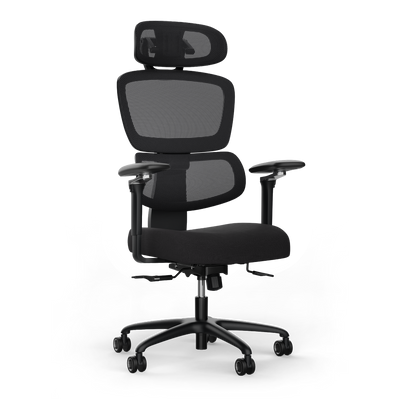
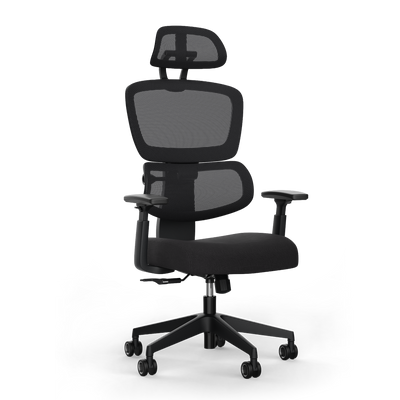
All you need is a sturdy chair. An ergonomic model also supports correct posture and makes execution safer. The exercises can be easily integrated into breaks and help you stay active throughout your workday.
1. Seated Torso Twist
The Seated Torso Twist activates the obliques. The exercise also improves spinal mobility. It helps release stiffness in the torso caused by prolonged sitting.

This exercise is one of the easiest seated abdominal exercises you can do on a chair and can be seamlessly integrated into your workflow. You can use this movement during short breaks between meetings or to regain focus.
Step-by-step instructions
- Starting position: Sit upright on the front edge of your chair. Your feet are firmly and hip-width apart on the floor. Your knees form a 90-degree angle. Tighten your abdominal muscles and keep your back straight.
- Posture: Clasp your hands in front of your chest or place them on opposite shoulders. This prevents you from using your arms for momentum.
- Movement: Exhale and rotate your upper body controllably to one side. Your hips and legs remain stable. The movement originates from your waist.
- Hold: Hold the end position for one to two seconds.
- Return: Inhale as you slowly return to the center. Repeat the movement to the other side.
Tips for optimal execution
- Breathing: Exhale when twisting to contract the abdominal muscles more strongly. Inhale when returning to the center.
- Stability: Focus on keeping your pelvis stable. Only your upper body rotates.
- Control: Perform the movement slowly and controllably. Avoid jerky movements.
- Recommendation: Integrate 2 to 3 sets of 15 to 20 repetitions per side into your breaks.
This exercise is effective when performed on an ergonomic office chair that supports an upright posture. For more information, see our guide on chair exercises.
2. Seated Knee Lifts
Seated Knee Lifts strengthen the rectus abdominis and hip flexors. This movement is important for building core stability. For people who sit a lot, this exercise is essential to counteract muscular imbalances.

This exercise is one of the seated abdominal exercises you can do on a chair that can be easily integrated into your daily routine. Use it as a two-minute movement break every 90 minutes to stimulate circulation and promote the core stability necessary for good posture.
Step-by-step instructions
- Starting position: Sit upright on the front half of your chair. Your feet are flat and hip-width apart on the floor. Keep your back straight and tighten your abdominal muscles.
- Posture: Lean back slightly and support yourself with your hands on the sides of the seat to maintain balance. Alternatively, you can lean against the backrest.
- Movement: Exhale and slowly lift one knee towards your chest. Your upper body remains upright and stable.
- Hold: Hold the knee in the highest position for a moment.
- Return: Inhale as you slowly lower your leg. Switch sides and repeat the movement.
Tips for optimal execution
- Breathing: Exhale when lifting the knee to activate the abdominal muscles. Inhale when lowering.
- Control: Start with slow and deliberate movements. Only increase the tempo when you have mastered the exercise safely.
- Stability: Use a stable chair. Your back can rest lightly against the backrest for support.
- Recommendation: Perform 3 sets of 12 to 15 repetitions per side.
3. Seated Dead Bug
The Seated Dead Bug is an advanced exercise. It targets the deep core muscles and spinal stabilizers. It is recognized for its effectiveness in improving core stability and protecting the lower back. It requires coordination and constant abdominal tension.

This exercise is often recommended for preventing back pain in home office workers. Its controlled execution makes it one of the most effective seated abdominal exercises you can do on a chair. The exercise requires concentration and is ideal for a mindful work break.
Step-by-step instructions
- Starting position: Sit upright in your chair. Lean slightly against the backrest. Your feet are initially flat on the floor.
- Posture: Lift both knees until your thighs are parallel to the floor. Your lower legs point vertically downwards. Extend your arms straight forward.
- Movement: Exhale and slowly extend your right arm backward and your left leg forward. Move them only as far as you can maintain tension in your abdomen.
- Hold: Hold the end position for a short moment.
- Return: Inhale and slowly bring your arm and leg back to the starting position. Repeat the movement with your left arm and right leg.
Tips for optimal execution
- Breathing: Exhale when extending and inhale when returning. Keep your breathing flowing.
- Stability: Your core remains stable throughout the exercise. Avoid movement in your lower back. The power comes from your core.
- Control: Slow movements are more important than speed.
- Recommendation: Perform 2 to 3 sets of 10 to 12 repetitions per side.
4. Seated Crunch
The Seated Crunch is the seated variation of the classic crunch. It is an isolation exercise for the rectus abdominis. The exercise is gentler on the neck and can be performed at your desk without equipment.

This exercise is one of the most effective seated abdominal exercises you can do on a chair because it allows for concentrated muscle contraction. Even in companies with ergonomic equipment, Seated Crunches are part of established micro-workout routines.
Step-by-step instructions
- Starting position: Sit upright on the front half of your chair. Your feet are flat and hip-width apart on the floor. Tighten your abdominal muscles and keep your back straight.
- Posture: Place your hands gently behind your head, without putting pressure on your neck. Your elbows point outwards. Alternatively, you can cross your arms in front of your chest.
- Movement: Exhale and bend your upper body controllably forward towards your thighs. The movement comes from your abdominal muscles. Your lower back remains stable.
- Hold: Hold the position at the lowest point for one to two seconds.
- Return: Inhale and slowly return to the upright starting position.
Tips for optimal execution
- Breathing: Exhale when bending forward to contract the abdominal muscles. Inhale when straightening up.
- Stability: Make sure your feet and pelvis remain firmly on the chair. The power comes from your abdomen, not from momentum.
- Control: Avoid pulling on your neck. Keep your neck in a neutral position in line with your spine.
- Recommendation: Perform 3 sets of 15 to 20 repetitions. Combine the exercise with stretches for the hip flexors.
Correct sitting posture at the desk is the foundation for safe execution of this exercise. An ergonomic chair provides the necessary support.
5. Seated Mountain Climbers
Seated Mountain Climbers are a dynamic exercise. They combine abdominal training with a light cardio effect. The exercise mimics mountain climbing while seated. It activates the rectus abdominis and lower abdominal muscles, increases heart rate, and promotes circulation.
This exercise is ideal for an intense, short break. It is one of the seated abdominal exercises you can do on a chair that can be specifically used to overcome the midday slump, to re-energize and stimulate circulation.
Step-by-step instructions
- Starting position: Sit upright on the front half of your chair. Lean back slightly and support yourself with your hands on the seat. Tighten your abdominal muscles.
- Movement: Lift one knee quickly and controllably towards your chest. Immediately lower it again, while simultaneously pulling the other knee towards your chest.
- Tempo: Perform the movement in a fluid rhythm. The tempo determines the intensity of the exercise.
- Repetition: Perform the movement for a specific time, for example, 30 to 60 seconds per set.
Tips for optimal execution
- Breathing: Breathe evenly and rhythmically.
- Stability: Use a stable chair that does not roll or tip. A stable ergonomic office chair provides the necessary safety.
- Increase intensity: Increase the speed of the knee movements to enhance the cardio effect.
- Maintain control: Keep your upper body stable and avoid rocking your back. The power comes from your abdomen.
- Recommendation: Perform 3 to 5 interval sets: 30 seconds of intense movement, followed by 30 seconds of rest.
Due to its stimulating effect, the exercise should not be performed directly before focused work periods.
6. Seated Leg Raises
Seated Leg Raises are a targeted abdominal exercise. They focus intensely on the lower abdominal muscles and hip flexors. The exercise improves core strength and stability without you having to leave your desk. It is a challenging but effective one of the seated abdominal exercises you can do on a chair.
The exercise can be performed dynamically or statically, offering significant potential for progression. Pilates practitioners use this movement as a modified variation to train core strength while seated.
Step-by-step instructions
- Starting position: Sit upright on the front half of your chair. Your feet are flat on the floor. Lean back slightly and hold onto the sides of the seat with your hands. Tighten your abdominal muscles.
- Posture: Keep your back straight and avoid a hollow back. Your upper body remains still throughout the exercise.
- Movement: Exhale and slowly lift both legs until they are extended parallel to the floor. Keep your legs as straight as possible.
- Hold: Hold the extended position for a short moment.
- Return: Inhale as you slowly and controllably lower your legs. Do not fully put your feet down to increase intensity.
Tips for optimal execution
- Breathing: Exhale when lifting your legs to activate your abdominal muscles. Inhale when lowering.
- Stability: An ergonomic office chair with a firm backrest provides additional stability.
- Control: The movement should be performed slowly and deliberately. Avoid using momentum with your legs.
- Progression: Start with one leg if the exercise with both legs is too difficult at first. Alternate sides.
- Recommendation: Perform 2 to 3 sets of 10 to 15 repetitions.
7. Seated Oblique Crunches
Seated Oblique Crunches strengthen the side abdominal muscles. This movement improves lateral core stability and contributes to waist definition. It is important for building functional upper body strength and counteracting unilateral strain.
This exercise is one of the most intense seated abdominal exercises you can do on a chair. It is suitable for a short but effective workout. Dancers and performers use this movement to develop the core strength required for complex movement sequences.
Step-by-step instructions
- Starting position: Sit upright on the front edge of your chair. Your feet are firmly and hip-width apart on the floor. Tighten your abdomen and keep your back straight.
- Posture: Place your hands behind your head, without pulling on your neck. Your elbows point outwards. Alternatively, you can cross your arms in front of your chest.
- Movement: Exhale and bend your upper body controllably to the side. Simultaneously bring your elbow towards the opposite knee.
- Hold: Hold the peak contraction for one to two seconds.
- Return: Inhale and return slowly and controllably to the starting position. Repeat the movement on the other side.
Tips for optimal execution
- Breathing: Exhale when bending to contract the abdominal muscles. Inhale when returning to the center.
- Quality of movement: Perform the movement slowly and deliberately. Avoid using momentum with your upper body.
- Stability: Keep your pelvis and legs stable. The movement comes from your core.
- Recommendation: Perform 3 sets of 12 to 15 repetitions per side.
To learn more about integrating exercises into your workday, read our article on movement at the workplace.
Comparison: 7 Seated Abdominal Exercises
| Exercise | Implementation Complexity | Resource Requirements | Expected Results | Ideal Use Cases | Main Benefits |
|---|---|---|---|---|---|
| Seated Torso Twist | Very low, easy to learn | No equipment, sturdy chair | Improved rotational mobility, light core strengthening | Office breaks, home office, short mobility intervals | Quiet, back-friendly, immediately applicable |
| Seated Knee Lifts | Low | Sturdy ergonomic chair | Increased core stability, improved posture | Short breaks, beginner routine, gamers | Very effective, gentle on joints, beginner-friendly |
| Seated Dead Bug | Medium, requires coordination | Chair with backrest, some space | Deep core stabilization, back protection | Rehab/prevention, ergonomics training, advanced users | Very effective for back protection, improves neuromuscular control |
| Seated Crunch | Low | No equipment needed | Direct activation of the rectus abdominis, muscle fatigue | Quick workouts, micro-breaks, beginners | Simple, immediately noticeable, easily variable |
| Seated Mountain Climbers | Medium–high, dynamic | Stable seat, free space | Combination of cardio and abdominal training, high intensity | Short HIIT breaks, time-limited sessions | Cardio + abs in short time, high calorie consumption |
| Seated Leg Raises | Medium | Chair with high backrest | Strong activation of lower abdominal muscles, hip flexors | Targeted training, Pilates variants, finishers | Very effective for lower abs, easily scalable |
| Seated Oblique Crunches | Low–medium | Chair | Specific strengthening of the obliques, better lateral stability | Waist shaping, functional rotational work, quick sessions | Shapes waist, improves rotational strength, quick to perform |
Your Path to an Active and Healthy Workplace
You have learned about a selection of 7 seated abdominal exercises you can do on a chair. These can be seamlessly integrated into your workday. Each exercise offers a targeted method to strengthen your core muscles without having to leave your desk. These exercises are a strategic tool for preventing back pain and improving your posture.
The variations presented allow you to adapt the training to your fitness level. Correct breathing and controlled execution are crucial for success. Consider these exercises as a building block of an ergonomic work concept.
Key takeaways summarized
- Consistency is key: Integrate short movement units daily. Five to ten minutes can make a significant difference to your core stability.
- Pay attention to technique: Clean execution takes priority over the number of repetitions. This maximizes effectiveness and minimizes the risk of injury.
- Listen to your body: Respect your limits and gradually increase intensity. Pain is a warning sign.
- Combine exercises and ergonomics: The exercises achieve their full effect in an ergonomically optimized environment.
Your next steps to an active work routine
The path to a healthier workday begins with the first step. It's about establishing sustainable habits. Choose two or three of the presented 7 seated abdominal exercises you can do on a chair and firmly plan them into your daily routine. Use the time while your computer is booting up, or set a timer for an exercise break every hour.
Combine these active breaks with conscious changes in posture. If you use a height-adjustable desk, regularly switch between sitting and standing. Even small adjustments, such as the correct setting of your chair and monitor, reduce the strain on your body. Make strengthening your core a priority. You are investing in your health, concentration, and productivity at work.
An ergonomic workplace is the basis for a healthy back and effective exercises. Discover height-adjustable desks and ergonomic chairs from DESKSPACE to optimally support your new, active work routine. Find the perfect equipment for your home office now at DESKSPACE.


