

Lumbar Disc Herniation: Exercises for Pain Relief and Prevention

A herniated disc in the lumbar spine (LWS) is one of the most common causes of severe back pain and can significantly impair quality of life. The soft core (nucleus pulposus) of a disc protrudes through a tear in the outer fibrous ring and presses on nerve roots – leading to symptoms such as lower back pain, numbness, or loss of strength in the legs. Statistically, about one in three people experience a herniated disc once in their lifetime. Most herniated discs occur in the lumbar spine, the lower part of the spinal column with its five vertebrae. In this article, you will learn which exercises truly help with a herniated disc in the lumbar spine, how you can strengthen your back muscles and relieve your spine – performed slowly and controllably to alleviate discomfort and prevent new problems.
What happens with a lumbar disc herniation?
A disc herniation (medically also known as disc prolapse) of the lumbar spine usually results from wear and tear or overuse of the intervertebral discs in the lower back. The intervertebral discs act as buffers between the vertebrae; however, with increasing age or improper stress, they can lose elasticity. If there is a tear in the fibrous ring, the nucleus pulposus protrudes outwards and can press on nerves or even the spinal cord in the spinal canal. Symptoms often include back pain that radiates into the leg, abnormal sensations (tingling, numbness), or muscular weakness. Even everyday movements can suddenly cause discomfort. Important: Not every disc herniation causes symptoms – small protrusions sometimes go unnoticed. However, if severe pain or neurological deficits occur, medical advice should definitely be sought (see FAQ).
Causes: Common triggers include poor posture, prolonged sitting, heavy lifting with a rounded back, or abrupt twisting of the upper body. Such stresses increase pressure on the intervertebral discs. Overweight, lack of exercise, and weak core musculature also promote disc herniations. The lumbar spine is particularly vulnerable because it bears a large part of the body weight and is very mobile.
Why do exercises help with a herniated disc?
In the past, rest was often recommended for back pain – today, it is known that movement and targeted exercises are crucial for recovery. Gentle training improves blood circulation in the tissues, promotes mobility, and strengthens the stabilizing muscles. This can reduce pressure on the nerves, alleviate pain, and often accelerate the healing process. In addition, regular activity prevents further herniated discs, as a strong core better supports the spine.
It is important that the exercises are performed specifically and with correct form. Physiotherapists recommend an individually tailored program that is gradually increased. Start with gentle movements and be careful not to make jerky or painful movements. Although movement should not be completely avoided during the acute pain phase – gentle walking is beneficial – intensive muscle training should ideally only begin when the acute pain subsides (often after a few weeks).
Note: Perform all exercises slowly and controllably and listen to your body. Pain should not occur during the exercise – if you feel a stabbing or increasing pain, stop the exercise. When in doubt, consult your physiotherapist or doctor before continuing. The following exercises are generally known to be safe and helpful; however, this does not replace personal advice. Especially after a fresh disc herniation, clarify with your doctor when you can start training.
The best exercises for a lumbar disc herniation
Below, we present six effective exercises that are frequently recommended for a lumbar disc herniation. These exercises help to mobilize the spine, strengthen the musculature, and reduce pain. Perform each exercise within your pain-free range of motion and increase intensity only slowly. You only need an exercise mat; all exercises can be easily performed at home lying on your back, on your stomach, or in the quadruped position.
Exercise 1: Pelvic tilt in supine position (mobilization)
This exercise mobilizes the lumbar spine and is ideal as a gentle start to relieve the lumbar spine. Tilting the pelvis gently moves the lower vertebral joints, which promotes blood circulation and releases tension.

How to do it: Lie flat on your back, with your legs bent (knees bent, feet hip-width apart). Place your hands on your hip bones. Now slowly tilt your pelvis forward and down – a small hollow back will form, and your lower back will lift slightly from the surface. Then tilt your pelvis in the opposite direction (up towards your head), so that your lumbar spine is pressed flat against the floor. Perform this pelvic tilt several times in a row, in a fluid, slow rhythm (forward and back counts as one repetition). Repetitions: approx. 10–15 times, pain-free. Pay attention to steady breathing and avoid jerky movements. (Tip: This exercise can also be done while sitting, e.g., at your desk, to mobilize the lumbar spine.)
Exercise 2: Cat-Cow in quadruped position (mobilization)
The Cat/Cow exercise stretches and mobilizes the entire spine and loosens the back muscles. It improves flexibility and can release tension in the lumbar spine area.

How to do it: Get into the quadruped position – hands shoulder-width apart under your shoulders, knees under your hips. Inhale and let your belly drop towards the floor as you slightly lift your head and upper body (Cow position). As you exhale, round your back, pull in your stomach, and lower your head until your chin points towards your chest (Cat position). Slowly alternate between arching and rounding your back with your breath. Repetitions: about 10–15 times in a flowing transition. The movement should be comfortable – avoid pain and make small, gentle movements.
Exercise 3: Cobra in prone position (extension exercise)
This extension exercise in the prone position – also called "Cobra" – can help to centralize a herniated disc and reduce acute pain. By carefully extending the lumbar spine, the intervertebral discs are relieved, as the nucleus pulposus can be drawn back inwards. At the same time, the front of the torso is stretched and the upper body is straightened, contributing to better posture.

How to do it: Lie flat on your stomach. Place your hands under your shoulders, elbows close to your body. Your hips remain on the floor the entire time. Now slowly lift your upper body by extending your arms – as far as is comfortably possible (do not push into painful hyperextension). The movement primarily comes from the arms; the lumbar spine is passively led into extension. Hold the raised position for a few seconds, continue breathing, and feel the stretch in your abdomen and spine. Then slowly lower your upper body back to the starting position in a controlled manner. Repetitions: 5–10 times. Make sure to work slowly and controllably and avoid applying sudden pressure to the lumbar spine. (Note: If your arms are not sufficient to fully lift your upper body, you can also support yourself on your forearms – similar to a Sphinx position. The important thing is that the movement remains pain-free.)
Exercise 4: Hip flexor stretch in lunge
Shortened hip flexor muscles pull on the lumbar spine and can contribute to an exaggerated hollow back. This stretching exercise aims to loosen the hip flexor to relieve the lumbar spine. A flexible hip flexor can significantly reduce pressure on the lumbar spine.

How to do it: Get into a lunge with one knee on the floor. Example: The right knee touches the floor, the left leg is forward, bent at approximately a 90° angle. Keep your upper body upright. Now slowly push your pelvis forward until you clearly feel the stretch in your groin/front hip area (right leg). Be careful not to create a strong hollow back – instead, slightly tense your abdominal muscles to keep your lumbar spine in a neutral position. Stretch gently, without bouncing. Hold time: approx. 20–30 seconds, then switch sides. Repetitions: 2–3 rounds per side. (Tip: This exercise is also recommended by physiotherapists for preventing lumbar disc herniations, as a flexible hip flexor puts less strain on the spine in everyday life.)
Exercise 5: Bridge (pelvic lift in supine position)
The bridge exercise specifically strengthens the gluteal, leg, and back muscles, thereby stabilizing the lumbar spine. The pelvic lift particularly activates the deep core muscles, which support the spine. In addition, this exercise helps to relieve the intervertebral discs, as the surrounding muscles bear more of the load.

How to do it: Lie down on your back on a mat. Place your feet hip-width apart close to your buttocks (knees bent). Your arms lie loosely at your sides. Now tighten your abdominal and gluteal muscles and lift your pelvis until your body forms a straight line from your shoulders to your knees. Avoid an excessive hollow back – the strength comes from your glutes and thighs. Hold the bridge for about 3–5 seconds at the top and then slowly lower your pelvis again, without fully resting it, to maintain tension. Repetitions: 10–15 times, in 2–3 sets depending on your strength. Gradually increase over time. (Note: If only a small lift of the buttocks is possible at first, perform the exercise within the pain-free range of motion and gradually increase the range of motion.)
Exercise 6: Forearm plank
The plank – the forearm support – is one of the most effective core exercises and specifically strengthens the deep abdominal and core muscles. A strong core greatly relieves the lumbar spine in everyday life. Correct execution is important here to keep the spine straight.

How to do it: Lie prone on the floor. Support yourself on your forearms, shoulder-width apart, and place your toes on the floor. Now lift your body so that only your forearms and toes (or the balls of your feet) touch the floor. Your upper body and legs form a straight line – do not let your back sag or push it up. Tighten your abdominal muscles firmly, gently pulling your navel towards your spine. Hold this position for about 20 seconds initially (or as long as you can) and breathe steadily. Then lower your knees and take a short break. Repetitions: 3 rounds. Gradually increase the hold time (up to 30–60 seconds) as your strength improves. (Variation: If the classic plank is too difficult, you can keep your knees on the floor – here too, ensure a straight back.)
Everyday tips for relieving the lumbar spine
In addition to the exercises mentioned above, you should observe some measures in everyday life to relieve your lower back and prevent further disc problems:
-
Take breaks for movement: Avoid prolonged rigid sitting. Regularly (at least once an hour) stand up, walk a few steps, and stretch. Even short stretching exercises in between promote blood circulation in the intervertebral discs and relieve tension.
-
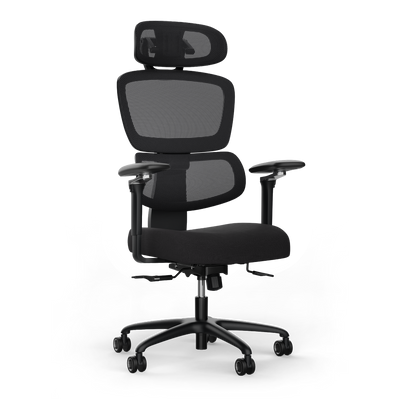
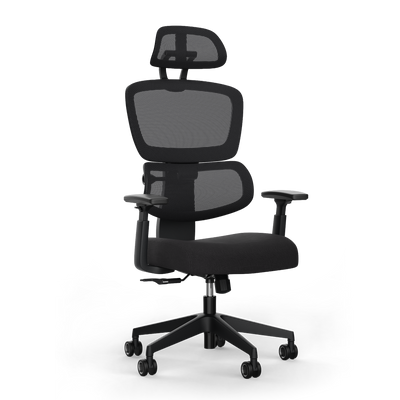
Ergonomic workspace: Set up your desk and chair ergonomically. Your office chair should be adjusted so that your feet are flat on the floor and your knees are bent at approximately a 90° angle. If necessary, use a footrest or a lumbar pillow to support the natural curvature of the lumbar spine and to lean your back against. A height-adjustable desk is ideal for switching flexibly between sitting and standing – this way you avoid one-sided, static strain on the spine. By alternating between working while standing and sitting, the lumbar spine remains in motion and is subjected to less one-sided strain.
-
Lift correctly: Always use a back-friendly technique when lifting heavy objects. Squat down, keep your back straight, and tense your core muscles before lifting the weight. Avoid lifting from a bent back or twisting while doing so – the combination of bending forward and twisting under load is particularly risky for the lumbar spine. Better: approach the object closely, lift with a straight back, and keep the weight as close to your body as possible.
-
Gentle sleeping position: If possible, sleep on your side with slightly bent legs or on your back with a pillow under your knees. These positions relieve the lumbar spine. Avoid very soft mattresses; a medium-firm surface supports the spine better.
With these measures, you can relieve your lumbar spine in everyday life and prevent herniated discs. Remember that movement is key: an ergonomically designed workspace and conscious movement breaks help keep your spine healthy.
Frequently Asked Questions about Herniated Discs (LWS) and Exercises
When can I start exercising or playing sports again after a herniated disc? – In the first few days after an acute incident, pain relief is the priority. However, complete bed rest is rarely advisable – light movement (walking, careful mobilization) promotes recovery. You should only start targeted muscle-building training when the acute pain has significantly subsided – usually after 1–6 weeks, depending on the severity of the incident. When in doubt, get the green light from your doctor. Then start with simple exercises and gradually increase the intensity.
How often should I perform the exercises? – The exercises are most effective when performed regularly. In rehabilitation, it is recommended to exercise at least three to four times a week. Shorter, daily sessions (e.g., 10–20 minutes) are ideal for continuously strengthening the muscles. Listen to your body – on days with more discomfort, gentle mobilization may be sufficient, while on good days you can train more intensively. The key is consistency: Regular exercise is crucial for achieving results.
Which movements or sports should I avoid with a herniated disc? – Initially, avoid all activities that put heavy strain on the spine or involve jerky movements. This includes especially sports with impact loads such as jogging, horseback riding, or ball sports (with quick twisting movements and jumps) during the acute phase. Also, heavy lifting exercises or extreme twisting of the torso should be avoided, as these create high pressure on the intervertebral discs. Once you are more stable, many sports can be gradually resumed in consultation with your doctor/physiotherapist – back-friendly disciplines such as swimming (backstroke) or walking are often possible relatively early. Important: If a certain movement causes pain, avoid it for the time being and focus on pain-free exercises.
When should I see a doctor? – A doctor's visit is advisable if, despite regular exercises, the pain increases or new symptoms appear. Warning signs include, for example, severe leg pain, sensory disturbances (tingling, numbness), or muscle weakness in the leg or foot – these can indicate nerve compression that requires medical evaluation. Immediate medical help is also required in cases of incontinence or paralysis in the leg (suspected cauda equina syndrome). In general: It is better to see a doctor one more time if you are unsure or if the condition worsens. Your orthopedist can clarify whether further measures (such as pain therapy, injections, or in rare cases, surgery) may be necessary.
Can I perform the exercises without a physiotherapist? – Basically, yes. Many of the exercises mentioned above can be performed independently at home. It is even important that you, as the affected person, actively participate in your recovery. However, it is recommended to be guided by a physiotherapist, especially at the beginning. A therapist can show you the correct technique, adapt the exercises to your needs, and ensure that you do not make mistakes that could strain your spine. Even a few guided sessions can make a big difference. Afterwards, you can continue exercising alone with more confidence. If you are unsure or experience new pain, seek professional advice early.
Concluding remarks
While a herniated disc in the lumbar spine is a painful experience, the situation can be significantly improved with the right strategy. Targeted exercises – from mobilizations to stretches and strengthening – play a central role in alleviating pain and promoting healing. Patience and consistency are important: Stay committed and integrate the exercises permanently into your daily routine to improve your back health in the long term. Always listen to your body and avoid harmful movements that could jeopardize the success of your recovery. Physiotherapy and ergonomic adjustments at the workplace often provide additional support – thus creating optimal conditions for recovery. With a strong back and back-friendly habits, you will also significantly reduce the risk of future herniated discs.
Remember: Even after overcoming a herniated disc, it is worthwhile to remain active. Your spine will thank you – for a life with more mobility and less back pain!
Sources: The content of this article is based on current physiotherapeutic recommendations and experiences. Relevant information and exercises have been taken from, among other sources, the advice of physiotherapists and reputable health sources to ensure that you receive the best exercises for your lumbar spine. However, this overview does not replace an individual examination – for specific complaints, please consult a specialist. Good luck with the implementation and get well soon!


