

What is dynamic sitting? Benefits & tips for more movement

Most people spend a large part of their day sitting. This rigid posture is a strain on the body and can reduce productivity. The solution is dynamic sitting. The principle behind it is simple: you regularly change your sitting position to keep your body moving.
What dynamic sitting really means

Dynamic sitting is the opposite of rigid, passive sitting. It's about giving in to your natural urge to move, even at your desk. Your body is not designed to stay in the same position for hours.
This active sitting style encourages many small micro-movements. You shift your weight, lean forwards and backwards, or imperceptibly change your posture. It is precisely these small adjustments that challenge your muscles and keep your circulation active.
The difference from static sitting
With static sitting, you force your body into an unnatural resting position. Your muscles become passive. Pressure on the spine and intervertebral discs increases unevenly. The result is often tension, back pain, and decreased concentration. Dynamic sitting counteracts this.
The main benefits of this active sitting style:
- Activated muscles: Your core and back muscles remain challenged and are thereby strengthened. This stabilizes your spine.
- Relieved intervertebral discs: The constant alternation between pressure and relief ensures better nutrient supply to the intervertebral discs. It's like a sponge that is constantly squeezed.
- Improved circulation: Continuous movement stimulates blood circulation and supplies your brain with more oxygen. This promotes concentration.
Dynamic sitting is not a conscious effort. It is the natural result of an environment that promotes movement. You transform sitting from a passive activity into an active, healthy state.
The foundation for an active workplace
For dynamic sitting to be possible, you need the right equipment. A rigid, immobile chair blocks all movement. An ergonomic office chair with a synchro mechanism or a special stool supports your body in its natural movements. In our article on office chairs without a backrest, we delve deeper into alternative seating options.
Dynamic sitting is an important building block for a healthy and productive working day. Every change of posture, no matter how small, is a gain for your health.
The science behind active sitting

Dynamic sitting is more than just a buzzword from the office world. Behind it are biomechanical facts rooted in the way your body functions. Your body reacts to movement, not to rigid immobility.
The musculoskeletal system is made for activity, not for stagnation. If you sit rigidly for hours, the pressure on your spine is one-sided and constant. This not only slows down the muscles but also inhibits important metabolic processes.
The sponge effect of our intervertebral discs
Your intervertebral discs lie like small, flexible sponges between the vertebrae. They consist of a soft core and are not directly supplied by blood vessels. Their nutrition works via a pump mechanism.
This process, also called diffusion, is activated by the constant change between load and relief. Only when you change your posture are the intervertebral discs gently compressed and then released again. Under pressure, they release spent fluid. When relieved, they soak up fresh, nutrient-rich tissue fluid.
Static sitting interrupts this cycle. The intervertebral discs are permanently compressed and lose their elasticity. Dynamic sitting keeps the pump mechanism active and ensures nutrient supply.
Activation of muscles and circulation
With dynamic sitting, you constantly challenge your body to make small changes in posture. These micro-movements have far-reaching positive effects.
The advantages of this constant activity:
- Strengthening of the core musculature: Your abdominal and back muscles must constantly make small balancing movements. This is a passive training that stabilizes your spine and prevents muscular imbalances.
- Improved blood circulation: Every small movement stimulates blood flow. This supplies muscles and brain with more oxygen. You remain more concentrated and get tired less quickly.
- Activation of the proprioceptive system: There are small sensors in your muscles and joints. They constantly report to your brain where your body is in space. Dynamic sitting stimulates this system and sharpens your body awareness.
Dynamic sitting gives the body exactly what it naturally needs: movement. It transforms passive sitting into an active, health-promoting state.
Static sitting vs. dynamic sitting
Perhaps you know the feeling: you're concentrating on your work and only hours later do you notice how stiff your back is. This is the difference between rigid, passive sitting and the active, dynamic variant. It's about your health and performance.
Static sitting means staying in almost the same position for hours. Your back becomes rounded, your shoulders fall forward. The pressure on the intervertebral discs is constant and one-sided. This is a strain on the body.
The invisible consequences of rigid sitting
If you sit rigidly for hours, your body goes into stand-by mode. The consequences go beyond occasional tension.
- Increased strain on the intervertebral discs: Constant, one-sided pressure blocks the supply of important nutrients. The intervertebral discs can lose their elasticity and no longer fulfill their buffering function.
- Weakened core muscles: With passive sitting, back and abdominal muscles have little to do and can waste away. Weak core muscles are a main cause of poor posture and chronic back pain.
- Reduced blood circulation: Without movement, circulation slows down. The brain and muscles get less oxygen. This leads to fatigue and poor concentration.
The result is not only a painful back, but also a drop in performance, which often manifests as an afternoon slump.
The noticeable benefits of dynamic sitting
Dynamic sitting is the answer to these problems. Instead of sitting passively, the body remains active. Constant small changes in posture activate muscles, stimulate circulation, and relieve the spine. The benefits are directly noticeable.
You continuously activate your back and abdominal muscles. This stabilizes and strengthens your spine. The alternation between loading and unloading ensures that your intervertebral discs are optimally supplied with nutrients. Studies show that better oxygen supply to the brain can demonstrably increase concentration.
Dynamic sitting is not an additional task. It is a method of using the long sitting time at the desk for one's own health. You transform a passive burden into active support for the body.
The following table summarizes the most important differences.
Comparison of static and dynamic sitting
A direct comparison of the effects of both sitting styles on important bodily functions.
| Aspect | Static Sitting (Passive) | Dynamic Sitting (Active) |
|---|---|---|
| Muscles | Remain inactive and weaken | Continuously activated and strengthened |
| Intervertebral discs | One-sided, continuous load and poor supply | Regular loading and unloading promotes nutrient supply |
| Circulation | Slows down, leads to fatigue | Stimulated, increases concentration |
| Posture | Promotes an unhealthy, hunched posture | Supports an upright, flexible body posture |
| Energy level | Often leads to afternoon slump and exhaustion | Keeps you more awake and energetic |
The decision for dynamic sitting is a decision for more energy, better posture, and a healthier back.
How to make dynamic sitting work in your daily work life

The switch to more movement at work is easy. Small adjustments are enough to have a big impact in the end.
The first step is to set up your work environment to promote movement. The basis for this is an ergonomic office chair with a synchronous mechanism. This function ensures that the seat and backrest move in sync with your body. Activate this mechanism and adjust the resistance so that it gently accompanies your movements.
Creating the foundation: the right adjustment
A correctly adjusted workplace is the basis. Only when the chair and table are optimally matched to you can your body use natural movements.
These three settings are crucial:
- Activate the synchro mechanism: Make sure the backrest of your chair is not locked. Your upper body must be able to lean back freely while the seat tilts slightly with it.
- Adjust resistance: The back pressure of the backrest should match your body weight. It is ideal if you can lean back without much effort, but the backrest supports you securely.
- Adjust seat height correctly: Your feet should be flat on the floor and your knees should form an angle of about 90 degrees. This is the only way your pelvis remains mobile.
Dynamic sitting begins with an environment that makes it easy for you. A chair that allows movement and a desk that promotes the alternation between sitting and standing are the best prerequisites.
More movement with the 40-15-5 rule
An effective method for more movement is a regular change of posture. The 40-15-5 rule offers a simple rhythm for this.
The formula works like this:
- 40 minutes of dynamic sitting: Consciously use your ergonomic chair. Repeatedly switch between a forward, upright and a backward, reclined sitting posture.
- 15 minutes of standing work: Switch to standing. An electrically height-adjustable desk like the DESKSPACE PRO PLUS makes this transition seamlessly possible.
- 5 minutes of active movement: Treat yourself to a short, active break. Use the time for stretching exercises or a short walk.
This rhythm prevents your body from remaining rigid for too long. Regular activation keeps you fit and concentrated throughout the day. A current study shows how urgent this is: Germans sit on average more than ten hours per working day. According to the DKV Report 2026, it is even 613 minutes daily. Only 30% of frequent sitters compensate for this with movement.
Additional movement impulses for in-between
You can incorporate other small exercises directly at your desk. These promote mobility and help release tension. You can find some simple exercises in our guide on gymnastics with an office chair.
Additional seating furniture can increase the variety of movement. An active stool like the WOBBLE constantly challenges your core muscles through small balancing movements. It is ideal for shorter work phases or as an addition to your main chair to introduce new movement stimuli.
The right equipment for more movement

The intention for more movement achieves little if the environment does not cooperate. Dynamic sitting becomes effective when your office furniture actively promotes movement. The key lies in a work environment that intuitively encourages you to be more active.
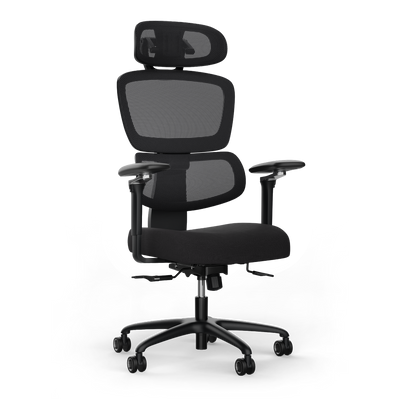
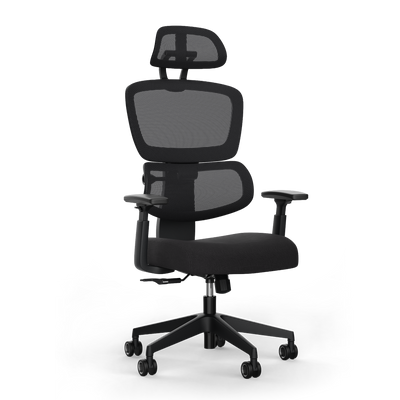
The basis for this is an ergonomic office chair. Models such as the DESKSPACE MOVE PRO are equipped with a synchronous mechanism. This feature is crucial because it links the movement of the seat and backrest. They adapt to your body's movements.
This way, your body is ideally supported with every lean back and straighten up. This automatically promotes continuous micro-movements and prevents rigid postures.
The ergonomic chair as a foundation
A good ergonomic chair is an active tool that supports your health.
- Synchronous mechanism: It is the core for active sitting. Through it, the tilt of the backrest and the seat synchronize with your movements. You always remain in a balanced position.
- Individual adjustability: For the mechanism to work for you, the back pressure of the backrest must be adjusted to your body weight. Only then will you find the balance between support and freedom of movement.
- Spinal support: An adjustable lumbar support and the correct seat height ensure that the natural S-curve of your spine is maintained.
A work environment that makes movement intuitive is the biggest lever for a healthier working day. The right equipment makes activity a natural habit.
The height-adjustable desk as a partner
An ergonomic chair alone is not enough. To bring full dynamism into your daily work life, an electrically height-adjustable desk is an equally important partner. It enables effortless switching between sitting and standing.
Models like the DESKSPACE TITAN make this change easy. With a memory function, you save your ideal heights and can change position at the touch of a button. Quiet motors ensure that the change does not disturb. This change of posture relieves your back and gets your circulation going. In our guide, you can learn more about the advantages of standing-sitting desks.
The combination of a dynamic chair and a height-adjustable desk creates an environment that keeps you active. How important preventive measures are is shown by the figures: According to the Health Atlas, almost 33 percent of Germans were affected by back pain in 2022. This already caused annual costs of 11.6 billion euros in 2020. You can find out more about the health consequences of prolonged sitting on aok.de.
Our conclusion: Your path to a more active workplace
Dynamic sitting is a conscious decision for your health and concentration. We have shown how you can bring more movement into your working day with simple means.
The crucial first step is simple: start. Make it a point to consciously change your sitting posture more often and to stand up regularly. Once this becomes routine, you can create the right framework conditions.
The key elements for your success
Two building blocks are the basis for a workplace that will benefit you in the long term:
- An ergonomic chair: Models with a good synchro mechanism, like the DESKSPACE MOVE PRO, are the foundation. They follow your body's movements instead of forcing you into a rigid position.
- A height-adjustable desk: A desk like the DESKSPACE TITAN makes switching between sitting and standing effortless. This is the most effective method to get your circulation going.
Your health is your most important asset. Every change from a rigid posture to more movement is a direct gain for your body and your mind.
Your workplace should intuitively encourage you to be more active. With the right equipment, dynamic sitting becomes a natural habit. Invest in the right tools and create a workplace that works for you.
Frequently asked questions about dynamic sitting
Dynamic sitting often raises questions. Here, we clarify the most important points so you can immediately start a more active work day.
How often should I change my sitting position?
As often as possible. As a rule of thumb, change every 15 to 20 minutes. It's not about big changes, but about avoiding rigid postures.
Think about different postures:
- Forward, upright posture: Ideal for concentrated phases when you are facing the screen.
- Rear, relaxed posture: Lean back to consciously relieve your spine.
- Small weight shifts: Move your pelvis, shift your weight from left to right. Even these micro-movements count.
A height-adjustable desk is the perfect partner here. With it, you can implement the 40-15-5 rule (40 minutes sitting, 15 minutes standing, 5 minutes moving).
Can I sit dynamically in any chair?
No, not effectively. A simple, rigid chair forces your body into a passive position. It blocks the natural movements you want to encourage.
The decisive factor for true dynamic sitting is a synchronous mechanism. Only it ensures that the seat and backrest move in sync with your body and support you optimally in every posture.
Doesn't constant movement disturb my concentration?
On the contrary. The feeling of losing concentration often comes from rigid sitting. It slows down blood circulation and oxygen supply to your brain. The result is the afternoon slump.
Dynamic sitting stimulates your circulation with gentle, often unconscious movements. The result is scientifically proven: you remain more awake, more focused, and more efficient. The regular alternation between sitting and standing acts like an energy booster for your brain.
Create a workplace that not only allows movement but actively promotes it. Discover the ergonomic solutions from Deskspace and invest in your health and productivity. Learn more at https://deskspace.de.


