

How the home office flat rate tax declaration works – simply explained

The home office lump sum makes it easier for you to claim costs for working from home in your tax return. You do not need proof of a separate office. Since 2023, you can claim a flat rate of 6 euros for each day worked exclusively from home. The regulation is limited to a maximum of 210 days. This can result in tax savings of up to 1,260 euros per year.
What is the home office lump sum?
The home office lump sum is a simplification rule in German tax law. It was introduced so that employees can easily deduct their work-related additional expenses for working from home.
The biggest advantage is that you don't have to provide individual proof of costs such as electricity or heating. This simplifies the process considerably. You only document the days on which you worked exclusively from your home office. The lump sum is a practical alternative to the complex deduction of a home office.
Development and current regulation
What began as temporary aid during the COVID-19 pandemic is now firmly established in tax law. Originally, in 2020, there was 5 euros per day for a maximum of 120 days, i.e. up to 600 euros per year.
Since the 2023 tax year, the situation has improved. The lump sum has not only been permanently enshrined but also increased. Now there is 6 euros per day for up to 210 working days. This increases the maximum deductible amount to 1,260 euros per year. This adjustment reflects the increased importance of working from home.
Development of the home office lump sum at a glance
| Feature | Regulation until 2022 | Regulation from 2023 |
|---|---|---|
| Amount per day | 5 Euros | 6 Euros |
| Maximum days | 120 days | 210 days |
| Maximum amount | 600 Euros | 1,260 Euros |
| Status | Temporary regulation | Permanently in law |
The table shows that the new regulations represent a clear improvement for everyone who regularly works from home.
Important note: The lump sum counts as income-related expenses. It only has a tax effect if your total income-related expenses exceed the employee lump sum of 1,230 euros (as of 2024).
Who benefits from the regulation?
Every employee can use the lump sum who has worked exclusively from home on certain days. Whether you have your own office or sit at the kitchen table does not matter.
The lump sum is particularly worthwhile for you if you:
- Do not have a tax-recognized office, for example, because you only use a work corner in the living room.
- Exceed the employee lump sum of 1,230 euros with your total income-related expenses.
- Are looking for an uncomplicated solution to declare your home office costs.
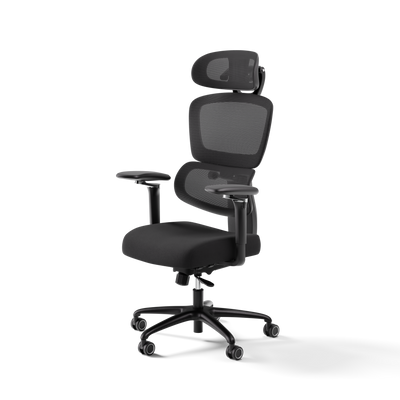
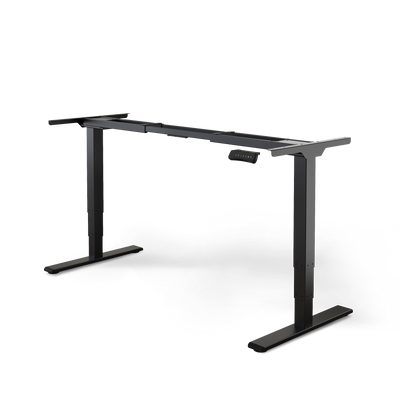
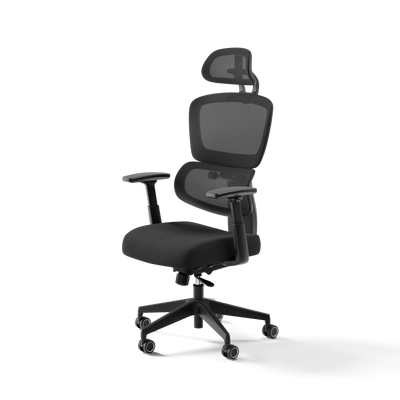
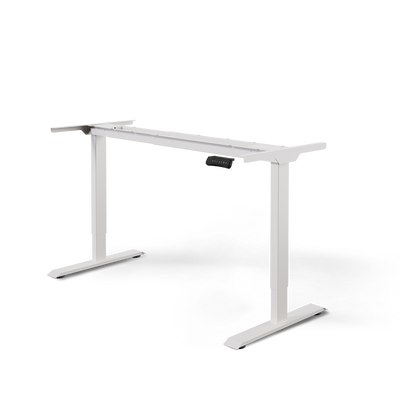
The setup of your workspace influences your productivity and health. In our guide, we show you how to set up your home office workspace optimally. While the lump sum covers running costs, you can also deduct the purchase of work equipment such as a height-adjustable desk.
What you need to know to claim the home office lump sum
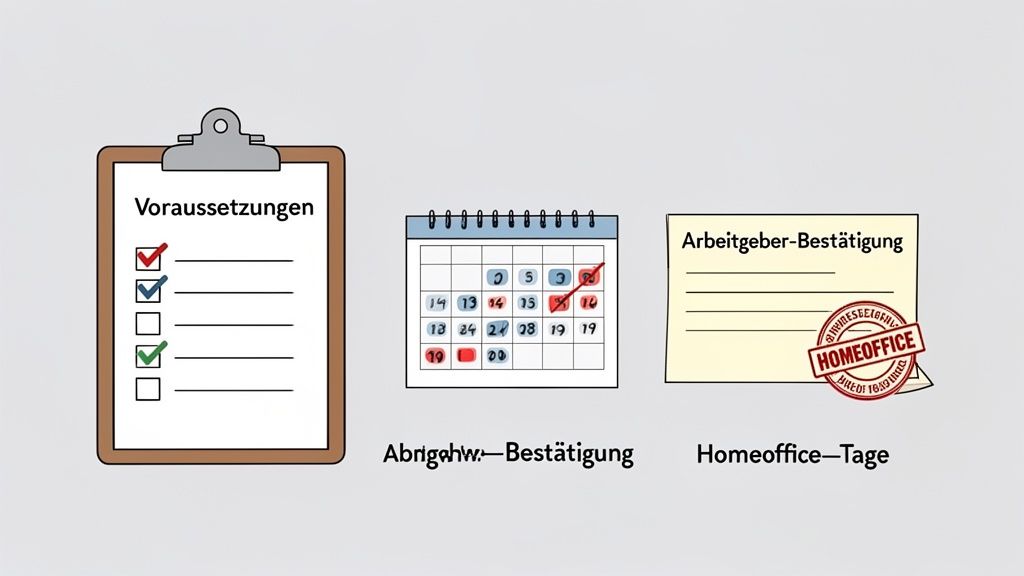
To successfully use the home office lump sum in your tax return, there are clear rules. These conditions are precisely defined and ensure that the lump sum is only claimed for actual working days at home. A good understanding of the details is crucial.
The most important basic rule is simple. You must have worked exclusively from your home office on that day. This requirement is strict. A short trip to the office, for example, to attend a meeting, excludes the claim for the lump sum for that day.
When is a day considered an exclusive home office day?
According to the law, the professional activity on that day must have taken place "predominantly" in the home. In practice, this means that you did not visit your primary workplace on that day.
This is to prevent double claiming of costs. If you work at home and also travel to the office on the same day, you can instead claim the commuter allowance for your commute. Both together are not possible.
Remember: For each working day, you can claim either the home office lump sum or the commuter allowance. Combining both for the same day is legally excluded.
This strict separation is important to avoid errors in the tax return and prevent inquiries from the tax office.
Your duty to provide proof
You do not have to collect individual receipts such as electricity or rent bills for the home office lump sum. However, you cannot do without documentation entirely. Upon request, you must credibly demonstrate to the tax office how many days you actually worked from home.
Informal records are best suited for this. You can keep them digitally or traditionally on paper.
- Calendar entries: Note the days you were in your home office in your calendar. An abbreviation like "HO" is sufficient.
- Excel spreadsheet: A table with the date and a note for the home office day is also a good way to keep track.
- Employer confirmation: An informal confirmation from your employer about the home office days granted is useful, even if it is not mandatory. It strengthens your credibility.
You do not have to submit these records automatically. But keep them handy in case the tax office asks for them.
The importance of the home office
The existence of such regulations shows how much the world of work has changed. The home office rate in Germany is stable at 24.5%. Before the pandemic in 2019, only 12.9% of employees occasionally worked from home. In the first lockdown in 2020, the number rose to 21%. Employees work an average of around 1.6 days per week in their home office.
This development makes it clear how important it is to know and use tax options such as the home office lump sum. You can find further insights on this in the Home Office Report 2025.
Special case: No fixed workplace
A special situation arises for people without a fixed "primary workplace". This applies, for example, to many field sales representatives or consultants.
For this group, there is a special rule. If they were neither at the customer's site nor at another company location on a given day, but worked exclusively from home, they can claim the lump sum. This also applies if they only carried out preparatory or follow-up work at home. The condition here, too, is that no other external activity took place on that day.
The correct calculation for your tax return
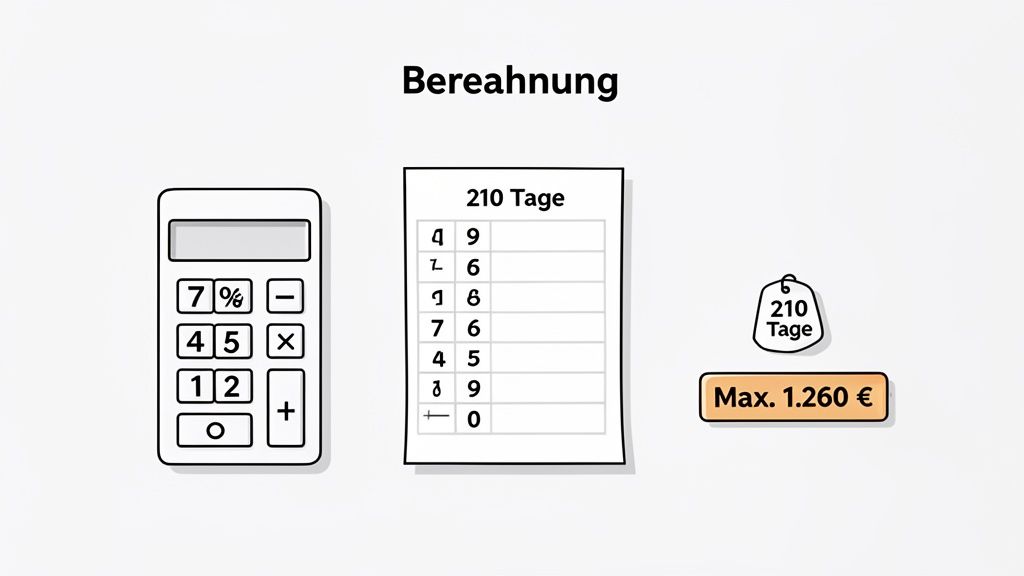
The calculation for the home office lump sum in your tax return is straightforward. You simply need to carefully count your working days to maximize your benefit.
Precisely count the days you worked exclusively from home. This number is the basis for everything else.
Correctly counting home office days
Determine the number of your exclusive home office days. Multiply this number by the lump sum of 6 euros per day.
Keep the upper limit in mind. The tax office accepts a maximum of 210 days per year. Your maximum claim from the lump sum is therefore capped at 1,260 euros.
Even if you were in your home office for more than 210 days, the amount is capped at 1,260 euros. Stating a higher number of days will not give you any additional tax benefit.
The home office lump sum is part of your income-related expenses. It is particularly relevant for you if your total income-related expenses exceed the general lump sum of 1,230 euros. An advantage remains that you do not have to collect individual receipts for electricity or heating. Learn more about how you can use the advantages of the new lump sum in 2025.
Practical examples for illustration
The following three scenarios show how different working models affect the deductible amount.
Scenario 1: Full-time with fixed home office days
You work full-time and have agreed on two fixed home office days per week. After deducting holidays and public holidays, there are often around 46 working weeks in a year.
- Calculation: 2 days/week x 46 weeks = 92 home office days
- Claim: 92 days x 6 euros/day = 552 euros
This amount is below the upper limit and can be claimed in full.
Scenario 2: Part-time in a hybrid model
You work part-time three days a week and are at home on average two of those days.
- Calculation: 2 days/week x 46 weeks = 92 home office days
- Claim: 92 days x 6 euros/day = 552 euros
Only the actual number of days in the home office is decisive.
Scenario 3: Almost complete remote work
You work almost exclusively from your home office. Over the year, you have 230 home office days.
- Calculation: 230 days counted
- Limit: The tax office recognizes a maximum of 210 days.
- Claim: 210 days x 6 euros/day = 1,260 euros
Here, the legal upper limit of 1,260 euros applies.
The interplay with the employee lump sum
The interaction with the employee lump sum of 1,230 euros is important. The tax office automatically deducts this amount from your income, without requiring proof.
The home office lump sum is part of your total income-related expenses. It only results in a real tax saving if all your work-related expenses together exceed the limit of 1,230 euros.
| Situation | Your total income-related expenses (incl. home office lump sum) | What the tax office claims | Result for you |
|---|---|---|---|
| Case A | 900 Euros | 1,230 Euros (employee lump sum) | No additional tax savings. |
| Case B | 1,500 Euros | 1,500 Euros (your actual costs) | You benefit because your costs are higher than the lump sum. |
It pays to collect all work-related expenses. In addition to the home office lump sum, also consider costs for specialized books, further training, membership fees, or work equipment. Only if the total sum exceeds the 1,230 euro mark will you pay less tax.
Practical Guide: How to Enter Everything in Annex N
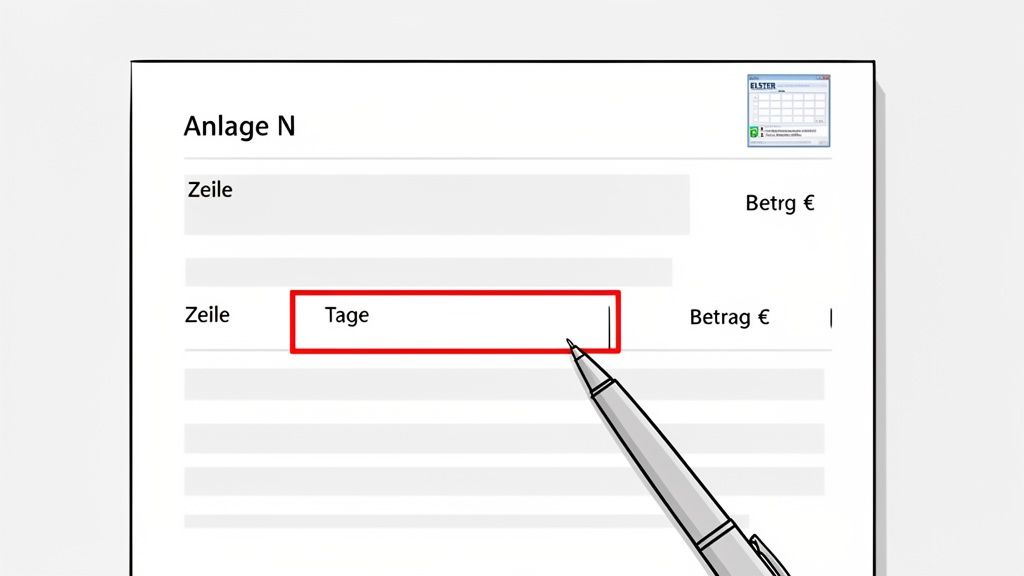
You have counted your home office days and know the amount you are entitled to. The crucial part is entering it into the home office lump sum tax return.
All information regarding the home office lump sum belongs in Annex N of your tax return. This form collects all information about your salary as an employee and is the correct place for your income-related expenses.
Where exactly do I enter the lump sum?
Within Annex N, you need to go to the "Income-related expenses" section. The tax office has set up a separate field for the home office lump sum here.
Look for the line labeled "Home office lump sum". In the forms for tax years from 2023, this is usually line 60 of Annex N. There you will see two fields.
- In the first field, enter the number of your exclusive home office days. Enter a maximum of 210 days here.
- The second field is reserved for the total amount. Tax software like ELSTER will do the calculation for you. You only enter the days and the program multiplies them by 6 euros and observes the upper limit of 1,260 euros.
Practical tip: Rely on the automation of your tax software. Only enter the exact number of your days. This avoids calculation errors.
Checklist for entry in Annex N
This checklist guides you through the process and summarizes everything important for the home office lump sum tax return.
The table gives you a clear plan of what information you need and where to enter it.
Checklist for entry in Annex N
A step-by-step overview of the necessary information and where it must be entered in the tax return.
| Step | Required Information | Where to enter (Example line) | Important Note |
|---|---|---|---|
| 1. Open form | Annex N for the relevant tax year | Open Annex N in ELSTER or your tax software. | Make sure to process the correct tax year. |
| 2. Determine days | Exact number of exclusive home office days | Have the number from your records ready. | Maximum 210 days are deductible. |
| 3. Find field | The line with the label "Home office lump sum" | Look for line 60 (may vary depending on the year). | Read the exact label of the field. |
| 4. Enter data | Your determined number of days | Enter the number of your days (max. 210) in the field. | The software calculates the amount automatically. |
| 5. Check details | Check the entry and the calculated amount | Check the entered number and the resulting sum. | A quick check prevents typos. |
With this approach, you maintain an overview and ensure that your information reaches the tax office correctly.
Common mistakes and how to avoid them
There are typical mistakes when entering the home office lump sum. This can lead to inquiries from the tax office or jeopardize your claim. Keep the following points in mind.
- Incorrect number of days: Do not enter the full 210 days if you have not worked them and cannot prove it. A realistic, documented number is the better choice.
- Double deduction: For days on which you use the home office lump sum, you may not additionally claim the commuter allowance. This is legally prohibited.
- Wrong form field: The home office lump sum is not the same as a home office. Do not accidentally enter your data in the field for home office costs.
- Forgot total amount: The home office lump sum alone often does not exceed the employee lump sum of 1,230 euros. Collect all other income-related expenses such as specialist literature, further training or work equipment.
Correct entry in Annex N is the key to success. It ensures quick processing and maximizes the financial benefit from your time in the home office.
Home Office Flat Rate or Deducting a Home Office?
Home office flat rate or deducting the full home office? This is a crucial question for your tax return. Both options have advantages, but are subject to different rules. Your choice determines how much money you get back.
Before you decide on an option in your home office flat rate tax return, you must know the strict criteria for a home office.
The strict requirements for a home office
The tax office has precise ideas about a tax-recognized home office. A work corner in the living room or a desk in the bedroom is not enough.
Your home office must meet these criteria:
- Spatial separation: It must be a separate room, separated from the rest of the apartment by a door.
- Almost exclusive professional use: The room must be used professionally for at least 90%. A guest bed or private shelves will lead to rejection.
- Center of the entire professional activity: Since 2023, this is the most important condition. The room must be the place where the most formative activities of your job take place.
If only one of these conditions is not met, the home office topic is excluded. Your only option then is the home office flat rate.
A direct comparison: Lump sum vs. actual costs
Which option is best for you depends on your living and working situation. Do you have a recognized home office that is the center of your work? Then you have a choice. You take the annual lump sum of 1,260 euros or claim the actual costs, which is often financially more attractive. For everyone else, the home office lump sum is the simple solution.
Here are the two models in comparison:
| Feature | Home Office Lump Sum | Home Office |
|---|---|---|
| Claim | Any employee who has worked exclusively from home on certain days. | Only with a separate room that represents the center of the entire activity. |
| Amount of deduction | 6 Euros per day, capped at 1,260 Euros per year (for 210 days). | Either the annual lump sum of 1,260 Euros OR the deduction of the actual, proportionate costs. |
| Proof required | You only need to record the days. No receipts for costs are necessary. | Detailed proof of all proportionate costs such as rent, electricity, heating is mandatory. |
| Flexibility | High. Also applies to working at the kitchen table. | Low. Strict spatial and usage-related requirements. |
Which option is worthwhile for you and when?
The home office lump sum is the right choice if you:
- do not have a separate room for your work or also use it privately.
- want to save the effort of collecting receipts and calculating costs.
- work flexibly in different places in your home.
Deducting a home office is usually the better financial choice if you:
- meet all the strict criteria of the tax office.
- have high proportionate costs that exceed 1,260 euros per year.
- are willing to put in the extra effort for documentation.
If you meet the requirements for a home office, you should calculate which option brings you more. A guide on how to deduct the costs for your home office will help you with the calculation. For most employees, however, the lump sum is the simplest way to reduce the tax burden.
Deducting additional work equipment for the home office
The home office lump sum covers running costs such as electricity and heating. Your work equipment is not included. You can additionally claim purchases for your workplace as income-related expenses.
This applies to anything you use primarily for your job. This includes furniture and technology that make your home office a professional workspace. An ergonomic workplace is an investment in your health and productivity.
Low-value assets: The quick way
The regulation for low-value assets (GWG) is important. Work equipment that costs no more than 800 euros net (952 euros gross) can be deducted immediately and in full in the year of purchase.
This immediate depreciation is practical for many home office purchases.
- Office chair: An ergonomic chair for your back.
- Monitor: A second screen for more efficient work.
- Printer or scanner: Classics for office work.
- Software: Programs and licenses for your job.
This rule simplifies the home office lump sum tax return, as you do not have to track depreciation for years.
Depreciating more expensive purchases over several years
If a purchase exceeds the net limit of 800 euros, you must depreciate it over its official "normal useful life". This applies, for example, to an electrically height-adjustable desk.
The duration is stated in the official AfA tables ("Absetzung für Abnutzung" - depreciation for wear and tear). For office furniture, a period of 13 years usually applies.
A practical example: You buy a height-adjustable desk from DESKSPACE for 1,300 euros. You depreciate it over 13 years. Each year, you can therefore claim 100 euros (1,300 euros / 13 years) as income-related expenses.
Even if it takes longer, this amount reduces your taxable income every year.
Proof for the tax office
Regardless of whether it's immediate depreciation or over several years, the tax office requires a receipt. Always keep the invoice or purchase receipt. The item, price, and purchase date must be clearly visible on it.
For items with possible private use, such as a laptop, the tax office usually accepts a professional share of 50%. If you want to claim more, you must have good reasons for it. For pure office furniture such as a desk or office chair, professional use is undisputed. You can also fully deduct an ergonomic keyboard and mouse.
The Home Office Lump Sum: What You Need to Know
The home office lump sum often raises questions. Here are the answers to the most important ambiguities.
Does the lump sum also apply if I am sick?
No. The lump sum only applies to days on which you actually worked in your home office.
Sick days, vacation days, or other days off do not count. The lump sum is intended to cover the work-related additional costs for actual working days from home.
What if my total income-related expenses are low?
It can happen that your total income-related expenses remain below the employee lump sum of 1,230 euros.
In this case, the tax office automatically applies the higher lump sum because it is more advantageous for you. You only benefit from the home office lump sum if your total professional expenses exceed this limit of 1,230 euros.
Do I have to provide proof of my home office days?
You don't have to send receipts to the tax office immediately. However, you should be prepared for inquiries.
Keep a simple list of your home office days.
- An Excel spreadsheet is sufficient.
- Entries in your digital calendar are also suitable.
- Some employers issue an informal confirmation.
This documentation serves as your security.
Can students also use the lump sum?
Yes. If you study or work from home for your studies, you can claim the lump sum. The tax effect depends on your status.
Important difference: In a second degree, expenses are considered income-related expenses. In a first degree, they are only considered special expenses, which often limits the tax relief.
For self-employed individuals, the regulation is different. They usually claim their costs for the home office directly as business expenses, instead of using the lump sum.
An ergonomic workplace is good for your back and an investment that you can deduct from tax in addition to the lump sum. At Deskspace, you will find TÜV-certified, height-adjustable desks and ergonomic chairs that improve your health and productivity in the home office. This not only secures you tax advantages, but also invests in yourself. Visit https://deskspace.de and find the right setup for you.


