

Buttock Pain When Sitting: Causes and Solutions

Buttock pain when sitting is a common problem in office work. Often, it's a direct signal from the body that the pressure on muscles, nerves, and bones is too high. A frequent cause is the irritation of the sciatic nerve by a tense piriformis muscle.
The most common causes of buttock pain when sitting
The human body is designed for movement, not for sitting for hours. A static posture compresses the gluteal muscles, impairs blood circulation, and strains the lower spine. Over time, this leads to pain.

Sitting habits in Germany highlight the problem. A study by Techniker Krankenkasse shows that 46 percent of Germans sit for five to eight hours on a weekday. 21 percent sit for nine hours or more. This continuous strain is a critical risk factor for discomfort.
Piriformis Syndrome
Piriformis syndrome is a common cause of buttock pain. The piriformis is a small muscle located deep in the buttocks, connecting the sacrum to the thigh bone. The sciatic nerve runs directly beneath it or sometimes through it.
If this muscle becomes tense due to prolonged sitting, poor posture, or overuse, it presses on the sciatic nerve.
The result is a deep, often throbbing pain in the center of the buttock, which can radiate into the thigh or calf. The symptoms resemble sciatica, but the cause here lies directly in the muscle and not in the spine.
Sciatica
Colloquially, "sciatica" is often used to describe pain that runs along the sciatic nerve. Sometimes, muscle tension is the trigger, as in piriformis syndrome. However, the cause often lies in the lumbar spine, for example, due to a herniated disc.
Such structural problems can irritate the nerve root and lead to radiating pain, tingling, or numbness in the leg. Prolonged sitting increases pressure on the intervertebral discs and can worsen symptoms. If you suspect a pinched nerve, you can find 5 simple ways to relief in our guide 5 simple ways to relief.
Inflammation of the Ischial Tuberosity (Ischial Bursitis)
The ischial tuberosities are the bones on which body weight rests when sitting. Bursae, fluid-filled sacs that reduce friction between bones and muscles, are located there.
Constant sitting on hard surfaces or repetitive pressure can cause inflammation of these bursae. This is known as ischial bursitis.
Typical signs include:
- A sharp, localized pain directly at the sit bone.
- Pain worsens when sitting or with direct pressure.
- Pain usually subsides when standing or walking.
Muscular Imbalances
Unilateral strain often leads to muscular imbalance. If important stabilizers such as the gluteal or abdominal muscles are too weak, other muscles must take over their work and become overloaded as a result.
This often affects the piriformis muscle, which takes on tasks for which it is not designed, and then becomes tense. At the same time, the hip flexors shorten due to sitting, which tilts the pelvis forward. This increases pressure on the lower back and buttocks.
Overview of the most common causes of pain
The following table summarizes the most common causes and their typical symptoms.
| Cause | Typical Symptoms | Main Risk Factor |
|---|---|---|
| Piriformis Syndrome | Deep pain in the center of the buttock, radiating into the leg | Prolonged sitting, unilateral strain |
| Sciatica | Pain from the lower back to the leg, often with tingling | Herniated disc, spinal stenosis |
| Ischial Bursitis | Sharp, localized pain at the sit bone, tender to the touch | Sitting on hard surfaces |
| Muscular Imbalances | Diffuse pain, feeling of tension and stiffness | Lack of movement, weak core muscles |
This overview shows the variety of possible triggers. Most of the time, they are a sign that the body needs more movement and variety.
When you should see a doctor
Most buttock pain when sitting is caused by muscular tension or irritation and is harmless. Often, it can be resolved with targeted exercises and workplace adjustments.
However, certain warning signs, known as "red flags," should be taken seriously. These symptoms can indicate more serious problems such as a herniated disc or neurological disorders. Do not hesitate to seek professional help if you notice any of the following signs.
Warning signs you need to know
Some symptoms require immediate action. They indicate that a nerve is severely pinched or that another serious cause is present. Do not ignore these warnings from your body.
Pay attention to the following symptoms:
- Numbness in the genital or anal area: A feeling of numbness in the "saddle region" is a clear warning sign.
- Sudden loss of bladder or bowel control: Difficulty controlling urine or bowel movements is a medical emergency.
- Severe, radiating pain with paralysis: Sudden weakness in the leg or foot, for example, foot drop, requires immediate action.
- Additional fever or chills: If the pain occurs along with general illness symptoms, an infection could be the cause.
If any of these symptoms occur, you should immediately consult a doctor or emergency room. A quick diagnosis is crucial here.
When a normal doctor's visit makes sense
Even without "red flags," there are reasons to have complaints medically clarified. Not every pain can be resolved solely through exercises.
A doctor's visit is advisable if your buttock pain when sitting is very severe, does not improve for several weeks, or worsens. This is especially true if the pain limits your quality of life or disturbs your sleep.
A professional diagnosis helps to find the exact cause. The doctor can initiate the correct therapy, from physiotherapy to injections to an MRI. This ensures you receive the best possible treatment.
Effective immediate measures for acute pain
When buttock pain suddenly occurs while sitting, quick relief is necessary. There are proven measures you can apply yourself immediately to reduce discomfort. These aim to relax muscles, inhibit inflammation, and relieve pressure on irritated nerves.

Listen to your body's signals. Experiment to see what feels best and start gently to avoid further irritating the affected area.
Apply heat or cold
The answer to the question of heat or cold depends on the type of pain.
Heat is suitable for muscular tension and dull, pulling pain. A hot water bottle, a cherry pit pillow, or a warm bath for 15 to 20 minutes loosens the tissue, promotes blood circulation, and relaxes the gluteal muscles.
Cold is the choice for acute, sharp pain or inflammation such as bursitis. An ice pack wrapped in a towel dampens swelling and numbs the painful area. Do not apply cold for longer than 10 to 15 minutes at a time to protect the skin.
Targeted stretching exercises for relief
Often, buttock pain is due to a tense piriformis muscle. This muscle can press on the sciatic nerve and cause radiating pain. Targeted stretching exercises can bring quick relief.
An effective exercise is the seated piriformis stretch:
- Sit upright on a stable chair.
- Place the ankle of your painful leg on the knee of the other leg.
- Slowly lean your upper body forward with a straight back until you feel a distinct stretch in your buttock.
- Hold this position for 20 to 30 seconds, breathing calmly.
- Repeat the exercise two to three times per side.
This exercise specifically relieves pressure on the sciatic nerve by relaxing the piriformis muscle. Perform it several times a day, especially after prolonged sitting.
Piriformis syndrome is one of the main causes of buttock pain when sitting. In Germany, it accounts for between 6 and 8 percent of all lower back pain syndromes. The typical unilateral, sharp pain results from impingement of the sciatic nerve and often radiates into the leg. Prolonged sitting is considered the main trigger. More information on the causes found by sports medicine can be found here.
Self-massage with a fascia ball
Muscle hardening and trigger points in the gluteal muscles can also cause pain. You can work on these points yourself with a fascia ball or tennis ball.
Self-massage releases local tension and makes the tissue more pliable.
- While sitting: Place the ball on a chair under your painful buttock. Slowly shift your weight onto the ball until you hit a sensitive spot. Stay on this spot for 30 to 60 seconds or roll over it slowly.
- While lying down: For a more intense massage, lie on your back, bend your knees, and place the ball under the affected area. Control the pressure by slightly lifting and lowering your pelvis.
The massage may be uncomfortable at first but should not cause sharp pain. Start with gentle pressure and gradually increase it.
Ergonomically optimize your workspace
Acute measures relieve pain, but prevention is the sustainable solution. An ergonomically designed workspace is the best strategy to prevent buttock pain when sitting from becoming chronic. The goal is to keep the body in a neutral, relaxed posture and avoid unilateral strain.

With targeted adjustments to your chair, desk, and monitor, you create the basis for a pain-free everyday life.
The basics of ergonomics
Ergonomics means adapting work tools to the body. The most important elements are the office chair and desk.
Your feet should be flat on the floor, while your knees form an angle of about 90 degrees. Your thighs should be parallel to the floor.
Adjust your chair so that your arms also form a relaxed 90-degree angle when your forearms rest on the tabletop. Your shoulders should remain relaxed.
The role of chair and desk
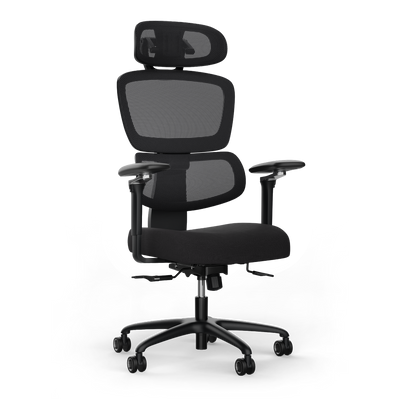
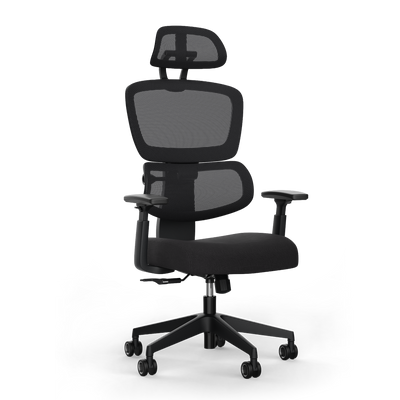
A good office chair needs an adjustable seat height, an adaptable backrest with lumbar support, and armrests that relieve the shoulders.
A height-adjustable desk is the ideal complement. It allows you to precisely adjust the working height to your size, both sitting and standing. This alternation is crucial to counteract the negative consequences of prolonged sitting.
The concept of dynamic sitting means frequently changing position and taking breaks to stand. This keeps the muscles active, promotes blood circulation, and redistributes pressure on the buttocks.
Our guide shows you how to set up your workspace ergonomically.
Positioning monitor and accessories correctly
The monitor has a major influence on your posture. The top line of the screen should be at or slightly below eye level. Your gaze is slightly tilted downwards without having to bend your neck.
The distance should be approximately an arm's length. Place the keyboard and mouse so that your wrists remain straight and your arms are close to your body.
Buttock tension, especially in the piriformis or gluteus muscles, is often a result of sitting for hours on unsuitable chairs. This can irritate nerves or cause ischial bursitis, which manifests itself through pressure pain. A study by Techniker Krankenkasse shows that 46 percent of Germans sit for five to eight hours daily. Poor posture in the home office can additionally put pressure on the sciatic nerve.
Checklist for an ergonomic workplace
This checklist helps you quickly check and optimize your workplace.
| Ergonomic Aspect | Optimal Setting | Why it is Important |
|---|---|---|
| Office Chair | Feet flat on the floor, knees at 90 degrees, backrest supports the lumbar spine | Prevents poor pelvic posture and relieves the spine. |
| Desk Height | Forearms rest loosely at a 90-degree angle on the tabletop, shoulders are relaxed | Reduces tension in the neck and shoulder area. |
| Monitor Position | Top edge at eye level, one arm's length away | Ensures neutral head posture and prevents neck pain. |
| Working Method | Regular alternation between sitting and standing (e.g., every 30-60 minutes) | Promotes blood circulation, activates muscles, and reduces pressure on the buttocks. |
These points lay the foundation for healthy and productive work.
Movement and exercises for a pain-free everyday life
Regular exercise is the best way to counteract the effects of sitting. An ergonomic workplace is important, but only targeted exercises activate the muscles that become inactive due to static posture.

A short exercise program can easily be integrated into your daily work routine. The focus is on activating the gluteal and core muscles, stabilizing the pelvis, and relieving the spine.
Effective exercises for buttock pain
You don't need any equipment for these exercises. Perform them slowly and with control to activate the correct muscles.
1. Glute Bridge
This exercise strengthens the gluteal muscles, the antagonists of the often-shortened hip flexors. Strong gluteal muscles stabilize the pelvis and relieve the lower back.
Here's how to do the Glute Bridge:
- Lie on your back and place your feet hip-width apart and close to your buttocks.
- Press your heels into the floor and lift your pelvis until your body forms a straight line from your shoulders to your knees.
- Consciously contract your glutes at the highest point and hold the position for two to three seconds.
- Slowly and controlled lower your pelvis back down without fully resting it.
Perform 10 to 15 repetitions.
Small, conscious activations throughout the day are very effective. They act like a reset for your posture and musculature.
Many small exercise units can be performed directly at your desk. You can find more inspiration in our article on gymnastics with a chair.
Integrate more movement into everyday life
In addition to targeted exercises, every movement counts. Buttock pain when sitting is often a sign of too little activity. Small changes in your habits can help.
Interrupt static phases. Set an alarm to remind you to stand up every 30 to 60 minutes.
Here are some simple tips:
- Take the stairs: Skip the elevator.
- Walk while on the phone: Use phone calls to stand up and move around.
- Park further away: A short walk to work is a good start.
- Get water in small glasses: Going to the kitchen provides regular breaks.
These small changes add up throughout the day. They promote blood circulation, activate muscles, and prevent the body from remaining in a static posture.
Long-term pain-free sitting: How to integrate healthy routines into your daily life
We know where buttock pain from sitting comes from, what immediate measures help, and what an ergonomic workspace looks like. The next step is to make these tips into firm habits.
Short-term relief is good, but the goal is to remain pain-free permanently. This requires small, conscious adjustments that integrate into daily life over time. It's about three building blocks: optimizing your environment, incorporating targeted movement, and listening to your body's signals.
Establishing lasting habits
Healthy routines should become as natural as brushing your teeth. This begins with setting up your workspace and extends to short exercise breaks.
Focus on these two habits:
- Regular position changes: Stand up briefly at least once an hour. A height-adjustable desk makes it easier to switch between sitting and standing.
- Daily exercise units: Integrate short exercise sequences firmly into your day. Five minutes of stretching in the morning or strengthening exercises during your lunch break can be more effective than one hour of sport per week.
Real change comes from the sum of many small, consistent steps. Design your environment so that the healthy choice is always the easiest.
Listen to your body's signals
Your body is constantly communicating with you. A slight tug in the buttock, a stiff lower back, or the need to change your sitting position are important messages. Learn to view these signals as a call to action.
When you feel pain, pause. Ask yourself about the cause. Are you sitting for too long? Is your chair adjusted incorrectly? Do you need a stretching break? This awareness is your best early warning system to prevent tension from becoming a chronic problem.
Your checklist for a pain-free future
This checklist summarizes the three most important measures. It is your personal action plan against buttock pain when sitting.
- Optimize ergonomics: Check your equipment. Are your chair, desk, and monitor optimally adjusted for you? Investing in ergonomic furniture pays off.
- Create an exercise routine: Schedule fixed times for stretching and strengthening exercises. Use every opportunity for movement in everyday life, such as climbing stairs or a walk during your lunch break.
- Actively listen: Pay attention to your body's signals. React immediately to the first signs of tension. A break, a stretch, or a change of position can prevent pain from settling in.
Frequently asked questions
Here we answer the most common questions about buttock pain.
Which seat cushion really helps?
A good seat cushion relieves sensitive areas such as the ischial tuberosities and tailbone. Wedge-shaped cushions gently tilt the pelvis forward and promote an upright posture. This relieves the lumbar spine and gluteal muscles.
Ergonomic seat cushions with a cutout for the tailbone distribute weight better on the thighs and relieve pressure on painful areas. Choose a dimensionally stable material such as memory foam that adapts to the body without losing its support.
Can buttock pain worsen from sleeping on your side?
Yes, that's possible, especially if your mattress doesn't fit. A mattress that's too hard creates pressure on your hips and shoulders. A mattress that's too soft allows your pelvis to sag.
Both can put continuous tension on the gluteal muscles, especially the piriformis muscle. This leads to increased buttock pain when sitting the next day. A pillow between the knees stabilizes the pelvis and keeps the hip in a neutral position.
A pillow between the knees when sleeping on your side stabilizes the pelvis. It prevents the upper leg from tilting forward and twisting the pelvis.
How long does it take for the pain to get better?
The duration depends on the cause and your commitment. With simple muscular tension, you often feel relief after just a few days if you stretch regularly, take movement breaks, and optimize your workspace.
For piriformis syndrome or bursitis, it can take several weeks. It is important to consistently perform the recommended exercises and protect the affected area. If there is no improvement after two to three weeks or if the pain worsens, you should consult a doctor.
An ergonomic workspace is the best protection against sitting discomfort. At Deskspace, you'll find height-adjustable desks and ergonomic chairs that help you stay active and pain-free throughout the workday. Discover the right solution for you now at https://deskspace.de.


